
Wayne Dyrness
Spirit-Led or Purpose-Driven? Part 4
Spirit-Led or Purpose-Driven? Part 4
Dealing with Resisters
Who Refuse to Compromise their Faith
by Berit Kjos
“I also believe that pastors are the most strategic change agents to deal with the problems society faces.”[1, page 20] Rick Warren
A “change agent… should know about the process of change, how it takes place and the attitudes, values and behaviors that usually act as barriers…. He should know who in his system are the ‘defenders’ or resisters of innovations…. Try to identify resisters before they become vocal….” Ronald G. Havelock, The Change Agent’s Guide to Innovation in Education.
“Change leaders must also be prepared to deal with members who choose to ‘stay and fight.'”[3, page 91] Leading Congregational Change (published by Jossey-Bass)
“The purpose driven life is being promoted in almost every church in my town. The banners are hanging everywhere! … We pretty much stand alone with a few friends.” A visitor to our website
Part 3 of this series, “Small Groups and the Dialectic Process,” triggered a stream of letters from troubled Christians around the world. They had watched as the focus of their churches shifted from Bible-based teaching to purpose-driven experiences. Many had sensed something wrong but couldn’t define the problem. Some wondered how God’s guidance fit into this tightly controlled man-made system. They had asked questions, but no one could calm their concern. They had tried to warn their pastor and friends but had been rebuffed. Some were even told to find another church. All shared the pain of rejection. The following letter from Pat Johnson illustrates the struggle faced by those who cannot, with a clear conscience, go along with a church that embraces the world’s transformative marketing and management methods:
“I just read ‘Small Groups and the Dialectic Process.’ Absolutely dead-on! At the end of it, I read this paragraph which took my breath away: ‘In today’s Church Growth Movement, resisters are usually sifted out fairly early in the process. In the next installment, we will look at some of the ways non-conformists are assessed, exposed, vilified and dismissed from the church families they have loved, served and supported.
“I have been forced out of two churches for being such a ‘resister.’ I am a normal wife and mom and teacher who would not conform and, as you stated above, have been shunned and vilified. This has caused me considerable heartbreak and torment. For years I have struggled to cope with the shock of losing my church family and being branded as divisive.
“The ONLY way I have been able to come through this is to return to my Lord and trust His Word only. For years, I didn’t really realize that I had drifted away from Him. Then when the storm hit, I didn’t have the means to withstand it. By His grace and mercy, I have emerged from the mind-hell that shaming and shunning create….”
Vilifying and shaming “resisters” is nothing new. Old Testament prophets like Jeremiah and Isaiah described the rejection and mockery they endured for speaking God’s truth. At least one early Church was torn by similar hostilities. The apostle John told us about a church who modeled the kinds of tactics used in the Church Growth movement today:
“I wrote to the church, but Diotrephes, who loves to be first among them, does not accept what we say. For this reason, if I come, I will call attention to his deeds which he does, unjustlyaccusing us with wicked words; and not satisfied with this, he himself does not receive the brethren, either, and he forbids those who desire to do so and puts them out of the church.” 3 John 1:9-11
In 17th century England, Pilgrims and Separatists faced ridicule, torture and imprisonment for refusing to conform to the Church of England’s demand for total conformity and universal participation. During the Spanish Inquisition, non-conforming Protestants were beheaded while villagers flocked to watch the show. In China today, millions of believers who worship their Lord outside the state-controlled church risk beatings and death under the capricious hand of Communist prison guards. Human nature doesn’t change, and social barriers to cruelty against non-conforming Christians crumble as Biblical morality yields to the world’s sensuality.
Who were targeted by the media after the tragic bombing of the Oklahoma Federal Building? Christians, conservative radio hosts and homeschooling parents together with Militia groups and criminals! Day after day, the media’s accusing pens pointed to suspected foes of American oneness — those whose “enraged rhetoric” had created a national “climate of hate and paranoia.” And their emotional appeals worked! It’s easier to shout, “Stop spreading hate!” than to encourage rational debate.
The same is true in postmodern churches. Like secular change agents, from UN visionaries to local educators, church leaders are being trained in the latest business management theories. They envision a unified community where all members participate in the required “lifelong learning” and facilitated consensus groups. No one would be exempt from the continual assessments that measure cooperation, monitor compliance and provide leaders with the feedback needed to periodically adjust the process. All would be tracked through a vast networks of databases available not just to the local church and government but, eventually, also to the United Nations. And resisters — those who stand back and question the process — become enemies to this quest for oneness and solidarity.
And no wonder! “Because you are not of the world, but I chose you out of the world,” warned Jesus, “therefore the world hates you…. If they persecuted Me they will persecute you…. for they do not know the One who sent Me.” John 15:19-21
One reason why people conform to the seductive “change process” in evangelical churches is the fear of loss. Rejection hurts. But such fear is useful for today’s change agents. Just as severe public punishment has through the ages been used to frighten the masses into outward conformity, so fear of personal rejection now prompts people of all ages “to go along to get along.”
In order to transform churches from the old ways (where pastors preach and everyone learns the Scriptures) to the Total Quality Management model, “transformational leaders” must find ways to curb resistance to change. The popular church management manual, Leading Congregational Change (LCC), promoted by Bob Buford‘s Leadership Network, offers a well-used plan. “This is a book you ought to read before you change anything,” said Rick Warren in his hearty endorsement. Ponder its definition for resistance and the tone it sets:
“Address Specific Pockets of Resistance. Resistance is the ‘opposite reaction’ to change…. [It] can come in many different forms—confrontational or passive-aggressive, from known troublemakers or loyal supporters, as a result of a specific change or of an incorrect perception.” [3, pages 90-91]
Since change agents must be totally committed to their strategic mission or purpose, they must also view dissenters as wrong. While some issues can be negotiated, this is not one of them. Successful transformation depends on persuading the vast majority to share their single-minded focus. Those who disagree with their manipulative strategies are viewed as intolerable barriers to the ultimate goal: a new way of collective thinking, being and serving.
In the end, the specific vision or stated purposes matter little. What counts are the unity and conformity derived from the common focus, the feel-good group experiences, the peer pressure, and the facilitated process. The only real obstacles to mass compliance are those (usually faithful members) who oppose the essential steps to top-down control and infect others with their doubts. You may recognize some of the steps:
1. Identify resisters. In the Church Growth Movement, the resisters are those who question the need for systemic change (total restructuring of all facets), distrust the dialectic process, and criticize the transformational methods. What’s worse, they refuse to shift their primary focus from the actual Scriptures to the positively phrased “purpose” or “vision” or “mission statement.” LCC warns change leaders about this problem:
“Change leaders should expect resistance to team learning. … Recognizing and making this resistance explicit to other team members tends to lessen its grip. It takes time for a group to emerge as a team, and all the concerns and resistance related to teams will resurface during this period.” [3, page133]
Rick Warren is more subtle, and his references to health versus disease cloak his hostility toward “unhealthy” members who resist his agenda. In The Purpose Driven Church, he writes:
“When a human body is out of balance we call that disease…. Likewise, when the body of Christ becomes unbalanced, disease occurs…. Health will occur only when everything is brought back into balance. The task of church leadership is to discover and remove growth-restricting diseases and barriers so that natural, normal growth can occur.”[1, page 16]
Scott Peck, famed author of The Road Less Traveled, uses the same analogy. “There’s a term therapists use; it’s ‘resistance,'” he writes in Reflections on Leadership, “which refers to people who don’t like to or want to be healed or converted, so they resist.”[5, page 92]
The Change Agent’s Guide to Innovation in Education by Ronald G. Havelock tells it like it is. This popular manual for transformational leaders was funded by the U.S. Office of Education and the Department of Health, Education and Welfare in 1973 and continued to receive government funding until the 1980s. Since then, it has been foundational to the training of teachers, pastors, politicians and change agents in diverse fields. A few years ago, it was promoted on the churchsmart.com website. (The page has since been removed). Comparing Havelock’s model for change with the management process taught by Bob Buford, Rick Warren and their common mentor Peter Drucker, one quickly sees the similarities. All use the same basic formulas dressed in different words, phrases and illustrations. Like LCC, Havelock’s book prompts change agents to watch out for resisters:
“Many social systems also contain some members who assume the active role of resisters or critics of innovation. They are the defenders of the system the way it is, the self-appointed guardians of moral, ethical, and legal standards…. Resisters of various orders have been very successful in preventing or slowing down… diverse innovations.”[2, page 120]
“Resisters’ may be identified for having spoken out previously on the innovation or from having come to you with objections…. It is important, however, to try to identify resisters before they become vocal and committed on this particular innovation.”[2, page 122]
Charlotte Iserbyt, in her revealing book, the deliberate dumbing down of america,(sic) shares her observations of a meeting she attended many years ago when she worked for the US Department of Education:
“The presenter (change agent) taught us how to ‘manipulate’ the taxpayers/parents into accepting controversial programs. He explained how to identify the ‘resisters’ in the community and how to get around their resistance. He instructed us in how to go to the highly respected members of the community… to manipulate them into supporting the controversial/non-academic programs and into bad-mouthing the resisters…. I left this training—with my very valuable textbook, The Change Agent’s Guide to Innovations in Education, under my arm—feeling very sick to my stomach and in complete denial over that in which I had been involved. This was not the nation in which I grew up; something seriously disturbing had happened between 1953 when I left the United States and 1971 when I returned.”[4]
2. Assess resisters and determine the degree of resistance. Negative or uncompromising attitudes will be tracked using the sophisticated data systems that monitor each member. “Continual feedback” from these high-tech systems (made available to many large churches through Bob Buford’s Leadership Network) provides the data needed to make necessary adjustments. It’s all part of Total Quality Management. As we read in The Change Agent’s Guide, “Resisters should be judged for relative sophistication and influence.” [2, page 122]
LCC’s suggestions fit right in:
“Treat Each New Initiative as an Experiment. … People are less resistant to a short-term experiment than they are to a ‘permanent’ change. … An experiment signals that the leaders do not claim to have all the answers. Experiments give people more room to innovate, learn and improve with less risk of repercussion. … Measure, measure, measure. Before beginning an experiment, a scientist defines the desired result and establishes procedures to measure the outcome. Measurement implementation requires clarity about the goal and process for evaluating progress.”[3, page 82]
“Continually Monitor the Commitment Level. Healthy congregations have good feedback systems. As change occurs, commitment levels will vary. For some people any change calls for a ‘withdrawal from the emotional bank account’ (Covey, 1989). When the account is overdrawn, people become unwilling to make further changes. As withdrawals are made, change leaders should intentionally replenish the account through acts of kindness, good communication, love and concern.”[3, page 104]
3. Befriend, involve and persuade borderline resisters. Participation in small group dialogues may encourage borderline resisters to trade their traditional convictions for a more permissive fellowship. Some will reconsider their objections and conform to group demands. Others will quietly leave on their own.
“Coercive power only strengthens resistance,” wrote Robert Vanourek in Reflections on Leadership. “…Instead the leader’s skills at ‘facilitating’ the group should be used. The ideas should evolve from the group. Then the leaders can simplify them in a persuasive fashion. Then commitment to the vision can be gained.”[5, page 301] Emphasis added
The words, “simplify them,” means rephrasing and adapting the group views to the pre-planned outcome — a shrewd and subtle way of giving the people the impression that they actually conceive and “own” the results. This strategy works well in community forums around the world. As Ronald Havelock wrote in his Change Agent’s Guide, “Increasing pressure against the opposing forces usually will increase the resistance pressure. Frequently, but not always, the wisest and most effective course of action is to focus on ways of understanding and reducing resistance rather than trying to overwhelm it.”[2, page 301]
The most effective solution is friendly persuasion. “For unity’s sake, we must never let differences divide us,” wrote Pastor Warren. “We must stay focused on what matters most — learning to love each other as Christ has loved us, and fulfilling God’s five purposes for each of us and his church.”[6, pages 161-162]
That sounds good. But how can concerned Christians embrace a unity that involves compromising the truth? Only if our primary focus is fixed on Jesus and His Word can we truly share His agape love in a darkening world. For His name’s sake, we can’t let a human vision of unity force us to minimize His truth.
Change agents have little tolerance for such an uncompromising Biblical position. It gets in the way of total and continual change. Therefore, LCC warns its readers to remain vigilant, keep promoting the vision (or purpose) and build congregational support. Notice that the strategic vision, not the Holy Spirit, must guide the process:
“Never stop. The change process never truly ends. … The art of leadership is knowing when to pause and when to press forward…. It is easy to be lulled into a premature feeling of victory after the first round of implementation. Established momentum and alignment will—
Spread the vision … to a congregation-wide effort
Steadily break down the residual places of resistance
Instill a new approach for vision-guided, strategic decision making throughout the congregation
Create the mindset and systems that will help the church… maintain or increase its impact on its community.”[3, page 93] Emphasis added.
“There is no ‘next stage,’ but the change process is never-ending. The eight stages of the change process need to be revisited often. This cycle becomes a part of the congregation’s culture and way of life.”[3, page 94]
4. Marginalize more persistent resisters. They obstruct progress and undermine the needed unity, momentum and passion for change. That’s why pastors often suggest to “divisive” members that they might be happier elsewhere. When the unhappy members leave, they usually, out of obedience to their Lord, follow the pastor’s request that they not speak to anyone about their reasons for leaving. The congregation will be told not to ask any questions. Thus the change leaders avoid potential conflict. The LCC summarizes this stage:
“Some loss of members is likely throughout the change process. Even at this late stage, some people will decide that they are not on board with the vision and that they need to leave. When this happens, leaders must be willing to allow people to find a different place to worship…. The worst mistake is to compromise the vision to try to retain a few members.
“Change leaders must also be prepared to deal with members who choose to ‘stay and fight.’ When the resistance is overt and destructive, failure to act on the problem is far worse than the cure. The Bible gives clear principles in Matthew 18 for how to handle these conflicts.” [3, page 91]
Actually, Matthew 18:15-17 shows God’s way of dealing with an actual sin — a violation of God’s law or guidelines — not someone who, in obedience to God’s Word, takes a stand. Yet, in spite of the enforced tolerance toward moral and spiritual sins within the Church Growth Movement, there is little tolerance toward those who appear to disobey the top-down mandates of this manipulative management system. Sold out to pragmatism, it often turns a blind eye to Scriptures such as Acts 5:29, “We must obey God rather than man.”
Pastor Warren is more subtle, yet he models an attitude that breeds intolerance and judgment toward individuals who violate his politically correct guidelines concerning unity and relational synergy. As you saw earlier, he equates sincere Christians who question the adoption of the world’s methodology with germs and disease within the body. And he calls on the church leadership to “remove growth-restricting diseases and barriers so that natural, normal growth can occur.”[1, page 16]
What are those barriers? Are they the thoughts and actions that the Scriptures call sins, or are they attitudes and values that clash with psychological criteria for a politically correct “healthy church?” As Pastor Warren demonstrates throughout The Purpose Driven Life, it’s all too easy to prove a point by cloaking the world’s psychological notions in short, simple or paraphrased Scriptures taken out of context.
5. Vilify those who “stay and fight.” At this stage, negative labels, accusations and slander are permitted, if not encouraged, to circulate. Resisters — now labeled as divisive troublemakers — are blamed for disunity, for slowing the change process, and for distracting the church body from wholehearted focus on its all-important vision, mission or purpose. Ponder the subtle suggestions and negative labels Pastor Warren attaches to individuals who question his purpose-driven management system:
“The Bible knows nothing of solitary saints or spiritual hermits isolated from other believers….”[6, page 130]
“Today’s culture of independent individualism has created many spiritual orphans—’bunny believers’ who hop around from one church to another without any identity, accountability or commitments. Many believe one can be a “good Christian’ without joining (or even attending ) a local church, but God would strongly disagree.”[6, page 133]
“A church family moves you out of self-centered isolation.”[6, page 133]
“Isolation breeds deceitfulness.”[6, page 134] Emphasis added in each item
Notice the derogatory implication in each statement. We discussed some of God’s special “solitary saints” earlier. Trusting God alone, they grew strong in Spirit. Those who have searched long and hard for a Biblical church with solid teaching and edifying fellowship may identify with what Rick Warren mocks as “bunny believers.” And the “isolation” of a faithful Christian who obeys God’s call to separation from worldliness and unbiblical fellowship produces purity, not deceitfulness. [2 Corinthians 6:12-18]
Yet unfair and misleading labels continue to undermine the credibility of faithful believers. In the article “165 members ousted from Gardendale Baptist,” Brad Olson wrote,
“Members of Gardendale Baptist Church voted Sunday to expel about 165 members from their congregation because they did not support the leadership of the church’s pastor…. In a letter to the congregation, Micah Davidson, the church’s pastor, called a business meeting after a July 18 baptismal service at which members would vote on the following statement: ‘Pastor Micah is the God-called pastor for Gardendale and is leading us in God’s direction or not.’… ‘If the church votes for me to stay,’ he wrote, ‘those who vote against me will be removed from membership in the family immediately.’
“The vote was about 750 to 165 in favor of the pastor, according to John Gilbert, administrative pastor of the church. Immediately after the vote of confidence, members voted to revoke the memberships of those who voted against Davidson. Gilbert said that of the 165 members who were ‘removed from membership,’ all could come back to church if they ‘signed a covenant for church unity.’…
“Gilbert said the controversy arose over Davidson’s leadership and changes relating to certain programs in the church. ‘Most of it centered around Micah’s leadership,” Gilbert said. “Some people liked it and some didn’t like it. This whole thing is like a divorce. You have new leadership and some of the old leadership decides they don’t want to follow the new leadership.’
“Our church is totally committed to reaching people in the community. Some people were willing to sacrifice some personal preferences [set aside offensive Scriptures and Biblical teaching in order to gain more members?] and traditions and some were not willing to do that.”
“Gilbert said opposition in the church was impeding the church’s progress. He said the members could not vote on every decision Davidson made, but could vote on whether he was called by God to be pastor.’ They just couldn’t continue with the gossip and slander and misinformation,’ he said.” www.caller.com/ccct/cda/article_print/0,1983,CCCT_811_3050141_ARTICLE-DETAIL-PRINT,00.html
Gossip, slander and misinformation? Statements from those who were forced to leave the church community they had loved show that their concerns about the shift to a more contemporary model were valid. During a televised interview, one person wept as she expressed both the pain of rejection and the confusing new rules for the church. The actual “misinformation” seems to come from the new pastor and other church managers who have little tolerance for anyone who questions their absolute power and unbiblical commands. No wonder, since contemporary “church leaders” are trained to use tough words to discredit dissenters.
In a review of the book, Making Change Happen One Person at a Time: Assessing Change Capacity Within Your Organization, resisters were labeled “tares in a wheat field.”[7] In other words, a negative Biblical image was used to disgrace those who couldn’t conform. Those who flowed with the change were the “wheat field.” Resisters were tares:
“At the opposite end of the leadership spectrum are the resisters who resemble the tares in the wheat field. They appear willing to change, but use a variety of ever-so-subtle tactical means to prevent the organization from reaching its objective.”[7]
Where pragmatism rules, anything goes. As The Change Agent’s Guide to Innovation in Education tells us: “Sometimes collaboration will not work and, when it fails, there are a number of alternatives that should be considered, ranging from complete abandonment to complete deception.”[2, page 131]
No doubt many are being deceived. And all who embrace this process of “managed change” tend to share its hostility toward resisters. Some of you may identify with the pastor who sent us the following letter:
“I am a pastor of a small congregation in Australia that grew out of a desire for the TRUTH…. Having been branded rebellious and out of divine order for challenging the senior leadership of a large church, (of which I was a pastor) — and having been disciplined by the senior pastor and the elders because I dared to address the errors of our ways and to challenge even our vision and church programs (which were hurting more people than healing) — my wife and I soon found ourselves ‘churchless.’
“Following some painful experiences of ostracism and spiritual rejection, I sought God in fasting and prayer for a week in solitude…. Our glorious and faithful heavenly Father finally broke through and after much weeping, brokenness — and repentance for the sins of self-effort and trying to please man rather than God, we were led into His wilderness for more trials and testing. We grew stronger in faith and deeper in His Word than we ever had before, and found refuge and strength in Him alone.
“Since then God has taken us through a time of searching the scriptures and fasting and prayer for His church. In time, God sent those who had also been ‘rejected’ or left the church because they could no longer tolerate the sin, compromise and false or diluted teachings, and we found ourselves meeting and worshipping in homes as in Acts 2. We now meet weekly and are growing in His glorious Word, and in biblical fellowship together.
“Rick Warren’s ’40 Days of Purpose’ is taking this country by storm and just about every church is running it. Before I even looked at it I felt a heaviness on my heart and a check in my spirit…. I began to read the book. Having already heard of the damage done to many churches by his ‘Purpose Driven Church’ years before, I was reluctant to do so, but I felt it my duty to at least look at the material. It wasn’t long before I began to see the deception, not so much by what he taught, but by what was missing.” Emphasis added
6. Establish rules, regulations, laws and principles that silence, punish or drive out resisters. At Saddleback, every new member must sign a “Membership Covenant.” It includes this innocuous promise: “I will protect the unity of my church… by following the leaders.”
This covenant is backed by Scriptures such as Ephesians 4: 29 (“Do not let any unwholesome talk come out of your mouths….”) and Hebrews 13:17 (“Obey your leaders and submit to their authority….”)
But taking a stand on God’s Word is hardly what the Bible refers to as “unwholesome talk.” And, if church leaders followed the world’s management system rather than God’s way, the command to “obey your leader and submit….” would be overruled by other relevant Scriptures. For example, when the religious leaders in Jerusalem told John and Peter to stop teaching “in the name of Jesus,” they answered,
“Whether it is right in the sight of God to listen to you more than to God, you judge. For we cannot but speak the things which we have seen and heard.” Acts 4:19
Church management consultant and interim pastor, Jim Van Yperen, might disagree. Teaching on submission at a church where he had been hired to lead the change process, he said,
“It’s sin not to submit…. By my refusal to admit it is sin, it’s a further problem. That’s what Satan wants to do. He wants to separate us. And if he can give me the idea that I’m right and you are wrong so I’m not going to submit to you because you are crazy or I don’t like you or I’m not going to listen to you or I won’t come to church… that’s an act of sin. It’s rebellion. It’s sin. It needs to be confessed, repented of and forgiven. Most of what happens in the church that get us into trouble are these relational sins that we want to minimize and say, ‘No I just disagree.’ We’ll talk about disagreement. There’s not a lot of things you have permission to disagree about.”[8] Emphasis added.
Van Yperen wrote a chapter titled “Conflict: The Refining Fire of Leadership” for George Barna’s book, Leaders on Leadership back in 1997. “A leader of leaders,” George Barna calls him. Like other leading change agents, he is “a marketing strategist and communications consultant,” who “has worked with a wide variety of churches, parachurch ministries and non profit organizations in the areas of vision development, strategic planning, communications, resource development and conflict resolution.” His international influence makes his next statement significant. Notice its emphasis on collective, holistic or “systems thinking” — one of the more important outcomes of the world’s new management system and its consensus process. Ponder the far-reaching implication of this postmodern principle:
“Think in wholes, not in parts…. God views sin as a community responsibility. When one person in the community sins, the whole community bears the guilt.”[9]
You saw evidence of Pastor Warren’s holistic views in the chapter on “Unity and Community.” Some of the following rules or principles also reflect a collective ideal. Violations open the door to various disciplines:
“God blesses churches that are unified. At Saddleback Church, every member signs a covenant that includes a promise to protect the unity of our fellowship. As a result, the church has never had a conflict that split the fellowship….”[6, page 167] Emphasis added
“Rick’s Rules of Growth…. Third, never criticize what God is blessing, even though it may be a style of ministry that makes you feel uncomfortable.” [1, page 62]
Who determines what God is blessing? Does the growth come through the Holy Spirit or through the latest strategies in behavior modification? The assessments that measure progress toward pre-planned outcomes don’t discern spiritual influences — whether from God or other forces. Like public schools, they measure personal change toward collective thinking and readiness to cooperate, but they can’t test the heart or measure obedience to the promptings of the Spirit. So the question remains: are new members added because they were seeking God or because they liked the feel-good fellowship, the sense of belonging and the unconditional respect?
Listen to the words Jesus spoke to the crowds fascinated with His message and healing power. “Most assuredly, I say to you, you seek Me, not because you saw the signs, but because you ate of the loaves and were filled. Do not labor for the food which perishes, but for the food which endures to everlasting life….” Matthew 6:26-27
Peter Drucker‘s unbiblical emphasis on success by man’s standards should stir great alarm among Christians. What happens to people who don’t fit his blueprint for productive human resources? Sarah Leslie, co-author of The Pied Pipers of Purpose, a vital document that makes the complexities and connections behind the new management systems understandable, wrote:
“We’ve come across numerous references in the Purpose-Driven literature to a concept called ‘abandonment.’ It is a Peter Drucker concept that has to do with businesses abandoning parts of their business that don’t make money. In the private sector (churches) it translates into churches abandoning projects that don’t produce pre-defined ‘results’ (the measurable kind, ‘outcomes,’ etc.). This also means abandoning people who don’t go along with the flow — the ‘laggards’ who won’t participate in the transformation. A church split is seen as a good thing, in that it gets rid of those people who are blocking progress towards church restructuring.”
If someone were to rewrite the parable of the Shepherd who leaves the 99 sheep to search for the one that was lost, do you wonder if he would check to make sure the one lost sheep would fit the new management standards?
One of the standard rules for small group dialogue tells members to respect every diverse position or point of view. Don’t violate someone’s comfort zone by implying that an unbiblical behavior or lifestyle constitutes sin. As LCC tells us, “Create a safe environment. Participants in the process must feel that they have permission to raise questions, challenge assumptions, and explore a variety of options.In transformational planning, there can be no sacred cows.” [3, page 124] Emphasis added
Do you see the inconsistency? There is little respect for the old views and standards. Resisters within the church have no permission to question or challenge the change process. Why then would its change agents encourage critical challenges to truth in a group setting that discourages clear Biblical answers? And why would the “critical thinking” strategies used by public schools to change our children’s home-taught values now be used to transform churches?
The answer is simple but shocking. First, LCC tells Christian leaders that, “Using critical thinking intentionally to challenge the mental models of an organization is a key skill. Critical thinking is the process of taking a fresh look at a problem by stripping away the assumptions and constraints that may have been imposed in the past. It requires probing deeper than most groups are comfortable doing.”[3, page 120-121]
Second, the goal for change agents in mega-churches matches the goal for UNESCO’s worldwide education system. Concerned parents who have been watching the changing education system will be familiar with the term critical thinking. In the Glossary of our 1995 book, Brave New Schools, we defined it as “Challenging students’ traditional beliefs, values and authorities through values clarification strategies and Mastery Learning.”
Don’t minimize the significant parallel between the school and the purpose-driven church. The words and phrases used by the two systems may differ at times, but the manipulative management methods and change processes are the same. Both fit into the “seamless” structure of the global management system. Both would agree that it’s okay to criticize and tear down the old ways of thinking and believing. But it’s not okay to criticize the global vision for a utopian future or the march toward solidarity in a new world order. Both the vision and the method were planned by socialist leaders back in 1945 through 1948, when Alger Hiss, Julian Huxley and Brock Chisholm (the first heads of the United Nations, the UNESCO and the World Health Organization) outlined the ambitious plan for global solidarity through education and mental health standards around the world. Their vision hasn’t changed in the last 59 years. If anything, it’s stronger and more acceptable to our culture and churches than ever.
Where do God, the Holy Spirit and the Bible fit into this monstrous worldwide system that uses deception and behavior modification to mold Human Resources for the Global Workforce? They don’t. That’s why schools must either ban or adapt religion to the ultimate goals of our globalist manager. And that’s why change agents assigned to transform churches must redefine Biblical terms, paraphrase Scripture verses, and determine which truths are useful and which are offensive. Behind the familiar sounding mission, vision and purpose statements stands a system that leaves little room for the actual guidance of the Holy Spirit. There is no room for God’s ways if they can’t be conformed to the detailed man-made plans for change.
Confidence and peace in the midst of change and struggle
Man’s grandiose aims and deceptive strategies never surprise God. He sees the end as well as the beginning, and He warns us to watch for signs of things to come. He tells us to guard against the world’s illusions and promises His strength in our weakness. He calls us to separation unto Him even as we love the lost and share His truth.
He tells us that His ways, His truth and His nature never change, for “Jesus Christ is the same yesterday, today, and forever” (Hebrews 13:8). The almighty Father and sovereign Lord of the Old Testament is still our Father and Lord in New Testament times. And this holy and righteous “Lord will judge His people. It is a fearful thing to fall into the hands of the living God” (Hebrews 10:30).
By His grace, His faithful followers find “refuge to lay hold of the hope set before us … an anchor of the soul, both sure and steadfast” (Heb 6:18-19). But those who hop on the bandwagon of “continual change” have no such anchor. Nor do they know where their ride will end, since they leave behind the unchanging absolutes of God’s Word.
“For many walk, of whom I have told you often, and now tell you even weeping, that they are the enemies of the cross of Christ: whose end is destruction, whose god is their belly, and whose glory is in their shame — who set their mind on earthly things. For our citizenship is in heaven, from which we also eagerly wait for the Savior, the Lord Jesus Christ….” Philippians 3:18-20
Those whose hearts are set on eternal life, but walk with Jesus in this life, will share in His suffering and rejection. Even His disciples complained about some of His teachings, which was anything but politically correct. In John 6, we read His response to their grumbling:
“’Does this offend you? … It is the Spirit who gives life; the flesh profits nothing. The words that I speak to you are spirit, and they are life. But there are some of you who do not believe.’ For Jesus knew from the beginning who they were who did not believe, and who would betray Him. And He said, ‘Therefore I have said to you that no one can come to Me unless it has been granted to him by My Father.’ From that time many of His disciples went back and walked with Him no more. Then Jesus said to the twelve, ‘Do you also want to go away?’” John 6:61-67
What about you? Walking with Jesus may mean that you must speak unwanted truths, share the offense of the cross and separate yourself from the crowd. But when you face hostility, rejection and abandonment, Jesus is there — softening the pain and replacing it with His sweet presence.
After reading Pat Johnson’s opening letter, I asked her how God strengthened and sustained her during the painful exclusion from her church “family” and friends. May her answers encourage you:
- By never leaving me even when I turned away from Him in hurt and anger
- By forgiving me daily for turning to the flesh and mercifully waiting for me to return to Him
- By speaking to me loud and clear through His Word.
- By increasing my faith, a prayer of my heart for a long time
- By steering me away from the instant gratification that the rock and roll churches tend to foster
- For teaching me to have more confidence that I am His child and am able to hear His voice
- By teaching me about His providence
- By lovingly revealing my own sin in response to being shunned
- By giving me a wonderful husband who has loved me without condition, even though this trial has surely tested us and our marriage
- By restoring my relationship with my parents and siblings. (They believed we had belonged to a cult.)
- By giving me 3 very active children to keep me going and focused and feeling loved, even when I was so very rejected (I was very worried that they would turn from God and reject His church, but thus far, it hasn’t happened)
- By pruning away my self-pity
- By keeping me healthy and giving me the gift of running
- For giving me encouragement from believers on the Internet when I had no one else to turn to that understood the dynamic of controlling churches/church leaders
- By showing me that there is no other way but through humility
- By freeing me from the dangerous practice of pleasing man (a life-long sin)
- The thing I am grateful for the most is the first thing I started with: He has never left me or forsaken me (though many have). This, to me, is mind-boggling and requires a faith that has only come from severe rejection by those I have loved and trusted.
“…we have this treasure in earthen vessels, that the excellence of the power may be of God and not of us. We are
— hard pressed on every side, yet not crushed…
— perplexed, but not in despair
— persecuted, but not forsaken;
— struck down, but not destroyed
— always carrying about in the body the dying of the Lord Jesus, that the life of Jesus also may be manifested in our body.” 2 Corinthians 4:7-10
1. Rick Warren, The Purpose Driven Church (Grand Rapids, MI: Zondervan, 1995), page 20.
2. Ronald G. Havelock, The Change Agent’s Guide to Innovation in Education (Educational Technology Publishing: Englewood Cliffs, New Jersey, 1973). According to Charlotte Iserbyt (note #4) “This Guide, which contains authentic case studies on how to sneak in controversial curricula and teaching strategies, or get them adopted by naive school boards, is the educator’s manual for bringing about change in our children’s values. Havelock’s Guide was funded by the U.S. Office of Education and the Department of Health, Education and Welfare, and has continued to receive funding well into the 1980s. It has been republished in a second edition in 1995 by the same publishers. [Ed. Note: Why is it that the change agents’ plans and their tools to “transform” our educational system never change, while parents and teachers are told, repeatedly, that they must be ready and willing to change?]
3. James H. Furr, Mike Bonem and Jim Herrington, Leading Congregational Change (San Francisco: Jossey-Bass, 2000). Authored by James H. Furr, Mike Bonem, and Jim Herrington in 2000, it was published by Jossey-Bass, the main publisher for the Peter Drucker Foundation (now called Leader to Leader) and the “Christian” Leadership Network founded by Bob Buford.
4. Charlotte Iserbyt, the deliberate dumbing down of america (sic), http://www.deliberatedumbingdown.com/
5. Larry C. Spears (Editor), Reflections on Leadership (New York: John Wiley & Sons, Inc., 1995); pages 92, 301.
6. Rick Warren, The Purpose Driven Life (Grand Rapids, MI: Zondervan, 2002).
7. Book review: Making Change Happen One Person at a Time: Assessing Change Capacity Within Your Organization (Amacon, 2000), posted athttp://www.booksunderreview.com/Society/Genealogy/Surnames/Organizations/Organizations_13.html
8. Jim Van Yperen. Transcribed from taped message. Chain of Lakes Community Bible Church (CLCBC), Illinois, Sunday evening, April 14, 2002.
9. George Barna, Leaders on Leadership (Ventura, CA: Regal, 1997), page 254.
Spirit-Led or Purpose-Driven – Part 5
Spirit-Led or Purpose-Driven? Part 5
Spiritual Gifts and Community Service
By Berit Kjos – July 2004
“The Church of the 21st Century is reforming itself into a multi-faceted service operation.” Bob Buford, founder of Leadership Network and founding president of the Drucker Foundation for Nonprofit Management.[1]
“More and more social needs are being met by these private organizations rather than large government bureaucracies…. Peter Drucker has called this private sector of social services the fastest growing segment of economies around the world.”[2]
“[Rick] Warren says, ‘I read everything Peter Drucker writes…. Long before words like ’empowerment’ became popular, Peter was telling us that the secret of achieving results is to focus on your strengths, and the strengths of those you work with, rather than focusing on weaknesses.”[3]
“[God] said to me, ‘My grace is sufficient for you, for My strength is made perfect in weakness.'” 2 Corinthians 12:9
“God has a unique role for you to play in his family,” writes Pastor Warren. “This is called your ‘ministry,’ and God has gifted you for this assignment: ‘A spiritual gift is given to each of us as a means of helping the entire church.‘ [1 Co 12:7-8, NLT] Your local fellowship is the place God designed for you to discover, develop and use your gifts.” [4, page 134]
Yes, that’s partly true. God calls each of us to specific roles in the Church. In his letter to the church at Corinth, Paul wrote,
“Now concerning spiritual gifts, brethren, I do not want you to be ignorant…There are diversities of gifts, but the same Spirit. There are differences of ministries, but the same Lord. And there are diversities of activities, but it is the same God who works all in all. But the manifestation of the Spirit is given to each one for the profit of all: for to one is given the word of wisdom through the Spirit, to another the word of knowledge…. But one and the same Spirit works all these things, distributing to each one individually as He wills.” 1 Corinthians 12:4-11
Yet, His work through us isn’t limited to “the local fellowship.” God will use the gifts He gives us wherever He sends us. He will equip us for any assignment He gives us — when we hear and follow Him. “He who calls you is faithful, who also will do it.” [1 Thessalonians 5:24] While your service to Him may start at our local church, His true Church reaches around the world. Pastor Warren points that out in a later section of His book.
Today’s popular church surveys and “continual assessments” are misleading tools for discovering our spiritual gifts and place of ministry. Yet they — along with peer opinions and personal “experimentation” — are among the tools new members of Saddleback Church are encouraged to use to “discover,” record, and develop their spiritual gifts and potential for service. Though God doesn’t command us to “discover” our gifts, the man-made rules of the new church-growth hierarchy do.
So do powerful globalist leaders and management gurus. As Peter Drucker tells pastors,
“The pastor, as manager, has to identify their strengths and specialization, place them and equip them for service, and enable them to work in the harmonious and productive whole known as the body of Christ.”[5]
Peter Drucker’s vision of the global management structure can be divided into three sectors: (1) the government sector, (2) the private (business) sector, and (3) the social sector. In the last or “third sector,” the key provider of social services would be churches. That’s why his efforts in the last decades have focused on church management and the leadership training needed to train church members to serve their communities.
Bob Buford, the founding chairman of the secular Drucker Foundation for Nonprofit Management, also founded the “Christian” Leadership Network, which helps pastors and church leaders build “successful churches” based on Drucker’s management policies and communitarian philosophy. The Drucker-Buford success story now reaches around the world, and the main trophies of his organizational talents are the mega-churches in the United States.
So why is that a problem? When the world’s secular managers tutor church leaders in church management in order to equip the “social sector” to fulfill the government’s vision for social welfare, God’s ways and truths will be compromised. In partnerships between the governmental and social sector, the former (which sets the standards and helps fund the projects) will always rule. Notice the blend of truth and distortion in Pastor Warren’s next statement:
“When we use our gifts together, we all benefit. If others don’t use their gifts, you get cheated, and if you don’t use your gifts, they get cheated. This is why we’re commanded to discoverand develop our spiritual gifts. Have you ever taken the time to discover your spiritual gifts? An unopened gift is worthless.” [4, page 237] Emphasis added
In the well-defined purpose-centered atmosphere of the postmodern church, discovery and development depend more on human plans and management formulas than on faith in God and the silent work of the Holy Spirit. Perhaps that’s why Pastor Warren suggests,
“Begin by assessing your gifts and abilities. Take a long, honest look at what you are good at and what you’re not good at. Ask other people. Paul advised, ‘Try to have a sane estimate of your capabilities.’ [Romans 12:3b, The Message] Make a list. Ask other people for their candid opinion…. Spiritual gifts and natural abilities are always confirmed by others.” [4, page 250]
They are? What if your spiritual gift has nothing to do with your natural talents or personal preferences? What if God gave you gifts that would show His exceeding greatness, not yours? In stark contrast to Pastor Warren’s view of spiritual gifts, the apostle Paul said,
“I, brethren, when I came to you, did not come with excellence of speech or of wisdom declaring to you the testimony of God. For I determined not to know anything among you except Jesus Christ and Him crucified. I was with you in weakness, in fear, and in much trembling. And my speech and my preaching were not with persuasive words of human wisdom, but in demonstration of the Spirit and of power, that your faith should not be in the wisdom of men but in the power of God.” 1 Corinthians 2:1-5
Did you hear that? God uses weak but faithful believers who will demonstrate His power, not their own talents. In fact, our own talents are often the opposite of our spiritual gifts. History shows us how some of God’s most powerful messengers served in total weakness, all the more demonstrating the amazing power of the Holy Spirit. Now as then, many of His servants come to Him as quiet, shy introverts who would fear speaking their name in a group and would shudder at the improbable thought of ever speaking in front of a group.
That’s where I was years ago: shy, avoiding groups and dreading attention. But when I surrendered my life to my Lord Jesus Christ, He filled me with His Spirit and gave me the absolute assurance that His strength was sufficient in my overwhelming weaknesses.[6] Then, as I immersed myself in His Word — trusting His promises and seeking His will — I found that every time He gave me an impossible task, and I said yes (often after agonizing struggles and sleepless nights), He provided the love needed to overcome my fears, the words needed to counsel the needy, the courage to stand in front of a microphone, and the message needed to encourage His people. It was all by the wonderful, gracious gifts of my Lord and Shepherd! His life had filled this broken earthen vessel to overflowing!
I still don’t know what my permanent spiritual gift or gifts are. Different challenges in my life have called for different gifts. None, other than perhaps service, matched my natural inclinations. That’s why I chose to study nursing. But God had a different plan. He showed me that to use His gifts, I just needed to keep my heart and mind fixed on Him, not on myself — “looking unto Jesus, the author and finisher of our faith” (Hebrews 12:2). Then any assignment He would give me would be matched by the spiritual gift(s) and resources needed to triumph in Him.
Notice that Pastor Warren used a quote from The Message to validate his last point “Begin by assessing your gifts and abilities. Take a long, honest look at what you are good at and what you’re not good at.” But the corresponding verse [Romans 12:3] in any of the standard translations has nothing to do with “assessing your gifts and abilities.” It simply reminds us “not to think” of ourselves too highly — an important warning considering today’s emphasis on self-esteem. It warns us to guard against pride and inflated egos, and it complements the two preceding verses: “…present your bodies a living sacrifice, holy, acceptable to God…. And do not be conformed to this world…” (Romans 12:1-2).
In other words, when we, mere humans, try to use business practices to measure and monitor what God is doing in the spiritual realm (instead of trusting and obeying Him and leaving the results in His hands), we are likely to get everything wrong. When ambitious visionaries reinvent God’s churches according to their strategic goals, humanist psychology and sophisticated data processing, they evade the Holy Spirit. Cloaking their own lofty plans and vision in Biblical words and phrases doesn’t help. Instead, it deceives open-minded people. And when today’s detailed management strategies point the way, there’s little room for God’s intervention. In other words, it’s hard to be Spirit-led if you are driven by organizational purposes.
These organizational purposes include experimentation. “In the living laboratory of Saddleback Church, we were able to experiment with different ways to help people understand, apply, and live out the purposes of God,” Pastor Warren wrote in Developing Your SHAPE to Serve Others.[7] Apparently, Saddleback’s “laboratory” experiments involved assessing “measurable results” against pre-planned outcomes (or purposes), which give little credit to what God might do outside the boundaries of the manmade standards. As Warren wrote in The Purpose-Driven Church:
“To remain effective as a church in an ever-changing world you need to continually evaluate what you do. Build review and revision into our process. Evaluate for excellence. In a purpose-driven church, your purposes are the standard by which you evaluate effectiveness.
“Having a purpose without any practical way to review results would be like NASA planning a moon shot without a tracking system. You’ll be unable to make midcourse corrections and will probably never hit your target.” [8, 151-152]
“Just start serving, experimenting with different ministries and then you’ll discover your gifts,” said Pastor Warren in The Purpose-Driven Life. “…I urge you never to stop experimenting…. I know a woman in her nineties who runs and wins 10K races and didn’t discover that she enjoyed running until she was seventy-eight!” [4, page 251]
So she discovered that she enjoys running races. But what does a new hobby or physical exercise have to do with discovering spiritual gifts? Pastor Warren’s next statement doesn’t help answer that question:
“Paul advised, ‘Make a careful exploration of who you are and the work you have been given, and then sink yourself into that.'” [Gal 6:4b, The Message] Again, it helps to get feedback from those who know you best. [Perhaps a reference to the small group each church member must attend.]
“Ask yourself questions: What do I really enjoy doing most? When do I feel the most fully alive? What am I doing when I lose track of time? Do I like routine or variety? Do I prefer serving with a team or by myself? Am I more introverted or extroverted? Am I more of a thinker or a feeler? Which do I enjoy more–competing or cooperating?
“Examine your experiences and extract the lessons you have learned. Review your life and think about how it has shaped you. Moses told the Israelites, ‘Remember today what you have learned about the Lord through your experiences with him.” [Deut 11:2 TEV] [4, page 251-252]
When you compare Pastor Warren’s Bible references with standard Bible versions (we included the NIV even though it, too, presents some dubious interpretations), you see how they change the essential message.[9] The first of the two verses quoted by Pastor Warren, Galatians 6:3-4 may seem a bit confusing, but the word “prove” or “examine” is used repeatedly in the New Testament with reference to examining your heart and walk with God — and has nothing to do with discovering your spiritual gifts.
For example, 2 Corinthians 13:5 says: “Examine yourselves as to whether you are in the faith. Test yourselves. Do you not know yourselves, that Jesus Christ is in you?—unless indeed you are disqualified.” It’s a warning to those who think they are Christian but were never really “born of the Spirit.” But such translations are unacceptable to postmodern church leaders who view all unbelievers as potential church members or “pre-Christians” just waiting to be caught up in the Church Growth Movement (CGM) by their marketing strategies.
According to the old Hebrew manuscripts, Deuteronomy 11:2 (the second Scripture in the quote above) emphasized the significance of actual eyewitness reports of facts: what the people knew to be true because they (unlike their children) were eyewitnesses to what God had done. In contrast to learning “about the Lord through your experiences,” their understanding was based on the objective fact of what they had actually seen with their own eyes, not on second-hand information or subjective, feeling-based experience. This emphasis continues in the New Testament. So to validate the gospel he recorded, Luke pointed to “those who from the beginning were eyewitnesses and ministers of the word….” Luke 1:2
KJV: “And know ye this day: for I speak not with your children which have not known, and which have not seen the chastisement of the LORD your God, his greatness, his mighty hand, and his stretched out arm.” Deut 11:1-2
NKJV: “Know today that I do not speak with your children, who have not known and who have not seen the chastening of the Lord your God, His greatness and His mighty hand and His outstretched arm.” Deut 11:1-2
NIV: “Remember today that your children were not the ones who saw and experienced the discipline of the LORD your God: his majesty, his mighty hand, his outstretched arm;” Deut 11:2
TEV: Remember today what you have learned about the Lord through your experiences with him.” [4, page 151-152]
Led by Moses, God’s people had seen the amazing miracles of the sovereign God of heaven and earth. They had faced His disciplines and knew the consequences of putting “common sense” or human intuition above the commands of their Lord. “Yet they did not obey or incline their ear, but everyone followed the dictates of his evil heart,” wrote a grieving prophet centuries later (Jeremiah 11:8).
Trusting their own inclinations, the people turned a deaf ear to God’s directions until their foolish choices and self-focused ways had blinded them to His goodness and devastated their land. “As I live,” God warned them, “surely with a mighty hand, with an outstretched arm, and with fury poured out, I will rule over you.” Ezekiel 20:33
The church’s place in the 21st Century community
Why would God’s churches implement the world’s management system? To grow and be successful? To make an impact on the community? To gain more control? To win fame in the Christian community? To find acceptance in the world?
These may all be true, but you see a more obscure reason when you look at the larger picture. Behind all the lofty promises and seductive promotion hides a purpose that has little to do with truth and God. It has everything to do with the structure of global governance for the 21st century. And, as you saw in earlier parts, it’s grounded in the pragmatic policies of Peter Drucker (“the world’s pre-eminent management thinker”) and his vision for a “healthy community.” In his mind, the “pastoral mega-churches are surely the most important social phenomenon in American society in the past thirty years.”[10]
Bob Buford echoed that belief in a book titled, The Community of the Future. In his chapter of the book, “How Boomers, Churches and Entrepreneurs Can Transform Society,” he wrote:
“Religious organizations are already far and away the most dominant part of the social sector…. Therefore, in terms of both money and volunteers, churches are already in a position to play a leading role in the years ahead. But because of its innovative organization, which affords it the size and scale to do things that have real community impact, the Next Church holds perhaps the greatest promise of converting good intentions into real results.”[11]
The “real results” are not simply success in caring for the needs of the community. The goal is to create a new kind of humanity — the global citizen, the group thinker and willing worker needed for the global village. Bob Buford goes on to say:
“The social entrepreneur transforms a process in the social sector, also with a view toward extracting a higher yield. Here however, the ‘product ‘ is neither a good nor a service (as in business) nor a regulation (as in government), but a changed human being. In June 1996, I hosted a gathering of people who fit this profile. They were all people who had excelled in their careers as entrepreneurs, having started or built successful, innovative businesses. Now they were innovating in the social sector….
Whatever the issue, the attraction for them was not the need per se, but the prospect of getting results, of actually bringing about a change in human lives and circumstances. This is a distinguishing feature of social entrepreneurs, they do not engage in charity, but in transformation. They ask, ‘Are people actually different as a result of my efforts?’
This result orientation is a new paradigm for social sector work. Traditional philanthropy, including the welfare state, has tended to apply resources to problems without much accountability for near-term, measurable results. Indeed, many in the nonprofit world balk at the very idea of measuring results and performance….
Who are the models of innovative social entrepreneurs? They include Millard and Linda Fuller of Habitat for Humanity…. Eugene Lang of the I Have a Dream Foundation (a secular organization partnering with globalist education leaders such as iEARN), and Kenneth Cooper of the Aerobics Center in Dallas…..
The questions, according to Peter Drucker, are What are we doing to encourage them? and What are we doing to make them effective? … What we need is a changed society, a revitalized community, and nothing less than a civilized city.”[11]
Neither the coveted “transformation,” nor the “measurable results,” nor “new paradigm for social sector work” have anything to do with Jesus Christ, our Lord, nor with the cross that makes us one with Him. If people call themselves Christian, as in the mega-churches, that’s fine as long as their faith doesn’t hinder the social transformation. In other words, if Christianity can be molded to fit the new view of Christianity as “helpful energy,” it can be useful. But the Holy Spirit cannot be permitted to interfere with the measurable social goals of tolerance, unity, and participation in the dialectic process.
Bob Buford left the secular Drucker Foundation to found the “Christian” Leadership Network, which helped pastors and church leaders build “successful churches” based on Drucker’s management policies and communitarian philosophy. Buford’s success story now reaches around the world, and the main trophies of his organizational talents are the mega-churches in the United States.
Do you wonder why Ducker’s disciple would focus his time and talents on the development of “large churches”? Like his famed tutor, he sees the church as an essential provider for “leadership training and “service learning” in the “social sector” of the envisioned community. He knows that “the government sector” will be incapable of providing all the services needed for the envisioned global welfare system. Nor can the “private sector” (business) accomplish the job. The burden must be shifted from a government sector to the social sector, and the strongest and most organized institution within the social sector is the large, multi-faceted church. No other institution has the human, financial and motivational resources to train leaders and servers that can accomplish the job. To accomplish the task — leadership training, service-learning and actual community service — the large “pastoral churches” around the world must be brought into “faith-based partnerships” with the governmental and business sectors.
In The 21st Century Church, Dr. Robert Klenck summarized this new network of systems with a quote from the Leadership Network’s Compass Magazine. Its May, 1995, article titled “After Church Growth, What?” stated:
“The next movement will grow partnerships, not properties. Partnerships, alliances and collaboration will become the norm, rather than the exception, and the relationships will be built on new loyalties and a new common mission. … The next movement will grow people, not parking lots. … These same people are in the congregations of the 21st century and they are going to be the ‘point people’ for the partnerships and alliances that will achieve the vision beyond the property line.”
“The Church of the 21st Century is reforming itself into a multi-faceted service operation.”[1] Bob Buford
As Dr. Klenck points out, these large service-oriented churches “’sanitize’ their surroundings of religious symbols ostensibly to keep from offending unbelievers… but that this ‘sanitization’ also ‘happens’ to bring them into compliance with partnership agreements with the government. There are approximately 100,000 schools entering into these partnerships with religious groups.”[12]
In The Pied Pipers of Purpose, Lynn and Sarah Leslie together with Susan Conway bring a warning we need to remember:
“Many advocates of government-funded faith-based charities believe that the end justifies the means, and will point to the ‘results’ as evidence of a good work being done. These good-intentioned people probably don’t realize that their activities further the political goals of communitarian societal transformation. These folks may not understand the long-term negative repercussions of cooperating with this new system of governance. In a communitarian worldview any truly private entity (family, charity, church and small Christian school) poses a direct challenge to the ‘common good.’ In the future, the luxury of granting special “rights” to a group of people who profess and practice biblical separation will no longer be tolerated by communitarians. Separatist practices and beliefs do not align with the ‘common good.’”[13]
Since God calls us to serve the poor, the imprisoned, the broken and the lame, community service makes sense. But genuine Christian service also involves the freedom to share the whole gospel, not a message watered down by politically correct guidelines and dialectic consensus. Any partnership with the government sector or the business sector will involve accountability to politically correct standards and guidelines that should be unacceptable to those who love God’s Word and cannot condone politically correct limitations on their freedom to share the gospel as the Spirit leads. No matter how great a person’s “felt needs,” the greatest needs are spiritual. And only Jesus Christ — through His Word and Spirit — can meet those needs. That’s true both for the server and those who are served.
“Beware of anything that competes with loyalty to Jesus Christ,” wrote Oswald Chambers. “The greatest competitor of devotion to Jesus is service for Him…. Are we being more devoted to service than to Jesus Christ?”[14] If so, we have lost our first love….
In the new global management system, service is considered successful if it is based on measurable standards that are met. But how do you measure the secret work of God’s Spirit in the hearts of the needy? Only God can measure the success of His work in a man, for –
“no one knows the things of God except the Spirit of God. Now we have received, not the spirit of the world, but the Spirit who is from God, that we might know the things that have been freely given to us by God…. But the natural man does not receive the things of the Spirit of God, for they are foolishness to him; nor can he know them, because they are spiritually discerned.” (1 Corinthians 2:11-14)
“The snare in Christian work is to rejoice in successful service,” warned Oswald Chambers, “to rejoice in the fact that God has used you. You never can measure what God will do through you if you are rightly related to Jesus Christ. Keep your relationship right with Him, then whatever circumstances you are in, and whoever you meet day by day, He is pouring rivers of living water through you… Beware of the people who make usefulness their ground of appeal….”[14]
It’s true. “…the kingdom of God is not eating and drinking, but righteousness and peace and joy in the Holy Spirit. For he who serves Christ in these things is acceptable to God….” Rom 14:17-18 How would you measure “righteousness and peace and joy in the Holy Spirit”? How would you measure Mary’s service to God in Luke 10:38-41? She was commended for sitting at the feet of Jesus, while Martha prepared their food. You might be able to measure the results of the meal, but how do you measure Mary’s love for Jesus? No man can. Nor does God approve of man’s measures for comparing human performance. Remember how God disciplined his people because David measured the size of his army! [1 Chronicles 21:3-22]
God sets the standard for our work in Him. He provides the resources, and He will give the rewards. He is our beacon, our strength, or guide and our beloved! Him we must obey and Him we will serve.
“Bondservants, be obedient to those who are your masters according to the flesh, with fear and trembling, in sincerity of heart, as to Christ; not with eyeservice, as men-pleasers, but as bondservants of Christ, doing the will of God from the heart, with goodwill doing service, as to the Lord, and not to men, knowing that whatever good anyone does, he will receive the same from the Lord, whether he is a slave or free.” Eph 6:5-7
Endnotes:
1.Leadership Network, NEXT, December 1997. http://www.leadnet.org/allthingsln/archives/NEXT/dec97.pdf
2. “Master’s Degree in International Service“ at http://www.ipsl.org/programs/maprogram.html
4. Rick Warren, The Purpose Driven Life (Grand Rapids, MI: Zondervan, 2002).
5. “The Business of the Kingdom,” Christianity Today, Volume 43, No. 13, November 15, 1999.
6. We are not to be “driven” by anything. Instead, we need to “run with endurance the race that is set before us, looking unto Jesus, the author and finisher of our faith, who for the joy that was set before Him endured the cross….” (Hebrews 12:1-2) “For with God nothing will be impossible.” (Luke 1:37)
7. Brett and Dee Eastman, Todd and Denise Wendorff, Karen Lee-Thorp, Developing Your SHAPE to Serve Others, (Grand Rapids, MI: Zondervan, 2002). page
8. Rick Warren, The Purpose Driven Church (Grand Rapids, MI: Zondervan, 1995).
9. See Part 1 of this series at Spirit-Led or Purpose-Driven?
10. http://www.wesleymission.org.au/ministry/sermons/21church.asp
11. “How Boomers, Churches and Entrepreneurs Can Transform Society,” The Community of the Future, page 44, 44-46.
12. The 21st Century Church
13. Lynn and Sarah Leslie, Susan Conway, “The Pied Pipers of Purpose” at http://www.crossroad.to/articles2/04/pied_pipers_of_purpose.htm
14. Oswald Chambers, My Utmost for His Highest (Grand Rapids, MI: Discovery House Publishers, 1935, 1993), January 18 and August 30.
Spirit-Led or Purpose-Driven? Part 6
Spirit-Led or Purpose-Driven? Part 6
Social Change and Communitarian Systems
by Berit Kjos
This is an important, but unfinished introduction to a very revealing set of links:
Today’s Biblical illiteracy, which is well documented by George Barna, has left churches vulnerable to countless marketing ploys and psycho-social strategies that lure God’s people away from His narrow ways. Cloaked in theological terms and Biblical promises, the new highways become all the more alluring.
Keep in mind, there is far more to the current paradigm shift than meets the eye. For example, behind Saddleback’s mostly clean Christian image hides a plan for global transformation and social restructuring that is hard to imagine. The sophisticated church assessments and data technology that help Christians “discover their spiritual gifts” and prepare for ministry fit right into the communitarian visions of trained leaders and facilitators inside and outside the church.
The new “systems” view of the world focuses on a three-member partnership between the private (corporate) sector, the governmental sector and what’s now called the third or “social sector” (which includes churches). Each would be made up of managed “systems” — all interconnected through networks, standards and leadership training. The basic blueprint for these vast networks was prepared by Peter Drucker, the communitarian mastermind behind the “systems theory” of how to manage everything.
Drucker called Rick Warren ‘the inventor of perpetual revival,’[44] and Saddleback Community Church is a starring example of the success of his pragmatic theories. The following links and quotes expose some of the connections and philosophies that drive the Church Growth Movement:
1. The Drucker Foundation: “The Drucker Foundation worked to realize a vision of the social sector as an equal partner of business and government based on the belief that a healthy society requires three vital and effective sectors working together to change lives. The Leader to Leader Institute will build on the Drucker Foundation legacy by pursuing its mission in three primary goal areas:developing social sector leaders of character and competence; forging cross-sector partnerships that deliver social sector results; and providing leadership resources that engage and inform social sector leaders.”
2. The Leader to Leader Institute Vision 2010: “The Leader to Leader Institute will chart the future path for the social sector to become the equal partner of business and government in developing responsible leaders, caring citizens, and a healthy, inclusive society. [This is where the small groups and dialectic process enters in]
“The Foundation will bring the best leadership and management voices from across the world to people of the world with a focus on providing social sector organizations with the ideas and tools that enable them to better serve their customers and communities.
“The Leader to Leader Institute [the former Drucker Foundation] will realize this vision by… spotlighting social sector innovations and teaching the generic lessons of leadership and management to all three sectors…. Packaging knowledge and experience into tools for social sector leaders in critical areas such as: fund development, marketing, volunteer management, [This is where the surveys and assessments of spiritual gifts and talents fits in] collaboration, self-assessment, innovation, and measuring results….”
3. Emerging Partnerships: New Ways in a New World: “A Symposium organized by The Peter F. Drucker Foundation for Nonprofit Management, sponsored by The Rockefeller Brothers Fund [December 1996]….
“The Drucker Foundation believes that a healthy society requires three vital sectors: a public sector of effective governments; a private sector of effective businesses; and a social sector of effective community organizations [the focus is on large churches]. The mission of the social sector and its organizations is to change lives. It accomplishes this mission by addressing the needs of the spirit, the mind and the body–of individual, the community, and society….
“As government cuts back social spending, many people expect the social sector to absorb much of the anticipated need for services….
“The one million nonprofit organizations… that comprise the social sector have only one common characteristic–their tax exempt status. It is their diversity–in mission, philosophy, and community–that uniquely qualifies them to deliver effective services to the community. … We are now talking about a true partnership to build community and produce people who are needed by healthy businesses and a healthy society.”
The large community oriented and purpose-driven churches fit right into the new communitarian model for organizing institutions and monitoring people. That’s why the Rockefellers are involved.
The Lilly Endowment “a private foundation…that supports community development, education and religion,” has also helped fund the Drucker Foundation. But more recently, it has shown its support for Baptist leadership and pastoral training. Strangely enough, the two — Druckers communitarian vision for the “social sector” and seminary training in community-building — fit together. The article, “Golden Gate Seminary Receives $300,000 Lilly Endowment Grant tells us that the funds would provide “hardware, software, renovations and training needed to fully integrate up-to-date technology” with the seminary’s training program.
This grant makes all the more sense in light of a new partnership between Golden Gate Seminary and Saddleback Church. The Baptist seminary will build a new branch on the Saddleback campus to train church leaders to use the digital data tracking technology needed to meet and monitor community needs around the world.
The next link sheds additional light on Golden Gate Seminary’s postmodern orientation:
4. Church Growth Scholar Advocates Radical Change in New Millennium: (By Cameron Crabtree) “The evangelical church in North America must undergo radical change with new kinds of leadership in order to fulfill its redemptive mission in the postmodern context of the next century, a church growth scholar told conference participants at Golden Gate Baptist TheologicalSeminary.
“‘This ongoing process of dying in order to live should not unnerve us if we are reading the scriptures right, for crucifixion followed by resurrection is at the very essence of the ministry of Christ,’ said Eddie Gibbs, professor of church growth at Fuller Theological Seminary.
“Speaking during the annual meeting of the American Society for Church Growth at Golden Gate Seminary’s Mill Valley, Calif., campus, Nov. 12-14, Gibbs warned churches must embrace transitions or ‘forfeit the possibility of exercising a transformational ministry within changing cultures.’
“In the shift from a modern era emphasizing rationality and unified progress to a postmodern era characterized by pluralism, ambiguity and relativism the church is facing a context in which former concepts of self-identity and purpose are being challenged.
“‘The church itself will need to go through a metamorphosis in order to find its new identity in the dialectic of gospel and culture,’ he said. ‘This new situation is requiring churches to approach their context as a missional encounter.’
“He said the cultural changes with which church leaders must grapple are: -Global. “There is nowhere to run to.” -Rapid. “There is no time to reflect.” -Complex. “There is too much information to absorb.” -Comprehensive. “They affect every area of life.”
Did you notice how the second paragraph puts the crucifixion into a new context? The current “metamorphosis” of the church has nothing to do with the crucifixion! Instead, it adapts the heart of the gospel to a human agenda, putting God’s unchanging Word into a postmodern context. As Pastor Warren does throughout The Purpose-Driven Life, it contextualizesBiblical truth, using it to validate its message rather than to preach the Word.
To “embrace transitions” churches must embrace Georg Hegel’s dialectic strategies. This process, embraced by Marx, Lenin and Stalin, uses the tension between opposites (thesis andantithesis) to create synthesis and prepare people for change. This dialectic process involves continual social change following a pre-planned purpose.
Look at some of the history behind the psychological strategies that prepare church leaders to build churches that complement the envisioned 21st century community:
The History of Faith at Work: “But a change was on the way. In the first place, the new leadership was open to change. … Smaller groups allowed greater openness and emotional intimacy. In that environment new procedures developed.
“These procedures were partly the outgrowth of the Human Potential movement and related behavioral principles and processes. Transactional Analysis with its emphasis on personal O.K.ness, the National Training Laboratories with their interest in honest and open encounter, Parent Effectiveness Training which argued for seeing the child as a person, Esalin, Gestalt and a host of other workshops, laboratories, strategies and training centers — all put the total human being at the center and pleaded for a greater awareness of personal growth and identity. …
“Under the leadership of Faith at Work, and with some funding assistance from the Lilly Endowment, a series of clergy conferences was held in the spring of 1970 in six American centers: Atlanta, Dallas, Los Angeles, Kansas City, Chicago, and New York…. The result was the Leadership Training (Development) Program which was launched with another grantfrom the Lilly Endowment in the fall of 1970….
“The objectives of self-awareness, self-acceptance and self-delight, of group building, and of discerning gifts governed the institute program. Here as elsewhere there was an effort to fuse Biblical faith with insights from the behavioral sciences.” Rom 12:2
Bob Buford, the founding chairman of the Peter F. Drucker Foundation for Nonprofit Management (now titled “Leader to Leader Institute), made his management strategies available to Pastor Rick Warren and Saddleback years ago. Among the sermons offered for sale at Pastor Warren’s website, www.pastors.com, is a 1997 sermon credited jointly to Rick Warren and Bob Buford titled, “Leaving a Legacy.”
Buford left his top role at the Drucker Foundation to found Leadership Network, which seems to serve as a virtual arm of the Drucker Foundation offering management theories, training and technology to large churches around the world. Through its global network of large churches, Buford has been bringing Drucker’s management structures to pastors and church leaders around the world. His website, leadnet.org, tells us more:
5. To Everything There Is a Season: “Leadership Network moved to Dallas and has grown to be a primary resource to which 21st century congregations and church leaders turn for information, innovation, and networking. Under Brad’s leadership, our services expanded to include networking the next generation of church leaders through the Young Leaders Network and theTerra Nova project. We launched the Leadership Training Network that has focused on equipping and releasing the laity in ministry and service. Our large church forums have grown to include urban as well as suburban churches and a new network is focusing on missional church leaders who are pioneers in community transformation.”
Did you notice the word “missional” again? It was used in the earlier statement by Eddie Gibbs, professor of church growth at Fuller Theological Seminary who spoke at the Golden Gate Seminary. Let me repeat his explanation: “‘The church itself will need to go through a metamorphosis in order to find its new identity in the dialectic of gospel and culture….’This new situation is requiring churches to approach their context as a missional encounter.'” In other words, the dialectic process (facilitated small groups) must synthesize (blend) the two opposites: “gospel and culture.”
That’s wrong! Jesus Christ, our Lord, made a clear distinction between the two. He tells us to be “in the world” but not “of the world.” God’s holy gospel and the world’s corrupt culture are incompatible. They cannot be synthesized! [2 Cor 6:12-18] God’s people must not conform to the unholy world. Yet the dialectic process is driving both Saddleback and other compromising churches further from the truth and closer to the world. [Romans 12:2]
In the past few years, the postmodern vision of the “missional Church” has spread underground like a cancer. One of its “missionary centers” is Regent College in Vancouver Canada, former “home” of Professor Eugene Peterson, author of The Message:
6. Congregational Resource Guide [Regent College, Vancouver]: “With the current decline of mainline churches in our pluralistic culture, the ‘professional’ pastor has become ineffective and must give way to the ‘missional’ pastor. Effective Church Leadership defines and lists the major resources of a missional pastor-leader. The reader will find practical help with the four central tasks of a missional leader: helping people rediscover power in the whole of their lives; helping people become communities of reconciliation; helping people discover meaning in everyday life; and helping people discover how they can make a difference. The missional pastor helps church members discover who they are now on the mission field, their specific mission tasks [that’s why they must “discover” and “develop” their “spiritual gifts”], and the central convictions about ordinary life in light of the gospel. The author gives practical insight into how pastors and key leaders can transform themselves and their communities of faith into vibrant and true mission outposts. A plan for pastoral evaluation and an evaluation worksheet are included.”
The next two links show the same collective “transformation” — based on the same psycho-social strategies — in a secular context. Both articles are written by Rick Smyre, President ofCommunities of the Future. Both indicate the need to motivate the masses to accept the planned transformation. The standard process for motivating people is embrace this collective change is to exaggerate the gap between the current crisis and a lofty vision of an ideal future. In the Purpose Driven Paradigm it would be the gap between a current inadequacy and the noble purpose or vision of future perfection. The worse the present condition — and the higher the envisioned goal — the greater the gap and the more powerful the motivation to change.
7. Building Capacities For Community Transformation: “All local communities are faced with the need to prepare themselves for a constantly changing, interconnected and increasingly complex society. This article emphasizes the needs to develop webs of learners throughout any community who have the capacity to understand the impact of trends of the future and who work in parallel to community strategic planning….
“Without developing new capacities for transformation, communities will continue to try to improve existing ways. It is important to be aware that incremental change and the old ways of doing things no longer work….
“Until an individual sees the need for change, no true change can occur because of the struggle and commitment that is necessary. In addition, until a community environment allows people to be open to new ideas, there is no safe haven for thinking differently. Finally, until local communities begin to see value in talking about ideas, there will be resistanceto real change. …
“No longer fixed and rigid with standardized rules, a pattern of dynamic and constantly changing connections require a change in our human consciousness….
“Transformational change reflects a change in the very essence of the institution, concept, method or technique….
“Focus on building a core group of community leaders who have a passion for learning. The potential for all communities of the future is to evolve an overall framework of innovation by developing small networks of learners.”
8. Rewiring a Community’s Brain for the 21st Century: Aligning the Cosmic Dance: “The Principles of Transformational Learning. …Leadership in general will move from top-down direction, prediction, and control of outcomes, to the natural idea of facilitating and motivating diverse people in methods of adapting to changing circumstances….The idea of ashifting context of information will become the new environment of learning. All people will need to become adept at adaptation…. A futures context requires that the idea of a ‘mindset’ be discarded and replaced with the concept of ‘mindflex.’ All learners will need to become comfortable with rethinking, reorganizing, and redesigning….
“Those who are able to understand the changes in context brought about by the transformation of change will be capable of vitality in a dynamic society….
“Be open to new ideas of any kind. Filter those that do not resonate with an understanding of a new reality. One of the greatest obstacles to learning within a constantly changing society is the need for certainty. The idea of certainty of outcomes will be replaced with the idea of continuity of principles. [Naturally, Biblical absolutes will seem obsolete. They won’t “resonate” with the new understanding of reality.] Certainty of values will be the glue that holds communities together. It will be important for all education and learning to search for, emphasize, and bring to consensus a family of values [such as tolerance, unity, inclusiveness]….
“Establish experiments and receive feedback…. Focus on collaboration among diverse people and ideas and allow them to combine in different ways… ….Develop a new system of evaluation to judge the systemic integration of core competencies, the ability to ask appropriate questions, and the ability to connect disparate ideas in continuous innovation. …Build webs of learners throughout an organization and community. Understand that the subpatterns of change will demand a new concept of individual learner…. The ideas of ‘learning webs’ will be added to Peter Senge’s popularization of the idea of ‘learning communities.’”
Let’s go back to Bob Buford, founder of the Leadership Network. Buford gave Peter Drucker an amazing compliment in the dedication of his book, Half Time. He called Drucker “the man who formed my mind.” Honoring his mentor, Buford helped fund a 2002 documentary on Peter Drucker’s long life. It was aired on CNBC in 2002.
In 1998, Buford wrote chapter 7 (“How Boomers, Churches, and Entrepreneurs Can Transform Society”) in a “Drucker Foundation” book titled The Community of the Future [http://www.jossseybass.com]. In it, Mr. Buford wrote:
“There are three major sectors in American society: the government, which ensures compliance with laws and allocates resources; the business sector, which proves jobs and fosters economic development; and the social sector, which addresses social and existential needs (“existential” meaning the making of personal choices in the context of a free society). All three sectors must do their part if we wish to create… healthy, socially functioning communities in the twenty-first century. …
“For if we cannot learn to live with each other in vibrant, fully functioning communities, then we will soon have everywhere what we already have to a large extent in the inner city, which is anarchy. And anarchy quickly and inevitably gives rise to tyranny, whether on the right or the left.” (page 35)
The Community of the Future, introduces Bob Buford as “founder of Leadership Network, a nonprofit organization that encourages innovation and entrepreneurship among leaders of large churches and parachurch organizations…. He has held leadership roles with the Young Presidents’ Organization and the World Presidents’ Organization and has been amoderator of executive seminars at the Aspen Institute.”
The Aspen Institute gained a moment of public fame shortly before sweet little Elian Gonzales was sent back to Cuba some years ago. Because the little boy’s mind had been corrupted with American thinking, the six-year-old had to go through a mind-changing re-entry process at the Aspen Institute. His little friends were transported to the temporary “school” so that the small facilitated group and the dialectic process could wash his young mind of individual thinking and retrain him in collective ways.
Founded in Aspen, Colorado, but linked to the British-based Tavistock Institute for Human Relations, The Aspen Institute for Humanistic Studies (AIHS) calls itself “a global forum” which “seeks to improve the condition of human well-being by fostering enlightened, responsible leadership and by convening leaders and policy-makers to address the structural changes of the new century.” This training center for a global army of psycho-social change agents works through offices in Germany, Japan, Italy and France as well as the United States. Its manipulative and transformative conferences are usually held in Aspen or at the beautiful Wye plantation in Maryland .
The AIHS website summarizes its mission and policies in nice-sounding words that few would challenge. For those who look deeper, they reflect the socialist vision of the master-minds behind the world’s sophisticated mass psychology and manipulative consensus process — well indoctrinated men and women determined to crush all hindrances to their quest for a new world order: not quite capitalism, not quite socialism, but Communitarianism or the Third Way. Ponder this statement on its program page:
“The Leading Change seminar is both intellectually challenging and immediately practical. For example, research indicates that as many as 80% of all change initiatives fail. A major factor contributing to the high failure rate of change initiatives is a natural, deep-seated resistance to change within an organization. Throughout this seminar, senior executives consider the nature and sources of resistance to change and how to overcome them. They explore ways of making the organizational environment receptive to ongoing change and ensuring that beneficial changes become embedded in culture and practice.”
In 1976, the AIHS published A New Civic Literacy. It offers a glimpse of the philosophy taught and touted at its global conferences — one that shows alarming sympathies with the manipulative education strategies used by Fidel Castro’s team of Communist trainers. The author, Ward Morehouse, writes,
“Experimental activities should be undertaken to see to what degree formal learning experiences can shape the world views of Americans so as to make those views more compatible with (or at least less resistant to) adjustments in behavior and attitudes necessary to cope more effectively with problems of interdependence….
“The kind of educational transformation for which we have argued in these pages will not come easily. Changing complex social institutions in any fundamental way requires unlimited quantities of sweat and almost certainly some tears, if not blood.”[2]
In light of the above agenda, it’s not surprising that the Aspen Institute is funded by globalist foundations such as the Carnegie Corporation, The Carnegie Endowment for International Peace (once headed by Alger Hiss) and the Ford Foundation.
Flour Power: Bakers Stick to Beliefs Despite Pressure
[Reprinted by Permission]
Tony Perkins’ Washington Update
January 20, 2014
http://www.frc.org/get.cfm?i=WU14A13&f=WU14A13
Flour Power: Bakers Stick to Beliefs Despite Pressure

In a politically correct world, the costs of running a business are a lot more than dollars and cents. For Aaron and Melissa Klein, the owners of a small Oregon bakery, the price is their First Amendment rights. Their dream of opening a dessert shop near Portland, Oregon turned into a nightmare when two lesbians refused to take “no” for an answer on their request for a same-sex “wedding” cake.
Exactly one year ago, the Kleins explained that they couldn’t take the order because it would violate their faith to participate in a same-sex “marriage” ceremony. Furious, the women filed a complaint with the state. The story made national headlines, as the young couple became another face in the war on religious liberty. “We still stand by what we believe from the beginning,” Aaron told reporters. “I’m not sure what the future holds, but as far as where we’re at right now… it’s almost as if the state is hostile toward Christian businesses.”
And the state isn’t the only one. After word spread, the harassment in the liberal suburb of Portland became too much to take. The Kleins were forced to close the shop in Gresham and operate out of their home. Even there, the family was a target. Activists broke into their company truck and painted “bigot” across the side.
Now, 12 months later, the state of Oregon is weighing in — and not on the side of free speech and free exercise. Investigators from the state Bureau of Labor and Industries ruled late last week that the couple was guilty of discrimination and ordered the Kleins to settle. If they refuse, the Bureau threatens to bring “formal charges.” Herbert Grey, the bakers’ attorney, was flabbergasted. “They’re being punished by the state of Oregon for refusing to participate in an event the state of Oregon does not recognize.” Even the state constitution defines marriage the same way as Aaron and Melissa — and they’re being persecuted.
While the couple debates their next move, surrender is not an option. In a Facebook post to her 12,000 fans, Melissa thanked people for their support. “I know that your prayers are being heard. I feel such a peace with all of this that is going on. Even though there are days that are hard… we still feel that the Lord is in this. It is His fight and our situation is in His hands.”
Meanwhile, same-sex “marriage” isn’t legal in Illinois until June 1st, but business owners are already bracing for it. Jim Walder hasn’t allowed a civil union ceremony at Timber Creek Bed & Breakfast since its inception — and he doesn’t plan on changing that policy any time soon. “As long as I own Timber Creek, there will never be a gay marriage at this venue,” he said. Like the Kleins, he’s been staring down the state’s Human Rights Commission after a homosexual couple filed a grievance in 2011 for Walder’s refusal to host their “wedding.”
Like most states with same-sex “marriage” laws, Illinois’s failed to protect business owners with moral objections. “I totally support exemptions for everyone doing business in the wedding industry regarding civil unions or gay marriage,” Walder said. “Our current legal predicament could be the predicament of other businesses in Paxton” — like caterers, photographers, cake bakers, or wedding planners. State Rep. Josh Harms (R), who voted against same-sex “marriage” in Illinois is horrified that businesses will have to participate in same-sex marriage “even if their religion forbids it.” He’s working on legislation to exempt churches and religiously-affiliated organizations and schools, but thinks a business exemption would be a tough sell.
Tough sell or no, the Thomas More Society thinks it’s time to go to bat for religious freedom. Tom Brejcha, who is on standby to file a suit the second an Illinois employer is punished for their marriage views, shakes his head at how backwards America has become. “The idea that free people can be ‘compelled by law to compromise the very religious beliefs that inspire their lives’ as the ‘price of citizenship’ is a chilling and unprecedented attack on freedom,” he told reporters. For his part, Walder is ready to stand for truth — no matter what the outcome. Sure, the complaint caused them to lose a few weddings, but “that’s OK,” he explained. “Overall, our business is up substantially since the [couple] filed their complaint. We hosted 26 weddings last year.”
[Article reprinted by permission]
Tony Perkins’ Washington Update
January 20, 2014
http://www.frc.org/get.cfm?i=WU14A13&f=WU14A13
Family Research Council www.frc.org
801 G Street, NW, Washington, D.C. 20001
1-800-225-4008
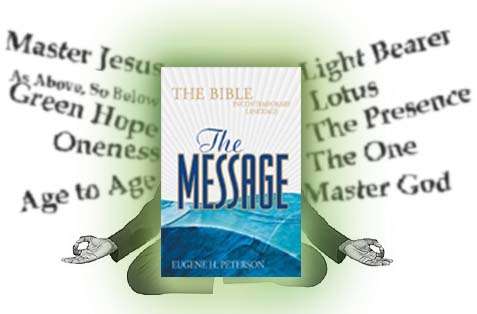

The Emergent Church Movemment – Part 1
THE EMERGENT CHURCH MOVEMENT – Part One:
THE METHODS USED BY ONE OF ITS PRIMARY LEADERS
by Richard Bennett
The Emergent Church Markets Catholicism
Not since the Jesus Movement of the early 1970s has a Christian phenomenon been so closely entangled with the self-conscious cutting edge of U.S. culture. Frequently urban, disproportionately young, overwhelmingly white, and very new–few have been in existence for more than five years–a growing number of churches are joining the ranks of the “emerging church.”
Thus declared Christianity Today in its article, “The Emergent Mystique”.1 While this new movement is permeating modern Evangelical circles in the Western world, few seem to understand its essential modus operandi. Careful analysis shows it to be a theory that repudiates any single defining source for truth and reality beyond the individual.
Emergent Church in its larger context
The Emergent Church movement did not start and does not operate in a vacuum. Hence to evaluate its function in the larger context, it is essential to understand that thirty-five years ago, the Roman Catholic Church published its non-negotiable agenda on ecumenism in its Post Vatican Council II documents. A crucial passage states,
“…ecumenical dialogue is not limited to an academic or purely conceptual level, but striving for a more complete communion between the Christian communities [churches], a common service on the Gospel and closer collaboration on the level of thought and action, it serves to transform modes of thought and behavior and the daily life of those communities. In this way, it aims at preparing the way for their unity of faith in the bosom of a Church one and visible: thus ‘little by little’, as the obstacles to perfect ecclesial communion are overcome, all Christians will be gathered, in a common celebration of the Eucharist, into that unity of the one and only Church which Christ bestowed on his Church from the beginning. This unity, we believe, dwells in the Catholic Church as something she can never lose…”2
Thus rather than looking for unity based on truth, the Papacy, as ever, is seeking to secure visible outward conformity through the compromise of others.This is the larger context into which the Emergent Church is set.
A man for the ecumenical season
Brian McLaren is the pastor of the non-denominational church he founded in the late 1980’s and a leading spokesman for Emergent-US, a dominant group within the Emerging Church movement. As such, he is a prime example of the success of the Catholic ecumenical agenda, a fact is well demonstrated by the strategy of this particular leader. McLaren’s website bio states that he obtained both a B.A. and an M.A. in English from the University of Maryland. He has had no formal degree from any seminary, other than an honorary Doctor of Divinity from Carey Theological Seminary in Vancouver, BC, Canada in 2004. His academic interests, listed as including “Medieval drama, Romantic poets, modern philosophical literature, and the novels of [Roman Catholic] Dr. Walker Percy”, have fitted him well for the task at hand.
Leaning heavily on Roman Catholic writers, particularly G. K. Chesterton and his book, Orthodoxy3, McLaren has written a book entitled A Generous Orthodoxy. Here he moves beyond Chesterton’s censure of Calvinism and sponsorship of mysticism to present what he thinks is a whole new method of knowing Christian truth, i.e., through Eastern mysticism. But to sell this mindset to the Protestants with their memory verses intact and their Bibles in hand, his approach to them is pitched on a strongly subjective level. This subtle tactic is part of the methodology of ecumenism spelled out in 1970 in Post Vatican Council II documents.
Bitterness against his heritage
At the outset, McLaren classes his book as “confessional”, which gives him latitude to express his opinions without the necessity to give any formal argument.4 Indeed, he states, “you should know that I am horribly unfair in this book, lacking all scholarly objectivity and evenhandedness.” Excusing himself on the basis of his heritage, he goes on, “I am far harder on conservative Protestant Christians who share that heritage than I am on anyone else. I’m sorry. I am consistently over sympathetic to Roman Catholics, Eastern Orthodox, even dreaded liberals, while I keep elbowing my conservative brethren in the ribs in a most annoying–some would say ungenerous–way. I cannot even pretend to be objective or fair.”5 Here the author shows by his own admission what amounts to bitterness against his conservative Protestant heritage and the personal context out of which A Generous Orthodoxy arises. While this same book is being hailed by many admirers as the “manifesto” or public declaration of the Emergent Church movement, the larger context in which it is set is the ecumenical movement of the Roman Catholic Church–as the Papacy moves to regain the loss of her political empire, i.e., the Holy Roman Empire, which loss she suffered at the hand of the Reformation three and a half centuries ago. Since the Papacy thinks in terms of centuries6 rather than decades, it is not too much to think that among Protestants, Brian McLaren (and Rick Warren as well) could be very useful to the larger papal cause.
McLaren says his book is addressed primarily to those who are ready to give up Christianity altogether, but encourages them not to do so. The basis on which he encourages them, however, first involves insulting the conservative Protestants’ and Pentecostals’ view of Jesus with their insistence on individual salvation or “a personal savior”. He then points them approvingly to his definition of the Roman Catholic “Jesus”, including the Liberation Theology “Jesus” and liberal Protestant “Jesuses”.
Next, McLaren is bold enough to re-define the Holy God. He does this by making a distinction between “God A” and “God B” via the present gender pronoun dispute. He writes,
“Think of the kind of universe you would expect if God A created it: a universe of dominance, control, limitation, submission, uniformity, coercion. Think of the kind of universe you would expect if God B created it: a universe of interdependence, relationship, possibility, responsibility, becoming, novelty, mutuality, freedom.” (p. 76)
By this fictitious contrast he entices his readers to choose between two highly subjective conceptions of a god of his own imagination. That done, he has set his standard of truth, which is not the inerrant Word of God, but rather his own current theory.
Harmful, offensive tactics disclosed
McLaren also informs the reader that, “as in most of my other books…I have gone out of my way to be provocative, mischievous, and unclear, reflecting my belief that clarity is sometimes overrated.”7 Further, he fully intends that “shock, obscurity, playfulness, and intrigue”8 are all to be a part of the style of his book. His tone is also highly reflective of Roman Catholic Chesterton’s own style. The springboard of permissive subjectivity laid, McLaren demonstrates his understanding of Christianity in the major section of his book, “The Kind of Christian I Am”. He claims to be many kinds of Christian simultaneously.
His method is usually to launch his bitterness against conservative Protestants by carefully assigning a major focus of his own choosing to that particular group and then redefining whatever words or terms delineate the target group. Under the new definition, which usually is nearly totally opposite of the original definition, he then declares himself to be one of that group, as “Fundamentalist/Calvinist”, “Methodist”, “evangelical”, “Charismatic/Contemplative”, “Liberal/Conservative”, “catholic”, “green”, “biblical”, “(Ana)baptist/Anglican”, “Mystical/Poetic”, “incarnational”, “missional”, etc. An instance of his tactic is when he defines Calvinists by their acrostic TULIP, which he clearly detests. Using the same letters, he makes a parody of the acrostic–which totally redefines it in a way antithetical to what TULIP commonly means–and on the sole basis of his redefinition calls himself a Calvinist.
Another group he dislikes are the Fundamentalists, or “fighting fundies”, from whom he says he will take the term, “fighting”. He now claims that this word is his legitimate heritage from them, and therefore he can “fight” for his own cause under the name of Fundamentalist–although what he is fighting for is directly opposed to Fundamentalists. Hence he has defined himself as a “Fundamentalist/Calvinist”, but what he means by those terms is totally different from what is commonly meant by them. In this way, he shows how his unbiblical method deliberately foments confusion and division. By contrast, however, he does not basically re-define the terms of the groups he likes, such as the liberal Protestants, Catholics, mystics, and environmentalists, all of which he also claims to be, except Roman Catholic. There is good reason for this: he claims to be “Post/Protestant”, retaining then in the larger ecumenical debate the legitimacy of his heritage to protest–but not to protest Roman Catholicism, as classically the term Protestant has meant in its historical context, but rather to protest against the conservative Protestants of his own day. It should be noted that his chief sources of authority in nearly every chapter are Roman Catholic, particularly G. K. Chesterton.
Relative and qualified compromise
Although McLaren denies that he is a relativist, his explanations give him away. He states,
“How do you know if something is true?…First, you engage in spiritual practices like prayer, Bible reading, forgiveness, and service. Then you see what happens; you remain open to experience. Finally, you report your experience to others in the field of spirituality for their discernment, to see if they confirm your findings or not.”9
In another place, McLaren redefines theology. He does this by drawing heavily from Vincent Donovan, a Roman Catholic missionary priest. Donovan came to the conclusion that “praxis [practice] must be prior to theology” and that his theology would be derived from his theory that was derived out of his experience with pagans.10 McLaren enlarges Donovan’s (and others’) definition to “rather than seeing missiology (the study of missions) within theology, theology is actually a discipline within Christian mission. Theology is the church on a mission reflecting on its message, its identity, its meaning.”11 McLaren has thus redefined theology. In short, McLaren says that mission defines theology rather than theology defines mission. His standard is pragmatism, or “what works”, rather than the absolute authority of Scripture. The Lord Jesus Christ Himself said, “The scripture cannot be broken.”12 “Is not my word like as a fire? saith the Lord; and like a hammer that breaketh the rock in pieces?”13 McLaren’s assertion that theology is actually a discipline within Christian mission is an utter denial of absolute truth as it is revealed in Scripture. Like the existentialists before him, McLaren has clearly denied biblical faith.
Adding fuel to his relativism
McLaren also shows that he is denying biblical authority when he states, “The earliest Protestants [meaning those of the Reformation of the sixteenth century] transferred the fulcrum or center of authority from the church to the Bible (which the…invention of an improved press facilitated greatly). But the Bible requires human interpretation, which was a problem…”14. Here McLaren totally ignores the fact that Scripture is to be interpreted by Scripture, as Psalm 36:9 explains, “for with thee is the fountain of life: in thy light shall we see light.” God’s truth is seen in the light of God’s truth, “Which things also we speak, not in the words which man’s wisdom teacheth, but which the Holy Ghost teacheth; comparing spiritual things with spiritual.”15
Having left Scriptural truth behind, McLaren now lays the groundwork for his theory by which he hopes, in the words of Vatican Council II, to remove one of “the obstacles to ecclesial communion”. His theory is that both Conservative and Liberal Protestants have trouble accepting the authority of the Bible in the “post-evangelical” or “post-modern” or “post-liberal” world in which their civil, political views are based in their religious convictions, causing a polarization between them. Of this, he says, both groups must repent because “[both] having survived in different ways the rough waters of modernity, they are now facing a new challenge: working together to save the village which we call planet Earth.”16 His own religion-based solution to what he casts as a civil and political problem that liberal and conservative Protestants have made is to say that times have changed and it is now necessary to change the norm of biblical interpretation accordingly. This is most interesting, since this is the same modus operandi as Papal Rome. In the beginning of her latest Catechism, the Vatican states, “Read the Scripture within the ‘living Tradition of the whole Church.'”17 Then Rome goes so far as to reprimand those who stray because she states there is “…the tendency to read and to interpret Sacred Scripture outside the Tradition and Magisterium of the Church.”18 McLaren is in the early stages of presenting the same protocol as Papal Rome. But then, Rome said that the induction of Protestant churches was to be “little by little” as their thinking was changed by dialogue with Catholics.
McLaren Reshapes History
In trying to lump liberals and conservatives together, McLaren also shows his prejudice against Evangelicalism by strongly insinuating that the Reformation of the sixteenth century was the beginning of believers placing their trust in the written Word of God.19 He is wrong about this, as the history of the Vaudois, Albigenses, and Waldenses show. His point is that there is a shift today away from the emphasis on the authority of the Bible (he leaves out the word “alone”), just as in the time of the Reformation there was a shift away from the authority of the Roman Catholic Church to the Bible. His attack on Martin Luther is to show him only as an individualist who would not bow to Catholic authority–but that is not why Martin Luther is important in church history. He states that in the context of “Martin Luther’s famous individualistic statement, uttered before the Catholic authorities with whom he disagreed, expresses this shift perfectly: Here I stand. That sentence might be understood as the first statement uttered in the modern world.”20 Here McLaren uses historical fact to chip away at individual salvation, which will dovetail nicely into his argument for emphasis on universal salvation. He totally neglects the content of Martin Luther’s historic position–which was to stand for justification by faith alone based in the authority of the Bible alone. In this way, he is able to use Martin Luther as simply a man of another time, not relevant for today because that time, which he calls modern, is now over. What he has failed to comprehend is that the biblical truth that justification is by faith alone is timeless. But McLaren’s opinion falls directly in line with the 1999 concordat between the Roman Catholic Church and the German Lutheran Federation in which it was declared that Lutherans and Catholics now agree on the issue of justification by faith alone and that the Reformation was a mistake.
McLaren mum on the Inquisition
What McLaren never tells is that the authority of the Roman Papacy was not well established until near the end of the eleventh century, when by crusades and the Inquisition, the Papacy by coercion forced people to submit to her ecclesiastical dictates. Many refused. Uncountable millions were robbed, tortured, and martyred because they held to the authority of the Bible in those bloody centuries and refused to accept Roman Catholic doctrines and traditions. At one point, McLaren admits that he is being unfair in his presentation of English history, but he does not apologize or correct his illicit revision of historical fact.
Nor does McLaren mention that it was the Papacy that locked away the Bible from the common people during the Middle Ages with their version in Latin, which only the clergy could have.21 Nevertheless, it is a well established historical fact that even in the fourth century, the bishops of Milan of Northern Italy were in no way subject to the bishops of Rome. The historical record shows that they used the Bible alone as their authority, having only two sacraments, baptism and communion, prayed to God alone, and allowed no images of the Deity. 22 The Vaudois of the Cottian Alps in that same area were by the ninth century known for their apostolic faith in the Bible alone, as Claude, bishop of Turin makes clear. The tenants of these ancient churches of the Alps were well demonstrated by their faith and practice to be essentially the same as those proclaimed by the Reformers of the sixteenth century. The same is true of the Albigenses, against whom the Papacy sent its first domestic crusade in the twelfth century. Thomas M’Crie gives an amazingly similar report of historical facts regarding the pre-Reformation believers in Spain in the sixth century. 23 The historical facts show that from early on the Church of Rome was the schismatic. It remains the same today. Her corruptions-become-traditions, spread by the Papacy during the centuries of the Holy Roman Empire, are now flowering in that same Papacy’s new tactic of “ecumenical outreach”. It is an entirely logical development that the open welcome of Eastern mysticism by Vatican Council II24 into this four-hundred-fifty year old apostate system25 should transfer a yet more potent strain of mysticism through her ecumenical outreach to those who have not received a love of the truth.
McLaren plays by Vatican Council II rules
In adopting this all inclusive format, McLaren is certainly playing by the rules for dialogue laid out by Vatican Council II, which states, “Each partner [in the dialogue] should seek to expound the doctrine of his own community in a constructive manner, putting aside the tendency to define by opposition, which generally results in certain positions becoming overstressed or unduly hardened.”26 “The partners [in the dialogue] will work together towards a constructive synthesis, in such a way that every legitimate contribution is made use of, in a joint research aimed at the complete assimilation of the revealed datum.”27 McLaren is well versed in Catholic literature. In this book, the approach to his subject of dealing with conservative Protestantism is a pristine demonstration that he has successfully assimilated Vatican Council II methodology and doctrine. Rather than defining by opposition, as Bible based public discussion would require, McLaren has followed the Vatican II tactic of presenting subjective opinion in a subtle attempt to pervert biblical authority and historical fact through fictitious contrast, revisionist history, and “constructive synthesis”. He has redefined commonly understood Protestant terminology in order to claim his compromises of truth as a “legitimate contribution” that Vatican II dialogue requires of its participants. These Catholic dialogue parameters, which are the working orders of the larger context in which the Emergent Church is set, work well for both the Catholic Church and McLaren because they sow confusion and discord among believers and unbelievers alike. The Papacy is most likely the bigger winner, for McLaren will be gone in a few decades, but the walls of doctrinal separation between the Catholics and the Protestant world will have been further damaged through McLaren’s assistance. And McLaren for his part, fueled by bitterness and informed and protected under the rules of the larger context agenda, is able to implement his own goal of moving the religious global village toward a new knowledge of God through mysticism. In Part II and III we will explore these things in more detail. McLaren claims to be a true prophet by bringing in his new ideas of emergent thinking.28 The infallible Spirit of God through the Apostle Paul warned Christians about “grievous wolves…not sparing the flock.”29
Christ Jesus said, “Ye shall know them by their fruits. Do men gather grapes of thorns, or figs of thistles?”30 Good spiritual fruit shows the nature of the doctrines that have been taught. The Holy Spirit produces spiritual fruits in those who are truly born again. There are fruits of repentance, personal faith, and deep fellowship with God and His people. New birth bears fruit in an awareness of God’s absolute Holiness, and in awareness of the exceeding sinfulness of sin. When Christ Jesus saves a person, He saves from hell and the power of sin. The Lord also delivers the true believer from the dominion of Satan and from the love of and the ways of the world. When we see in a person neither the conviction of sin, nor the fear of God, but rather both a love for the world and it methods, we “know them by their fruits”. Thus it is with McLaren. Not only do his tactics, methods, relativism and rewriting of history reveal whom he is following, but also we see much more is he revealed by what his message is missing. The Holiness of God, the conviction of sin, the fear of God, and the Gospel message are major parts of what is missing from A Generous Orthodoxy. Rather than compromise these precious tenants of the faith, the believer is to separate from those who promote such heresy by “earnestly contend[ing] for the faith which was once delivered unto the saints.”
Part Two: The Rejection of the Gospel and Authority of Scripture
Part Three: The Promotion of Eastern Mysticism and the Catholic Connection
Footnotes
1 http://www.christianitytoday.com/ct/2004/011/12.36.html 1/18/06
2 Vatican Council II Document No. 42, “Reflections and Suggestions Concerning Ecumenical Dialogue”, S.P.U.C., 15 Aug 1970, in Vatican Council II: The Conciliar and Post Conciliar Documents, Austin Flannery, ed., New Rev. Ed., Vol. I, Sec. II, pp. 540
541.
3 G. K. Chesterton (1874-1936) has been very influential in literature of the twentieth century. His book, Orthodoxy, is considered by many to be the centerpiece of his writings. McLaren’s work largely reflects both the content and style of Chesterton, who was staunchly Roman Catholic and who is aggressively promoted on the Internet and elsewhere by Catholics.
4 John Henry Cardinal Newman in the nineteenth century did the same thing in his well-known treatise, Apologia pro Vita Sua, in which he presented his arguments in the form of a testimonial. Newman started out as an Anglican prelate who wanted to become a Catholic, but in 1844 was persuaded by the Papacy to remain an Anglican. From his position, inside the Anglican Church, he was to use all his influence and power to move the Church of England back into the Roman Catholic fold. It has proven to be a very effective strategy. See Walter Walsh, The Secret History of the Oxford Movement (Swan Sonnenschein & Co.,: London, 1898).
5 Brian McLaren, A Generous Orthodoxy (Grand Rapids, MI: Zondervan, 2004) p. 35 Emphasis in original.
6 A primary example of one of the Papacy’s long range plans has been its Oxford movement to reclaim England from Henry VIII’s defection in the sixteenth century. Papal plans were put in motion in 1844, using John Henry Newman as their point man within the Church of England for the express goal of subverting that body to Catholicism and thereby regain England as a Catholic country. The group Newman succeeded in establishing within the Church of England became known as Anglo-Catholics, to which belonged the famous Wescott and Hort. That movement is still progressing, although not now known by the same name.
Another example is the Papacy’s snaring of the German Lutheran Federation in a concordat signed October 31, 1999 in Augsburg, Germany. Four hundred forty-four years prior to this signing was the signing of the Treaty of Augsburg (September 25, 1555) in which Germany ratified the Peace of Passau of 1552. This completely established the Reformation by confirming the Protestant Churches of Germany in all their rights and possessions, making them entirely independent of the Pope. The basic issue was justification by faith alone, which Martin Luther had so clearly published on October 31, 1517. The basic issue of the 1999 concordat was the same issue but in 1999 it was declared that the Reformation was a mistake and that the Lutherans and Catholics now believe the same on justification. Nothing could be further from the truth; but after thirty years of dialogue with the Roman Catholics, the Lutherans compromised their historic stand for the biblical truth. The October 31st 1999 concordat, which overturned Martin Luther’s historic stand of October 31, 1517, was signed in Augsburg, the same place where the Treaty of Augsburg, declaring liberty of worship for Protestants, had been signed in 1555. In light of these historical facts, the significance of dates and places is hard to miss.
7 McLaren, pp. 22-23
8 Ibid.
9 McLaren, p. 199 Emphasis in original.
10 McLaren, p. 92
11 McLaren p 105
12 John 10:35
13 Jeremiah 23:29
14 McLaren, p 133.
15 I Corinthians 2:13
16 McLaren, p. 143
17 Catechism of the Catholic Church (1994), Para. 113 Emphasis in original.
18 “DOMINUS IESUS” September 5th 2000 http://www.vatican.va/roman_curia/congregations/ cfaith/documents/rc_con_cfaith_doc_20000806_dominus-iesus_en.html
19 McLaren, p. 133.
20 McLaren, p. 132, 133
21 Thomas M’Crie recounts that in the sixteenth century in Spain, Archbishop Fernando de Talavera wanted to translate the Bible into Arabic in order to win the Moors to Christ. Cardinal Ximenes, who carried enormous influence with the Spanish government, was strenuously opposed to this because in his opinion to do so was to throw pearls before swine. Therefore, his solution was that “the sacred scriptures ought to be exclusively preserved in the three languages in which the inscription on our Saviour’s cross was written. …This opinion, of Rome, that ignorance is the mother of devotion, has met with the warm approbation of his biographer.” Further, of the vulgar or common people, the cardinal was of the opinion that “they were in danger of wresting the Scripture to their destruction…Therefore, the books which the Cardinal had promised as a substitute for the Gospels and Epistles made their appearance, consisting of treatises of mystic or rather monastic devotion, and the lives of some of its most high-flying zealots, both male and female.” Thomas M’Crie, History of the Progress and Suppression of the Reformation in Spain in the Sixteenth Century (Edinburgh: Wm Blackwood; & London: T. Cadell, 1824) Reprinted by Hartland Publications, 1998; pp. 46-47
22 Peter Allix, The Ecclesiastical History of the Ancient Churches of Piedmont and of the Albigenses (1619, 1690, 1692, 1821) Reprinted by Church History Research & Archives (CHRA), 1989. Ch. III, IV. See also Jean Paul Perrin, History of the Ancient Christians Inhabiting the Valleys of the Alps (Philadelphia: Griffith & Simon, 1847). Reprinted by CHRA, 1991. Perrin, a Waldensian pastor from whom Allix got his information, attended a very important meeting which drew up six articles condemning the church of Rome as the whore in the book of Revelation and clearing the Albigenses and Waldenses of the charges of Manicheanism.
23 M’Crie, Ch. I & II.
24 Vatican Council II, Nostra Aetate, “Declaration on the Relation of the Church to Non-Christian Religions”, Para. 2.
25 Council of Trent, Session XI, Jan. 13, 1547, “If anyone shall say that justifying faith is nothing else than confidence in the divine mercy which remits sins for Christ’s sake, or that it is this confidence alone by which we are justified: let him be anathema [cursed].” Henry Denzinger, The Sources of Catholic Dogma, Tr. by Roy J Deferrari from Enchiridion Symbolorum, 13th ed. (B. Herder Book Co., 1957) #822, Canon 12.
26 Vatican Council II Document No. 42, V. Method of Dialogue, (b), p. 548, in Flannery
27 Ibid., (c), p. 548
28 McLaren, p. 285
29 Acts 20:29
30 Matthew 7:16
Permission is given by the author to copy this article if it is done in its entirety without any changes. Richard Bennett, Berean Beacon. The ministry’s Internet web page address is: www.bereanbeacon.org
The Emergent Church Movement – Part 2
THE EMERGENT CHURCH MOVEMENT – Part Two:
THE REJECTION OF THE GOSPEL AND AUTHORITY OF SCRIPTURE
by Richard Bennett
Leader of Emergent Church Movement Embraces Mysticism
The Emerging Church movement has hailed as its “manifesto” Brian McLaren’s book, A Generous Orthodoxy. In it, McLaren explains that the genesis and title of the Emergent Church movement takes its model from the growth of a tree,
“The meaning of emergent as used in these and other settings is an essential part of the ecosystem of generous orthodoxy. A simple diagram can illustrate what we mean by emergent thinking…Each ring [of a tree] represents not a replacement of the previous rings, not a rejection of them but an embracing of them, a comprising of them and inclusion of them in something bigger…[likewise] some thought seeks to embrace what has come before–like a new ring on a tree–in something bigger. This is emergent (or integral, or integrative) thinking. Emergent thinking has been an unspoken assumption behind all my previous books….”1
While this definition gives an excellent picture of McLaren’s modus operandi, it also is the Hegelian dialectic idea2 in a different format. Such change does not describe the biblical pattern of growth that the believer experiences. The biblical pattern requires a putting away of worldly thinking and an adherence to thinking in line with the Bible, which produces godly understanding and behavior.
McLaren further states, “This God-given thirst for emergence…is causing new forms of Christian spirituality, community, and mission to emerge from modern Western Christianity…a generous orthodoxy is an emerging orthodoxy, never complete until we arrive at our final home in God.”3 Contrary to what McLaren states, new forms of Christianity are not developing. Rather, he is inserting new definitions into the classical terminology so that the words suddenly do not mean what they used to mean, thus intentionally confusing people. McLaren has stated that he was going to use devices that confuse because he thinks, “clarity is sometimes overrated.”4
McLaren is at no loss to demonstrate how his “emergent thinking” works. The object of his book is to lump all Protestants and Catholics together, which would be the new ring around the Protestant Catholic split, and to move beyond that5 into Eastern mysticism, which would be the new ring around Catholicism.
The “Solas”–the basic biblical principles utterly denied In order to accomplish his first step of lumping Protestants and Catholics together, McLaren has to redefine the Lord Jesus Christ, Holy God, biblical authority, theology, salvation, and conservative Protestant denominational distinctives. However, after the example of the Lord and the Apostles, true believers adhere to God’s written Word alone as the final authority–Sola Scriptura.6 Before the all-holy God, according to the Bible, an individual is saved by grace alone– Sola Gratia,7 through faith alone–Sola Fide,8 in Christ alone–Solo Christo.9 Following on this, all glory and praise is to God alone–Soli Deo Gloria.10 These five biblical principles, called “the solas,” are the foundation of true faith in the Lord. They are founded on Scripture, existed in the early Church, and have been the basis of all genuine biblical revivals since then. The solas were the foundational principles for which so many thousands of Evangelicals gave their lives at the stake–John Huss, William Tyndale, John Rogers, Hugh Latimer, Nicholas Ridley, Anne Askew, John Bradford, and John Philpot, to name but a few–and for which millions were martyred under various tortures during six hundred years of papal Inquisition. Nevertheless, McLaren makes it very clear that conservative Protestants will have to compromise these basic biblical principles for the sake of community; otherwise they cannot be part of his “generous orthodoxy”. According to McLaren, what we have just outlined in the solas must be discarded. Thus, he proclaims, “Calvinists in particular and fundamentalists in general” are to give up their “solas” or “alones” as distinctives because the word sola is not in the Bible.11 What he is telling the Bible believers is that they must renounce the five basic biblical principles–principles that were the distinctives, principles that separated the Reformers from the Roman Catholic Church. Hence, although McLaren has assured his readers that “emergent thinking” does not reject any of the thinking that has preceded it, yet when he applies his method, his words of assurance turn out to be of no value whatsoever.
On the most fundamental of these distinctives McLaren states, “Scripture is something God had ‘let be,’ and so it is at once God’s creation and the creation of the dozens of people and communities and cultures who produced it.”12 In this, as in most of his teaching, McLaren is in line with the Church of Rome. While Papal Rome does not say these words, she embodies the same concept when she states, “[Holy] Tradition transmits in its entirety the Word of God….”13 McLaren has clearly paralleled the Catholic line in attempting to equate man’s creativity on a par with God’s. The Scripture itself teaches something totally different, “…holy men of God spake as they were moved by the Holy Ghost”.14 The Bible alone is the Word of God revealed to men as the Holy Spirit moved them. According to the Apostle Paul, “All scripture is given by inspiration of God….15 It is not as McLaren would have one believe–“the creation of the dozens of people and communities and cultures.” It is especially serious to undermine the authorship of God’s written Word. Such belittling of the authority of the written Word prevents a person from coming to knowledge of the truth and embracing it as it is in Christ Jesus. This means that McLaren’s teaching is literally soul damning because it has “taken away the key of knowledge.”16
History fabricated to meet desired ends
McLaren also lies about historical facts in order to be able to present an integrated (emergent) picture of Protestants and Catholics on the same issue. He states, “The Christian community at its best through history has always had a deep feeling and understanding for this integrated dual origin of the Scriptures…the Christian community in its Catholic, Protestant, and Orthodox forms has sought to hold on to both dimensions of the origin of Scripture…to hold them together as friends, as partners, as colleagues.”17 In history, true Bible believers never bowed to the man-made notion of a “dual origin” of the Scripture. They held to the Scripture as God’s revelation alone. Many were burned at the stake for it. McLaren’s “friends, partners, and colleagues” of the Bible is nothing but a re-statement of the Roman Catholic notion that “Holy Scripture and Holy Tradition are bound closely together and communicate with one another.”18 The Catholic statement and McLaren’s statement on the “integrated dual origin of the Scriptures” are in essence the same. Both are outright lies. To put away truth for these fabrications–not only of doctrinal distinctives but also of the facts of history–is what the “generous orthodoxy” requires. This is nothing new. It is simply the traditional teaching of Papal Rome using other words.
Denying the Gospel
McLaren absolutely denies the Gospel when, for example, he states,
“Perhaps our ‘inward-turned, individual-salvation-oriented, un-adapted Christianity’ is a colossal and tragic misunderstanding, and perhaps we need to listen again for the true song of salvation, which is ‘good news to all creation.’ So perhaps it’s best to suspend what, if anything, you ‘know’ about what it means to call Jesus ‘Savior’ and to give the matter of salvation some fresh attention. Let’s start simply. In the Bible, save means ‘rescue’ or ‘heal’. It emphatically does not mean ‘save from hell’ or ‘give eternal life after death,’ as many preachers seem to imply in sermon after sermon. Rather its meaning varies from passage to passage, but in general, in any context, save means ‘get out of trouble.’ The trouble could be sickness, war, political intrigue, oppression, poverty, imprisonment, or any kind of danger or evil.”19
Contrary to McLaren, Christ Jesus proclaimed, “I will forewarn you whom ye shall fear: Fear him, which after he hath killed hath power to cast into hell; yea, I say unto you, Fear him.”20The Lord Himself summarized the Gospel when He said, “He that believeth on the Son hath everlasting life: and he that believeth not the Son shall not see life; but the wrath of God abideth on him.”21 The contrast is stark; the one who personally believes on the Son has everlasting life. The one who denies personal salvation is not only under the wrath of God, which is surely the soul’s death, but God’s wrath abides on him. McLaren has formally denied the faith. He and his followers have fulfilled the Word spoken of Scripture, that they “being ignorant of God’s righteousness, and going about to establish their own righteousness, have not submitted themselves unto the righteousness of God.”22 One can see McLaren’s heresy in other pastors and authors in the Emerging Church movement, such as Alan Jones. McLaren has endorsed Jones’ book, Re-imagining Christianity: Reconnect Your Spirit without Disconnecting Your Mind. Alan Jones, like McLaren, rejects what is central and pivotal to the Gospel message. Jones brazenly declares, “The Church’s fixation on the death of Jesus as the universal saving act must end, and the place of the cross must be reimagined in Christian faith. Why? Because of the cult of suffering and the vindictive God behind it.”23Jones goes on to say, “Penal substitution was the name of this vile doctrine.”24
As we saw above, the Lord declared, “He that believeth not the Son shall not see life; but the wrath of God abideth on him.”25 If McLaren and others, such as Alan Jones, continue to deny personal biblical salvation then they shall neither enjoy true life or happiness here nor in the world to come. Rather, they are now under the wrath of God’s condemnation. As there is no way of escaping the wrath of God but by the Lord Jesus Christ, those who will not personally trust and believe in Christ’s penal substitution in his or her place must go to eternity under the wrath of God and be cast, “into outer darkness; there shall be weeping and gnashing of teeth.”26 Such is the miserable condition of those who accept such teaching, i.e., denying personal salvation, which we have documented.
McLaren, however, is not concerned with hell because, he says,
“Isn’t hell such a grave ‘bottom line’ that it devalues all other values? It so emphasizes the importance of life after death that it can unintentionally trivialize life before death. No wonder many people feel that ‘accepting Jesus as a personal Savior’ could make them a worse person–more self-centered and less concerned about justice on earth because of a preoccupation with forgiveness in heaven. Again, although I believe in Jesus as my personal savior, I am not a Christian for that reason. I am a Christian because I believe that Jesus is the Savior of the whole world.”27
In the above statement McLaren does what countless others have done before him. He remakes Jesus into a social justice mascot. “Accepting Jesus as a personal Savior” for him is not focused on “forgiveness” but rather on “justice on earth.” The Lord Himself spoke about sin before God, and He was not an advocate of “justice on earth!” He taught that “…whosoever committeth sin is the servant of sin… if the Son therefore shall make you free, ye shall be free indeed.”28 In this passage, the Lord showed that He was not referring to political bondage but to a person’s slavery to evil passions and desires. The Lord’s message is about the bondage to sin and of the spiritual liberty that He brings. Christ Jesus’ message is “…except ye repent, ye shall all likewise perish.”29 It never was a call for “justice on earth.” It is interesting that the Catholic priests, Leonardo and Clodovis Boff, would agree with McLaren as they wrote, “Liberation theology was born when faith confronted the injustice done to the poor.”30 Let it be clearly and emphatically stated: if Christ Jesus does not save a person spiritually, that person’s case is desperate, and he will die in his sins. McLaren’s profession, “I am a Christian because I believe that Jesus is the Savior of the whole world,” suggests that the whole world makes up the kingdom of God. Unless his profession is interpreted in the sense of personal repentance and salvation from sin, which he denies, McLaren’s personal salvation is a socialized reduction of the Gospel message.
The true message is the clarion call of the Lord, “For God so loved the world, that he gave his only begotten Son, that whosoever believeth in him should not perish, but have everlasting life.”31 The Lord’s message will always be “everlasting life,” notwithstanding a thousand McLarens who try to reduce His teaching into pragmatism, i.e., “concerned about justice on earth.” McLaren needs the light of the biblical solas to draw him out from his efforts to demolish the Christian faith; but he has rather turned aside into a still darker haunt, Eastern mysticism.
The Mystic Poet
To move into mysticism, McLaren has yet another hindrance–the preaching of the Gospel and Bible truth in terms of methodical exegesis of Scripture, propositional knowledge, and systematic theology. To destroy these objective methods of preaching and teaching is necessary because mysticism is the attempt to have direct, subjective communication with Holy God, thereby taking to one’s self the role of mediator. The Bible states clearly, however, that this role is given to the Lord Jesus Christ alone–“For… there is one mediator between God and men, the man Christ Jesus.”32
McLaren, in his chapter entitled “Why I Am Mystical/Poetic,” never formally defines what a mystic is nor quotes anybody who does. Rather, he sets up a false dialectic. McLaren writes, “This mystical/poetic approach takes special pains to remember that the Bible itself contains precious little expository prose. Rather it is story laced with parable, poem interwoven with vision, dream, opera…personal letter and public song, all thrown together with an undomesticated and unedited artistic passion.”33 For him, to preach the Gospel and Bible truth in terms that primarily address the mind is to reduce it to something scientific, mechanical, and dead. His idea is that preaching needs to be done by poets who address the emotions primarily, the direct opposite of addressing the mind. He quotes Walter Brueggemann, “Poetic speech is the only proclamation worth doing in a situation of reductionism, the only proclamation, I submit, that is worthy of the name preaching.”34 McLaren’s immediate comment on Brueggemann is this, “This non-prose world…is the world entered by the mystic, the contemplative, the visionary, the prophet, the poet.” His insinuation is that men of reason and logical thinking have not under stood or used poetry at all. This suggestion is patently false. Having thus created a false distinction, he now is ready for a synthesis between the two, which allows for direct communication with God. He says, “There long have been Christian traditions recognizing the profound importance of mysticism and poetry, and the corresponding limitations of rationality and prose, including the via negative–the negative way–and the hesychastic tradition, which discovers God in silence. Both traditions remind us of the limitations of language when talking about God….”35 The hesychastic tradition36 is the synthesis, or the “emergent” circle around McLaren’s misleading distinctions regarding addressing mind and emotion. Having thus been able to insert into his argument the “larger” or “emergent” idea of discovering God in silence, an Eastern monastic idea, he concludes,
“A generous orthodoxy, in contrast to the tense, narrow, controlling, or critical orthodoxies of so much of Christian history, doesn’t take itself too seriously. It is humble; it doesn’t claim too much…It doesn’t consider orthodoxy the exclusive domain of prose scholars (theologians) alone, but, like Chesterton, welcomes the poets, the mystics, and even those who choose to say very little or to remain silent, including the disillusioned and the doubters. Their silence speaks eloquently of the majesty of God that goes beyond all human articulation.”37
With this, he has set the stage for mysticism and buttresses his new position by praising Ignatius of Loyola, the mystical founder of the Jesuit order and originator of the counter-Reformation–a man who died an unbeliever.38
By “emergent thinking” (the Hegelian dialectical method), McLaren has worked his argument from objective teaching to mysticism and cited Ignatius of Loyola as an example that mysticism is acceptable in the West. McLaren explains, in some detail, one of his own mystical experiences with God.
“For a period of about 20 minutes, I felt that every tree, every blade of grass, and every pool of water become especially eloquent with God’s grandeur…These specific, concrete things became translucent in the sense that a powerful, indescribably, invisible light seemed to shine through. The beauty of the creations around me…seemed…to explode, seemed to detonate, seemed to radiate with glory. An ecstasy overcame me that I can’t describe. It brings tears to my eyes as I sit here and type. It was the exuberant joy of simply seeing these masterpieces of God’s creation…and knowing myself to be among them. It was to be one of them, and to feel and know that ‘we’–all of these creatures, molecules, and phenomena–were together known and loved by God, who embraced us all into the ultimate ‘We.'”39
This man’s darkness is a heart breaker. He is stating that through this mystical experience he has been brought into the ultimate “We.” It cannot be so. God is holy, totally “other” than His creation. There is no direct communication between God and man. The Lord Jesus Christ is the only mediator between God and men. McLaren is tragically wrong about his experience, totally deceived by “the light” that made him think he is part of God. Confusion of God with His creation has ever been the hallmark of Hinduism, Buddhism, and every other form of polytheism over the centuries.
The Culmination
Having reduced his idea of salvation from personal to universal, having reduced God from an All Holy God to his own notion of a mere loving god, and having redefined theology from the study of God to the study of man, McLaren has also invented a “salvation” that signifies “get out of trouble.” In all of his writing, his tactic for success is the Roman Catholic methodology of ecumenism. Behind the poetry and rhetoric of McLaren’s movement is heresy. McLaren’s paradigm is in the domain of apostasy, showing by its duplicity and falseness a withdrawal and defection from the Gospel of grace. Satan’s trick is always to promote leaders who think that they are truly Christian, while at the same time they proffer new unbiblical techniques for the glorious work of Christ Jesus. Ecumenical strategy, re-defining God, a fictitious contrast replacing the Word of truth, redefining theology, rewriting history, the utter denial of basic biblical principles, and the rejection of the Gospel are just a part of what McLaren proposes. This is the deed and work of antichrist. It is the sin of a so-called “spiritual” man. Unless present day Christians take the biblical warnings with radical seriousness and examine their own hearts and households, they can be deceived by this lethal scheme. Unless this generation of the Evangelical church takes seriously the Gospel, as the Lord and His Apostles spoke it, it will become more and more part of Papal Rome. The Church of Rome has already attempted to usurp Christ’s place and His prerogatives, and far from truly representing Him, she represents His greatest enemy. If peoples succumb to the Emerging Church movement, they will be surrendering to “…the working of Satan with all power and signs and lying wonders.”40 Nothing could possibly be more descriptive of the Papacy than this. It has been kept up by deception, delusion, and its pretended growth and success. Thus, we now see the growth and success of a movement that embodies much of the strategy and teaching of Papal Rome. Many of the subtle artifices of man and various pretences of the world are evident in the Emergent Church movement, yet like the Papacy it is remarkable in its propagation. What we see is patent apostasy making shipwreck of the faith. For us, however, it is to fear the All Holy God and obey His commandment and, “hold fast the form of sound words…in faith and love which is in Christ Jesus. “41 Steadfastness to the Gospel is of utmost necessity. It is dangerous when those who profess to be true Christians remain unaware of the attacks that are presently confronting the Gospel. Those who would strive for the faith of the Gospel must stand firm in it, aware of present dangers, and carry on unwavering in the hour of crisis. In the words of the Apostle, “…stand fast in one spirit, with one mind striving together for the faith of the gospel.”42
(In Part III, we will document the syncretistic Catholic mysticism in the Emergent Church movement.)
Part One: The Methods Used by One of Its Primary Leaders
Part Three: The Promotion of Eastern Mysticism and the Catholic Connection
Footnotes
1 Brian McLaren, A Generous Orthodoxy, (Grand Rapids, MI: Zondervan, 2004) pp. 276-278 Underlining in any quotation indicates emphasis in original text.
2 The Hegelian model starts with a thesis and then an antithesis is introduced. Finally, these two merge into a synthesis, which is a new thesis, and the whole process starts over. Marxism is based heavily on this model.
3 McLaren, pp. 284-285
4 “… places here where I have gone out of my way to be provocative, mischievous, and unclear, reflecting my belief that clarity is sometimes overrated.” McLaren, p. 23.
5 McLaren, p. 210
6 John 10:35,17:17, Proverbs 30:5-6, I Corinthians 4:6, II Timothy 3:15-17
7 Romans. 3:24, Ephesians 2:8, 9
8 Acts 16:31, Romans. 4:5, 5:1
9 Ephesians 1:3-14, I Timothy 2:5, Acts 4:12
10 I Corinthians 10: 31, Colossians 3:17
11 McLaren, p. 198
12 McLaren, p. 162
13 Catechism of the Catholic Church (1994) Para 81. Square brackets and italic in the original.
14 II Peter 1:20, 21
15 II Timothy 3:16, 17
16 Luke 11:52
17 McLaren, p. 162
18 Catechism, Para 80
19 McLaren, p. 93
20 Luke 12:5
21 John 3:36
22 Romans 10:3
23 Alan Jones, Reimagining Christianity: Reconnect Your Spirit without Disconnecting Your Mind (Hoboken, NJ: John Wiley & Sons, Inc., 2005) p. 132
24 Alan Jones, p. 168
25 John 3:36
26 Matthew 22:13
27 McLaren, p. 100 Emphasis in the original.
28 John 8:34-36
29 Luke 13:5
30 Introducing Liberation Theology http://www.landreform.org/reading0.htm 2/10/06
31 John 3:16
32 I Timothy 2:5
33 McLaren, p. 155
34 McLaren, p. 146
35 McLaren, p. 151
36 The hesychastic tradition is basically the Eastern orthodox monastic practice.
37 McLaren, p. 155
38 See J. A. Wylie’s contrast of Ignatius of Loyola’s life and experience with his contemporary, Martin Luther, in History of Protestantism, Book Fifteenth. Originally published 1878. Reprinted by Hartland Publications, 2002. Also posted on www.bereanbeacon.org.
39 McLaren, p. 178
40 II Thessalonians 2:9
41 II Timothy 1:13
42 Philippians 1:27
Permission is given by the author to copy this article if it is done in its entirety without any changes. Richard Bennett, Berean Beacon. The ministry’s Internet web page address is: www.bereanbeacon.org
The Emergent Church Movement – Part 3
THE EMERGENT CHURCH MOVEMENT – Part Three:
THE PROMOTION OF EASTERN MYSTICISM AND THE CATHOLIC CONNECTION
by Richard Bennett
Emerging Church Indoctrinates with Catholic Style Eastern Mysticism
“Americans are looking for personal, ecstatic experiences of God”, declared the “Spirituality in America” feature article in the Aug. 29 – Sept. 5, 2005 issue of Newsweek.1 The article highlights the fact that America and much of the Western world are becoming more open to mysticism. A major factor in this is Rome’s official policy, which in 1965 formally endorsed
Hinduism and Buddhism. The Vatican officially states,
“In Hinduism, men…seek release from the trials of the present life by ascetical practices, profound meditation and recourse to God in confidence and love. Buddhism…proposes a way of life by which man can, with confidence and trust, attain a state of perfect liberation and reach supreme illumination either through their own efforts or by the aid of divine help…. The Catholic Church rejects nothing of what is true and holy in these religions.”2
Purpose and Essence of Catholic Mysticism
Two months after the Vatican’s monumental acceptance of pagan mysticism, another well-known papal document revealed the heart of Roman Catholic policy. “It [Vatican Council II] longs to set forth the way it understands the presence and function of the [Roman Catholic] Church in the world of today. Therefore, the world which the Council has in mind is the whole human family seen in the context of everything which envelops it… This is the reason why this sacred Synod, in proclaiming the noble destiny of man and affirming an element of the divine in him, offers to co-operate unreservedly with mankind in fostering a sense of brotherhood to correspond to this destinyof theirs.”3
In order to promote the Roman Catholic Church’s understanding of her role in the world, her talking point for dialogue with the Hindus and Buddhists is to affirm their ideas, specifically “an element of the divine” within mankind. If in man there were “an element of the divine”, mankind would be of the same order of being as God. Such teaching attempts to do away with the utter transcendence of God and the total depravity of man in his natural or unregenerate state. In a word, it is pantheism. The very first verse of the Bible proclaims, “In the beginning God created the heaven and the earth.”4 This is the epitome of the absolute distinction of God from all created things. The Lord God is revealed as unique and separate from His creation. The Creator and the creation are not the same. Were it not for the fact that this papal declaration of pantheism is now accepted and marketed by some modern Evangelicals, we might think that the Vatican statement was simply a seductive trapping of ecumenism packaged for Eastern paganism.
The True Basis for Fellowship with God
The doctrine of the Trinity and the Gospel are the basis of fellowship with God. Fellowship with God involves the whole of the grace and faith relationship with God on which the Gospel is based. Christians enjoy fellowship with God, which God Himself initiates, and at each stage, the Lord God is in control. The doctrine of the Trinity is the underpinning to both Christian faith and Christian experience. The glorious life of the Godhead is foundational to the Christian life. The Father, in the pages of Scripture, is revealed as the One who initiates the whole message of salvation. He is the one who has chosen a people, and He is the one who selected His Son to redeem and save them by means of His perfect life and sacrifice. The Gospel and Christian living depends wholly and completely on the nature of the Father when revealed as the God of love. The Christian experience depends entirely on Christ Jesus being full of grace and truth. The work of the Holy Spirit in Christian experience consists in communicating and making known to the believer the love of the Father and the grace of the Son. The Holy Spirit is the principal and fountain of all genuine Christian living. In this life, He is the controller and source of the communion we have with God. Fellowship with God is the excellent privilege of the Gospel. It is based on the love of the Father, the grace of the Son, and the fellowship of the Holy Spirit.
Due to a sinful nature, no man has any communion with God, “… they that are in the flesh cannot please God.”5 The Lord God is light; we are darkness. Light has no communion with darkness. He is Life, we are dead in trespasses and sins; there can be no accord between us. In the first place, the giving of grace is the only way into fellowship with God. God does not entrust grace to any technique or strategy of man but to Christ Jesus alone. Herein lies the root problem with the modern seeker-sensitive approach to the Christian faith. One must be in Christ before he can “… have boldness and access with confidence by the faith of him [Christ Jesus].”6 For sinners to have fellowship with the infinitely all Holy God, there is the need for the direct work of Christ Jesus. This communion with the Father, Son, and Holy Spirit is the very heart of the New Testament message. In the words of the Apostle, “The grace of the Lord Jesus Christ, and the love of God, and the communion of the Holy Ghost be with you all.”7 Thus, life of the Godhead and the Gospel of grace are foundational to the whole of Christian life. This vital message is not simply missing from the present day advocates of the Emerging Church movement; rather it is contradicted, inverted, and reversed at times in utterly blasphemous ways.
Mystic Syncretism Popularized for Youth
Tony Jones is the U.S. National Coordinator of Emergent-US and minister to youth at Colonial Church of Edina in Minnesota. He is a regular speaker at Youth Specialties National Youth Workers Conventions. Jones was also respected enough in his field to be one of the featured seminar presenters for the Zondervan National Pastors Conference in February 2006. The back cover of his 2003 book, Soul Shaper: Exploring Spirituality And Contemplative Practices In Youth Ministry, states that this book “is hands down the most comprehensive primer on the study and use of spiritual and contemplative practices for the benefit of your teenagers–and especially your own soul.”8 The book specifically targets youth ministers and pastors. Even Jones’s recommendation of Meister Eckhardt’s Collected Works as “a mystical treatise…with an emphasis on God’s indwelling of humanity”9 is enough to forewarn a true Christian of the latent pantheism.
No testimony of salvation in Christ Jesus
In neither of his two books, Soul Shaper: Exploring Spirituality And Contemplative Practices In Youth Ministry (2003) and The Sacred Way: Spiritual Practices for Everyday Life (2005), does Jones present the Gospel. Like so many leaders in the Emergent Church, his personal testimony is not of being a convicted sinner without hope before the all Holy God and in that conviction coming to Christ as the only Savior. Rather, in Chapter 1, “The Quest for God”, Jones’ testimony shows that in 2005 he is still fumbling in the darkness of unbelief.
“[Some of us] have this nagging feeling that God is following us around, nudging us to live justly, and expecting us to talk to him every once in a while…Every time I leave God’s side, as it were, it’s not too long until I feel God tagging right along beside me, I can’t seem to shake him. Yet having this sense of God’s company doesn’t necessarily translate to a meaningful spiritual life. I know this because despite my awareness of God’s presence, I have spent most of my life trying to figure out what to do about it.”10
This sad testimony is of a man who is not “in Christ”, and yet he is one of the leading lights of the Emergent Church movement in making and disseminating materials for youth pastors and youth groups.
Of his growing up in a Protestant church, he says, “I’d say there was one word that summed up my religious life: obligation.”11 Predictably, he fell away from his pattern of obligatory prayer, Bible reading, and “quiet time”, but felt guilt ridden about it. His solution:
“Something occurred to me: People have been trying to follow God for thousands of years…Maybe somewhere along the line some of them had come up with ways of connecting with God that could help people like me…I could think of no better way to spend it [his three month sabbatical] than to travel and read about different ancient ways of prayer and devotion.”12
His travels took him to round the clock prayer vigils and to Dublin, Ireland, to Catholic priest Alan McGuickian and the staff at the Jesuit Communication Centre. He “voraciously read” Roman Catholic mystics and spoke with individuals who were Protestants, Roman Catholics, and Eastern Orthodox. Nowhere does he mention any in-depth study of the Bible nor of searching after the great truths of Scripture. In this way, his searching is reminiscent of Ignatius of Loyola13 and it is noteworthy that he recommends the disciplines of the founder of the Jesuits to youth pastors and youths to learn and practice. What is clear from his statements is that “obligation” remains major in his understanding of what it means to be a Christian–but what becomes equally clear is that he has no dependable knowledge of God from God. That is, he has no knowledge of God through the Bible as revelation by His Spirit. Because Jones does not hold to the Bible alone as giving truthful knowledge of God, God Himself remains a truth undefined. Thus Jones is free to define his own god and to fulfill his obligation to this god of his own making.
Thus by making Roman Catholic and Greek tradition his current standard, he is able to fulfill what he sees as his obligation in a supposedly time-honored and acceptable way through these old, mostly Roman Catholic mystical exercises. Yet clearly before the All Holy God, he is still an alien and a stranger to saving grace in Christ Jesus.
Jones’s definition of “Christian” needs careful attention. In The Sacred Way, he states,
“For years I’d been told that to be a Christian meant I had to do three things: (1) read the Bible, (2) pray, and (3) go to church. But I had come to the realization that there must be something more. And indeed there is. There is a long tradition of searching among the followers of Jesus–it’s a quest, really, for ways to connect with God…The quest is to know Jesus better, to follow him more closely, to become–in some mysterious way–wrapped into his presence. And I thank God that some of these brilliant and spiritual persons wrote down what they learned.” (pp. 16-17)
What is missing in Jones’s definition of following Jesus more closely is any conviction of sin and therefore any need for a Savior. Without the conviction of sin one does not have life in Christ Jesus. The Lord declared that the Holy Spirit “will reprove the world of sin, and of righteousness, and of judgment.”14 Conviction is the Spirit’s work; He does it effectually, and none but He can open the mind and heart of a sinner to saving faith. Jones appears to be totally unaware of this, for he says nothing about the Lord Jesus Christ as Savior, or about the Holy Spirit’s role of conviction. Jones is not a “follower of Jesus” in any biblical sense since his god is not the All Holy God of the Bible. His “Jesus”, therefore, is not the Lord Jesus Christ of the Bible.
“A zeal of God, but not according to knowledge”
Jones does state, however, that he feels “that the road to inner peace and connection with our Creator is through Jesus.”15 But at the same time he also says, “the point of these practices is to draw me into a deeper relationship with the Christian God.” While recommending these mystical practices, he clearly states that he really cannot say why he has found them so helpful and does not know why they work, but that they do work. Then he states,
“I think they work because of Jesus. I’m afraid you’re not going to get much more explanation from me than that. Still, I think that something about Jesus…inspired the people who developed these disciplines centuries ago. He led them on this quest, which really is unique to Christianity. For only in Christianity is there the belief that the one, true God came to earth as a human being, and that, to this day, we can know him in as personal a way as the disciples who shared lunch with him 2,000 years ago. That is, Christians engage in these spiritual practices not out of duty or obligation but because there is a promise attached: God will personally meet us in the midst of these disciplines. It’s really pretty crazy when you think about it–… some of the saints who favored these disciplines were driven to extremes that their contemporaries considered mad. (St. Francis preached to the birds in the forest–in the nude)…traditional Christian practice [of the mystical disciplines] is…about a way of life and faith that has been honed by the centuries. It is a way–the way–to live in the sacredness of God.“16
For Jones, as with Catholic and Greek mystics, conviction by the Holy Spirit through the written Word has become irrelevant because they do not believe that God has revealed true propositional knowledge about Himself through the Scripture alone. They have neglected His call, “Come now, and let us reason together, saith the Lord: though your sins be as scarlet, they shall be as white as snow…”17. Rather than engaging their minds over the issue of their sin and need for perfect righteousness before the All Holy God, they seek a subjective meeting with God through spiritual exercises– practices that do not engage the mind according to biblical truth as presented in the written Word. When this so-called union is purportedly experienced, a sense of spiritual fulfillment is felt. This subjective experience (called “enlightenment”) is an attempt to replace Christ Jesus the Lord as the only way to communicate with God. Thus Jones’s above statement is a formal denial of the Lord. Fallen man cannot communicate with God other than through Christ Jesus, who is the only Mediator, the only way. Christ Jesus’ own declaration puts to death all subjective mystical experiences as means of reaching the Father, “I am the way, the truth, and the life: no man cometh unto the Father, but by me.”18 The Lord Jesus Christ is the All Holy God’s loving, and only, answer to every man’s sin and need of perfect righteousness.
Historically, the spiritual practices of which Jones writes came from and flourished under the monastic system. These mystical practices went hand in hand with the ascetical practices that prevailed in Egypt and over the East. The fundamental principle behind them was the philosophy that the flesh was the seat of evil, and, consequently to meet God one must first mortify the body and at the same time engage in spiritual rituals whereby man can find God.
Past apostasy comes alive in the present In Soul Shaper, Tony Jones advocates sixteen “ancient-future” spiritual tools or disciplines such as “The Jesus Prayer, Lectio Divina, Silence and Solitude, Stations of the Cross, Centering Prayer, The Ignatian Examen, and the Labyrinth”. Assuming that the Roman Catholic-Evangelical split over the Gospel is a thing of the past, Jones begins defining his “postmodern” approach to youth ministry by combining aspects of what he sees as common spirituality in Evangelicalism, Roman Catholic and Eastern Orthodox traditions along with Eastern religious practices gleaned from Buddhism and Hinduism. Tony Jones’s involvement with youth ministry and leaders of youth ministry is particularly dangerous. This is because of his use of obscure heretical practices from Papal Rome, which he then passes off on the unsuspecting as if he has rediscovered a long hidden spiritual treasure for a “postmodern” Christianity. His major goal is to make his very Roman Catholic view of the “past come alive in the present”19–something Bible believers should consider carefully, especially regarding his very young audience.
What is so hazardous is that most youth ministers are not familiar enough with the history of the Christian Church to recognize that Jones is selling them a bill of spiritually bankrupt goods. Moreover, pastors within the mainstream of the Evangelical church are also being taught these practices at such places as Zondervan National Pastors Conference 2006. Regrettably, Tony Jones misleads pastors and youth when he writes of “the saints of the Christian church who have over the past two millennia labored at practicing and perfecting these disciplines.”20 He also states, “One of the things you may have to leave at the front cover is denominational bigotry. A lot of the practices herein will seem very ‘Catholic’ or very ‘Eastern Orthodox,’ and if you aren’t from one of those traditions, remember this: before 1054 we were all Catholic/Orthodox! That’s right–for the first half of Christian history, there was one church, and most of the practices in this book are from that time.”21 Jones is not drawing from genuine Christian history before 1054. Clearly, he has taken his history from the apostate Roman Catholic Church, conveniently forgetting the Vaudois, the Waldenses, the Paulicians, the Albigenses, the Spanish believers, and many others who in the first eleven centuries never followed the mystic practices the papacy has consistently promoted since the Dark Ages.
The Catholic mystic, Thomas ˆ Kempis (1380-1471) has had a primary influence upon Tony Jones. Each chapter in Soul Shaper opens with a quote from Kempis. In fact Jones writes, “Thomas ˆ Kempis has guided us throughout our exploration of ancient spiritual practices” (p. 254). In commenting on his book, Jones says, “This book is long on history and theology” (p. 19). The history and theology he presents, however, have a distinct and singular Roman Catholic bias. His section of recommended reading is a virtual all-star roster of mystics of mostly Roman Catholic vintage. Among those he encourages youth ministers to read are “Ignatius of Loyola, Catherine of Siena, Henri Nouwen, John of the Cross, Thomas Merton, Theresa of Lisieux and George Fox.” (pp. 252, 253)
More developed and lethal mystic syncretism
The Gospel message is open, plain and straightforward. Tony Jones’s message, however, in his 2005 book The Sacred Way: Spiritual Practices for Everyday Life is even more artful and disguised than his Soul Shaper book. In The Sacred Way, Jones advocates the spiritual exercises of Ignatius of Loyola and such mystical and Roman Catholic practices as the Labyrinth, Centering Prayer, the Stations of the Cross and the Jesus Prayer. The dishonest substitution of Roman Catholic mystical methods for the straightforward proclamation of the Gospel of grace and fellowship with the Father, Son and Holy Spirit, is the spiritual black hole into which Tony Jones is leading his readers.
The operating principle of Tony Jones’s mystical philosophy is his endorsement of the humanistic message and technique of Ignatius of Loyola. Here Jones emphasizes the Jesuit founder’s use of visualization and human choice in order to overcome evil and to be the person one wants to be. Thus in Chapter 8 of Soul Shaper, “The Ignatian Examen”, Jones declares,
“From the first day, meditating on the Incarnation and nativity of Jesus, through the final meditation focused on the week leading up to Palm Sunday, the retreatant imagines Lucifer arrayed with all of his forces in one plain, ready to do battle, and Jesus and his forces lined up against him. By the end of this week, Ignatius says the retreatant will be ready to make Election–that is, to choose which army she wants to be a part of, to choose what kind of a person she wants to be.” (p. 92)
This is openly and unmistakably to place oneself in what the Lord classified as, “that which is born of the flesh is flesh” in contrast to, “that which is born of the Spirit is spirit.”22 Man’s own election, or his choice of his own destiny, is manifestly presented as the starting point of what is alleged to be Christian salvation. This is in stark opposition to the Apostle Paul’s statement that salvation is by “the election of grace”. “And if by grace, then is it no more of works: otherwise grace is no more grace.”23 Salvation and fellowship with God is by His gracious or merciful choosing, that is, election; and not by any maneuver of man.
Jones also teaches gross idolatry. He promotes images that are forbidden by the Lord, implying that God’s holy presence is to be seen in the icon. Like Brian McLaren, he makes his position known by quoting others who hold the same position without ever presenting the biblical position. In The Sacred Way, he quotes an Eastern Orthodox woman who says,
“The sober presence of the Lord in an icon makes us uncomfortable because it makes us realize how far short we fall from the ineffable beauty and power of God…. The steady, unsettling gaze of the Lord in an icon is like the gaze of a surgeon as he looks at a patient’s wounded, broken body. The surgeon understands the woundedness better than the patient does, and he knows exactly what it will take to heal it. Our Lord sees brokenness and failures in us that we can’t, that we simply won’t, that we could not bear to see. And he invites us to open ourselves to his healing, a healing that will progress very gently, very gradually, as we are able to bear it.” (pp. 98-99)
Rather than exposing this sentimental notion of an icon as a substitute for conviction of sin by the Holy Spirit through the Word of God, leading to repentance and salvation in Christ alone, Jones uses this “castle-in-the-air” to soften his audience to the use of icons. He then builds his case for idolatry citing Catholic legends and modern Catholics as his authority because although he does not say so, he has found it necessary to bring in his own mediator, the form of which is an icon. He states,
“The Catholic belief [is] that Christians can pray through saints, especially the Blessed Virgin Mary, and their prayers will be delivered to the throne of God…The bottom line is that we use icons to pray, but we pray through them, not to them….Since we believe that those who have died in faith are currently living in eternity with God, praying through an icon of a saint is simply asking one of these friends to pray for me.”
This is exactly the issue in Exodus 32 when Aaron made a golden calf for the worship of Holy God. They surmised that they were not worshipping the calf; rather they were using it to worship Holy God. Their worship was supposedly going through the image to God. Exodus 20:4-5 specifically forbids the making of these images, a reminder that is much needed today. Because he claims that we are in the postmodern age, which de facto means post-Gospel, and has rationalized by legend and Catholic tradition that icons are acceptable, he counsels,
“In order to incorporate praying with icons into your personal devotional life, the first item of business is to get an icon…. Shadows are never seen in an icon, and no source of light illuminates the subject’s face. The icon itself is a source of light…an icon is not meant to be a depiction of a normal human being but of Jesus or Mary or a saint in their resurrected state.”24
Thus Tony Jones, turning his back on conviction of sin through the preaching of the Word of God, endorses forbidden images as being good for a person’s spiritual life; but the Lord God says those who use such images hate him, and He will visit their iniquity upon them to the third and fourth generation (Exodus 20:4-6).
In the Epilogue to his two books, in the sections called “Developing a Rule of Life”, Jones urges his readers to place their faith in the religious exercises, “Following some experience with the ancient practices outlined in this book, you may decide to incorporate some of them into your personal Rule of Life. An example of a rule could look something like this: Pray through two centuries of the Jesus Prayer in the morning and evening every day. Keep the Sabbath from sunset Friday to sunset Saturday every week. Walk a labyrinth once a month. Take a two-day silent retreat once a year. Fast and walk the Stations of the Cross every Friday during Lent. Take a 28-day Ignatian retreat every decade….”25 His final platitude is simply on the level of feeling,
“We have lots of options in our ministries, but developing a disciplined spiritual life isn’t one of them. That is, it isn’t optional. It’s mandatory…Slow down. Listen to God. Be silent. Meditate. Make the Stations. Stare at the icon. And there, do you feel it? The divine light of the Risen Christ flickering within you, slowly building to a roaring fire….”26
To all this, the Lord thunders through His Word, “Who is this that darkeneth counsel by words without knowledge?”27 One would have to say that the Mad Hatter’s tea party in Alice in Wonderland has more to offer. The notions that Jones advances are merely the inventions of men and are certainly not by divine revelation of the Bible. They are but proud conceits from the Roman Catholic tradition “intruding into those things which he hath not seen, vainly puffed up by his fleshly mind.”28 These traditional Catholic practices that Jones so warmly promotes may have an appearance of spirituality but they have been found throughout history, and even again in our own day, simply to deceive by leading into pride and sin. In effect, Jones disclaims Christ as the only Mediator between God and man. One of the greatest denigrations of Christ Jesus is to attempt to interject some other mediator between God and His creation; and Jones has done this unashamedly. Yet as Jones has already shown in his own case, when men let go of the knowledge of Christ Jesus as the only Mediator, they become entrapped within the traditions of men and the bankruptcy of worldly spirituality. Jones makes mystical exercises seem so worthy that by endorsing Catholic mysticism, idolatry and fleshly devotions, he can easily bewitch those who read or try to implement his teaching. The relic-artifacts of Catholicism, presented by Jones as appropriate to the postmodern period, are absolutely opposed to biblical truth. The Lord God’s command is that believers are to be “casting down imaginations, and every high thing that exalteth itself against the knowledge of God, and bringing into captivity every thought to the obedience of Christ.”29
Conclusion
Communion with God is a participation in eternal life by grace through faith. Such communion is not achieved by imagination, visualizations, solitude, or mystical formulas. False teachers such Tony Jones and Brian McLaren have attempted to supplant the Gospel by seducing multitudes with doctrines that can damn their souls for all eternity. Christ Jesus the Lord warned that, “many false prophets shall rise, and shall deceive many.”30 The present day Emerging Church movement is full of deceitful “contemplative practices”. Only by taking heed to the counsel of the Lord can His followers escape ruin. The danger of the Emerging Church’s type of spirituality is that it replaces the certainty of the written Word with subjective experiences. Jones and other leaders of the movement teach that “spiritual practices” can bring an awareness of God wherein morality and keeping the commandments of God are not mentioned. True coming to God is by trusting on the perfect life and sacrifice of Christ that includes repentance and forsaking of sin. If Evangelicals follow the teachings of Jones, it will inevitably lead to asceticism and immorality, a fact of prior church history, by those who practiced such things. Christ Jesus proclaims in His Word “If any man have ears to hear, let him hear… take heed what ye hear.”31 Not only are we to hold to the Gospel, but also the Lord commands us to give due regard to what we hear. To be true to the Lord, we must be perceptive to what is happening and diligent to “stand fast in one spirit, with one mind striving together for the faith of the gospel.”32
Part One: The Methods Used by One of Its Primary Leaders
Part Two: The Rejection of the Gospel and Authority of Scripture
Footnotes
1 http://www.msnbc.msn.com/id/9024914/site/newsweek/ 1/5/06
2 No.56, Nostra Aetate, “Declaration on the Relation of the Church to Non-Christian Religions”, Oct 28,
1965, in Documents of Vatican II: The Conciliar and Post-Conciliar Documents, Austin Flannery, Ed.,
New Revised Ed.(Grand Rapids, MI: Wm. Eerdmans Publ. Co., 1975, 1984) Para. 2.
3 Vatican II Document No. 64, Gaudium et Spes, 7 Dec. 1965 in Flannery, Vol. I, Sec. 2, 3 pp. 904-5.
Bolding in any quotation is added in this presentation.
4 Genesis 1:1
5 Romans 8:8
6 Ephesians 3:12
7 II Corinthians 13:14
8 Tony Jones, Soul Shaper: Exploring Spirituality And Contemplative Practices In Youth Ministry (Zondervan, 2003)
9 Ibid., p. 252
10 Tony Jones, The Sacred Way: Spiritual Practices for Everyday Life (Grand Rapids, MI: Zondervan, 2005) p. 15
11 The Sacred Way, p. 15
12 Ibid., p. 16
13 Ignatius’s search began by reading stories of the Catholic saints, and attending to images, all of which fed his wild imagination with mystical fervor. None of these things brought salvation, Ignatius died unsaved.
14 John 16:8
15 The Sacred Way, p. 17
16 The Sacred Way, pp. 18-19
17 Isaiah 1:18
18 John 14:6
19 Soul Shaper, back cover
20 The Sacred Way, p. 21
21 Soul Shaper, Introduction, p.20 22 John 3:6
23 Romans 11:5-6
24 The Sacred Way, p. 103 Antidote: Christ Can’t Be Pictured by Virgil Dunbar available on www.bereanbeacon.org
25 Sole Shaper, p. 233
26 The Sacred Way, pp. 198-199; Soul Shaper, p. 233-234
27 Job 38:2
28 Colossians 2:18
29 II Corinthians 10:5
30 Matthew 24:11
31 Mark 4:23,24
32 Philippians 1:27
Permission is given by the author to copy this article if it is done in its entirety without any changes. Richard Bennett, Berean Beacon. The ministry’s Internet web page address is: www.bereanbeacon.org
Joel Osteen: True or False?


| Dr. Terry Watkins | Dial-the-Truth Ministries |
. . . Beware of false prophets, which come to you in sheep’s clothing,
but inwardly they are ravening wolves.
Matthew 7:15
The latest “star” among the Christian world is Joel Osteen, pastor of nondenominational Lakewood Church in  Houston, Texas. Osteen claims the nation’s largest congregation with over 30,000 members. Lakewood recently purchased the colossal Compaq Center, formerly home of the NBA’s Houston Rockets. After a whopping $95 million in renovations, the Compaq Center now houses Osteen’s empire called Lakewood Church.
Osteen continually sells out huge arenas (at $10 a ticket) across the country (on eBay,Osteen’s tickets list for over $100! Can you say ‘ch-ching?’)
New York Times (July 18, 2005) reports Lakewood’s 2004 revenues of $55 million. Osteen’s book of human-potential, self-esteem, “feel good,” self-help-guide titled, Your Best Life Now: Seven Steps to Living at Your Full Potential, ranks number one on the prestigious “New York Times” best-seller list. Wxyz.com writes of Osteen’s enormous popularity, “In the world of religion, he’s achieved the status of a rock star. . .”
Clearly, Mr. Osteen wears the coveted crown prince of the Christian kingdom. Osteen’s message is described as “. . . simple self-help message that congregants say is both uplifting and accessible. . .” Osteen proudly wears the title of “the smiling preacher.” His theology has been described as “cotton candy” theology, “tastes good” but no substance. Before we examine Osteen’s disturbing theology, let us lay some ground work for our critique.
Today’s Christians have been spiritually malnourished with a steady and unrelenting diet of “judge not, that ye be not judged. . .,” tolerant, inclusive “junk food” doctrine until they are completely void of any spiritual discernment. May I remind you in Matthew 7 where the popular “judge not, that ye be not judged. . .” mantra occurs contains the harshest warning in the Bible exposing false prophets and exercising personal spiritual discernment.
 The Lord Jesus in Matthew 7:21-23 provides the most enlightening and frightening warning found in all the scriptures. Many (not a few) people that openly call Jesus “Lord, Lord. . .” and many that “prophesy in thy name. . .” and “. . . cast out devils. . .” and in the name of Jesus Christ perform “many wonderful (not hateful, but nice, sweet) works. Jesus will utter “I NEVER knew you.” They were never saved. If they were ever saved. Jesus could not say, I NEVER knew you. Despite their “many wonderful works” in the name of Jesus, despite calling Him “Lord, Lord,” Jesus Christ will cast them into an eternal lake of fire, calling them “ye that work iniquity.”
Matthew 7:13-23
13 Enter ye in at the strait gate: for wide is the gate, and broad is the way, that leadeth to destruction, and many there be which go in thereat:
14 Because strait is the gate, and narrow is the way, which leadeth unto life, and few there be that find it.
15 Beware of false prophets, which come to you in sheep’s clothing, but inwardly they are ravening wolves.
16 Ye shall know them by their fruits. Do men gather grapes of thorns, or figs of thistles’
17 Even so every good tree bringeth forth good fruit; but a corrupt tree bringeth forth evil fruit.
18 A good tree cannot bring forth evil fruit, neither can a corrupt tree bring forth good fruit.
19 Every tree that bringeth not forth good fruit is hewn down, and cast into the fire.
20 Wherefore by their fruits ye shall know them.
21 Not every one that saith unto me, Lord, Lord, shall enter into the kingdom of heaven; but he that doeth the will of my Father which is in heaven.
22 Many will say to me in that day, Lord, Lord, have we not prophesied in thy name’ and in thy name have cast out devils’ and in thy name done many wonderful works’
23 And then will I profess unto them, I never knew you: depart from me, ye that work iniquity.
Matthew 7 (and there are many other scriptures) is an earth-shattering wake-up call for prayerful Bible discernment. If we, as Christians do not shine the exposing light of the Word of God upon preachers, Christians or anyone and everyone, how can we possibly obey the clear admonition of our Lord and Saviour in Matthew 7:15? How can we “Beware of false prophets, which come to you in sheep’s clothing, but inwardly they are ravening wolves”? If we do not “judge” who are the “false prophets”? How in the world can we even KNOW who are these “false prophets”? They appear as “sheep” or saved people, but they are “ravening wolves.” There is only one way; the unchangeable, perfect Word of God. There is a very serious and very deadly Christian belief perverting Christians that says, “I can’t judge them, I don’t know their heart.” The Lord Jesus Christ says in Matthew 15:19, “But those things which proceed out of the mouth come forth from the heart; and they defile the man.” What comes out the mouth is in the heart.
And what came out of the heart and mouth of Joel Osteen during the June 20, 2005 interview with Larry King literally sent shivers down my spiritual spine. As a Bible Believing researcher, I have researched many topics, many cultural issues and many false prophets, but what I heard repeatedly from the mouth of Joel Osteen on Larry King clearly ranks as the most disturbing words publicly coming out of a mainstream, accepted preacher. Bar none!
Before we view Osteen’s troubling statements, let me also add: we are not frivolously “sowing discord among brethren. . .” (Proverbs 6:19); we are not blindly, “. . . straining at a gnat, and swallowing a camel.” (Matthew 23:14); nor is any personal malice or contempt against Mr. Osteen intended.
As Bible Believers, we can disagree on certain doctrinal issues, but never the redemptive work and person of the Lord Jesus Christ. God forbid! God help us to never cease from exposing serious doctrinal errors, and make no mistake about it, several of Joel Osteen’s statements on Larry King Live were serious. Very serious. . .
The first very alarming portrait of Osteen’s heart (Matthew 12:34) deals with the most important subject in the Bible. Salvation is only through the redemptive blood of the Lord Jesus Christ at Calvary. Nothing is more important. Nothing is more evident in the scriptures. The following scriptures (among many) loudly and boldly proclaim Jesus Christ as the ONE and ONLY way of salvation, without any room for misinterpretation or misunderstanding. The Bible makes this crystal-clear. Other doctrines may have opportunity for argument, but not this one.
John 14:6
Jesus saith unto him, I am the way, the truth, and the life: no man cometh unto the Father, but by me.
Acts 4:12
Neither is there salvation in any other: for there is none other name under heaven given among men, whereby we must be saved.
John 3:36
He that believeth on the Son hath everlasting life: and he that believeth not the Son shall not see life; but the wrath of God abideth on him.
1 Timothy 2:5-6
For there is one God, and one mediator between God and men, the man Christ Jesus;
Who gave himself a ransom for all, to be testified in due time.

On Larry King Live, the following very disturbing conversation occurred with Larry King and Joel Osteen:
KING: What if you’re Jewish or Muslim, you don’t accept Christ at all?
OSTEEN: You know, I’m very careful about saying who would and wouldn’t go to heaven. I don’t know …
At this point, even Larry King appears surprised by Osteen’s answer. Then Larry tosses Osteen a “soft-ball” to explain his previous answer. And again Osteen openly denies that Jesus Christ is the ONLY way of salvation.
KING: If you believe you have to believe in Christ’ They’re wrong, aren’t they?
OSTEEN: Well, I don’t know if I believe they’re wrong. I believe here’s what the Bible teaches and from the Christian faith this is what I believe. But I just think that only God will judge a person’s heart. I spent a lot of time in India with my father. I don’t know all about their religion. But I know they love God. And I don’t know. I’ve seen their sincerity. So I don’t know. I know for me, and what the Bible teaches, I want to have a relationship with Jesus.
Again Osteen denies the redemptive work of the Lord Jesus Christ. Notice, he praises the pagan, false-religion of India as “I know they love God.” Unbelievable. . .
I’m sure some reading this are thinking, “Well, maybe Larry caught Joel Osteen flat footed. Maybe Osteen wasn’t prepared. If Osteen only had been given another chance to testify of the redemptive work of the Lord Jesus Christ, he’d get it straightened out.
Osteen did get another chance. . .
After Larry King opened the phone lines, a concerned Christian asks Joel to clarify his previous statement (which we just viewed). Again Osteen could easily clear this up.
CALLER: Hello, Larry. You’re the best, and thank you, Joe — Joel — for your positive messages and your book. I’m wondering, though, why you side-stepped Larry’s earlier question about how we get to heaven? The Bible clearly tells us that Jesus is the way, the truth and the light and the only way to the father is through him. That’s not really a message of condemnation but of truth.
OSTEEN: Yes, I would agree with her. I believe that. . .
KING: So then a Jew is not going to heaven?
OSTEEN: No. Here’s my thing, Larry, is I can’t judge somebody’s heart. You know, only God can look at somebody’s heart, and so — I don’t know. To me, it’s not my business to say, you know, this one is or this one isn’t. I just say, here’s what the Bible teaches and I’m going to put my faith in Christ. And I just I think it’s wrong when you go around saying, you’re saying you’re not going, you’re not going, you’re not going, because it’s not exactly my way. I’m just…
KING: But you believe your way.
OSTEEN: I believe my way. I believe my way with all my heart.
KING: But for someone who doesn’t share it is wrong, isn’t he?
OSTEEN: Well, yes. Well, I don’t know if I look at it like that. I would present my way, but I’m just going to let God be the judge of that. I don’t know. I don’t know.
KING: So you make no judgment on anyone?
OSTEEN: No. But I…
And here Larry really tosses Joel a soft-ball. How about a God-defying atheist? And again, Osteen will not confess that Jesus Christ is the ONLY way of salvation.
KING: What about atheists?
OSTEEN: You know what, I’m going to let someone — I’m going to let God be the judge of who goes to heaven and hell. I just — again, I present the truth, and I say it every week. You know, I believe it’s a relationship with Jesus. But you know what? I’m not going to go around telling everybody else if they don’t want to believe that that’s going to be their choice. God’s got to look at your own heart. God’s got to look at your heart, and only God knows that.
Friend, the Bible is clear. There is one, and only one way out of an eternal hell and that is the blood of the Lord Jesus  Christ. Not simply “a relationship with Jesus Christ.” Judas Iscariot had a “relationship” with Jesus Christ, walking and talking with the Lord, and even “kissing” the Lord (Luke 22:47), but Judas went to hell (Acts 1:25). Revelation 2:15 reads, “And from Jesus Christ, who is the faithful witness, and the first begotten of the dead, and the prince of the kings of the earth. Unto him that loved us, and washed us from our sins in his own blood,”
What can wash away my sins? NOTHING BUT THE BLOOD OF JESUS!
The teaching professed by Osteen that “. . . God’s got to look at your heart. . .” for salvation is wrong. It is grossly wrong. It is deadly wrong. God has already “looked at you heart.” In Jeremiah 17:9, the Lord says, “The heart is deceitful above all things, and desperately wicked: who can know it?” Proverbs 28:26, says, “He that trusteth in his own heart is a fool. . .” The Lord Jesus says, in Matthew 15 “But those things which proceed out of the mouth come forth from the heart; and they defile the man. For out of the heart proceed evil thoughts, murders, adulteries, fornications, thefts, false witness, blasphemies:”
Osteen’s refusal to confess the sole redemptive salvation of the Lord Jesus Christ sent shock waves among many of Osteen’s followers. Because of the amount of email and letters questioning his statements, Osteen issued an apology on his web site, stating:
| Dear Friend,Many of you have called, written or e-mailed regarding my recent appearance on Larry King Live. I appreciate your comments and value your words of correction and encouragement. It was never my desire or intention to leave any doubt as to what I believe and Whom I serve. I believe with all my heart that it is only through Christ that we have hope in eternal life. I regret and sincerely apologize that I was unclear on the very thing in which I have dedicated my life.Jesus declared in John 14; I am the way, the truth and the life. No one comes to the Father but by me. I believe that Jesus Christ alone is the only way to salvation. However, it wasn’t until I had the opportunity to review the transcript of the interview that I realize I had not clearly stated that having a personal relationship with Jesus is the only way to heaven. It’s about the individual’s choice to follow Him.God has given me a platform to present the Gospel to a very diverse audience. In my desire not to alienate the people that Jesus came to save, I did not clearly communicate the convictions that I hold so precious.I will use this as a learning experience and believe that God will ultimately use it for my good and His glory. I am comforted by the fact that He sees my heart and knows my intentions. I am so thankful that I have friends, like you, who are willing to share their concerns with me.
Thank you again to those who have written. I hope that you accept my deepest apology and see it in your heart to extend to me grace and forgiveness. As always, I covet your prayers and I am believing for God’s best in your life, (http://www.joelosteen.com/site/PageServer’pagename=LarryKingLetter) |
I find it ironic and demeaning that Osteen said he “was unclear on the very thing in which I have dedicated my life.” He was not UNCLEAR. He was crystal clear. He consistently and clearly rejected that the Lord Jesus Christ was the ONLY way of salvation! We’re not talking about a “babe in Christ.” We are talking about the pastor of the largest church in the nation! Here he is as an ambassador for the Lord Jesus on a very popular television show and refuses to acknowledge the very thing he supposedly has “dedicated his life”? Something’s seriously wrong with this picture!
Osteen’s glossing, or apologizing for his serious statements, does not negate his repeatedly refusal to confess that Jesus Christ is the only way of salvation. If his answers were not so clear, nor given several chances to clarify, his apology might be appropriate. But the heart and soul of the Christian faith is the sole redemptive blood of the Lord Jesus. Without that, there exists no Christian faith. For a preacher to repeatedly refuse to confess that Jesus Christ as the only way of salvation is without excuse, nor apology.
1 Peter 3:15 admonishes the Christian: “But sanctify the Lord God in your hearts: and be ready always to give an answer to every man that asketh you a reason of the hope that is in you with meekness and fear:”
Many other statements from Osteen during the Larry King interview were blatantly in opposition to the Word of God.
KING: But you’re not fire and brimstone, right? You’re not pound the decks and hell and damnation?
OSTEEN: No. That’s not me. It’s never been me. I’ve always been an encourager at heart. And when I took over from my father he came from the Southern Baptist background and back 40, 50 years ago there was a lot more of that. But, you know, I just — I don’t believe in that. I don’t believe — maybe it was for a time. But I don’t have it in my heart to condemn people. I’m there to encourage them. I see myself more as a coach, as a motivator to help them experience the life God has for us.
Friend, the greatest “fire and brimstone” preacher that ever lived was the Lord Jesus! He preached about hell more than any other subject. If you don’t believe in proclaiming fire and brimstone, as Osteen openly confesses, you do not believe the Bible! It’s that simple.
Jesus Christ took hell very serious. In Mark 9:43-47 the Lord says,
43 And if thy hand offend thee, cut it off: it is better for thee to enter into life maimed, than having two hands to go into hell, into the fire that never shall be quenched:
45 And if thy foot offend thee, cut it off: it is better for thee to enter halt into life, than having two feet to be cast into hell, into the fire that never shall be quenched:
47 And if thine eye offend thee, pluck it out: it is better for thee to enter into the kingdom of God with one eye, than having two eyes to be cast into hell fire:
Jesus Christ took hell so serious, he could say without the slightest hesitation to remove your eye, cut off your hand or foot, if that would keep you out of hell!
If hell is not real, Jesus Christ was the most deceived man that ever lived!
Osteen may sound pious and sweet to say, “. . . I don’t have it in my heart to condemn people,” but according to the Lord Jesus, they are already condemned. The Lord says in John 3:18, “He that believeth on him is not condemned: but he that believeth not is condemned already, because he hath not believed in the name of the only begotten Son of God.”
The Christian’s message is not condemnation, but the way out of ALREADY condemnation. If there is no “hell fire and brimstone,” there is no reason for Jesus dying on the cross. It was a waste. Hell is as much a part of the gospel, as the blood of Jesus Christ. No hell. No blood. No heaven. No gospel. . .
Friend, if we believe the Bible it is our duty and decency to warn people about hell! Warning someone of the fires of eternal hell is not condemning them – it is just the opposite – we are trying to keep them from being condemned in hell!
Because of Osteen’s vague and confusing answers, Larry King point-blank asks Osteen if he believed the Bible. (What a strange question to ask the pastor of the largest church in America)
KING: You believe in the Bible literally?
OSTEEN: I do, I do.
There is a problem here – a very, very serious problem. Here is a man that claims to believe the Bible literally. And the Bible over and over and over, warns of a place of called hell, a place of eternal fire and torments where the majority of people will suffer in torments for all eternity.
Matthew 13:49-50
49 So shall it be at the end of the world: the angels shall come forth, and sever the wicked from among the just,
50 And shall cast them into the furnace of fire: there shall be wailing and gnashing of teeth. Revelation 14:10-11
10 The same shall drink of the wine of the wrath of God, which is poured out without mixture into the cup of his indignation; and he shall be tormented with fire and brimstone in the presence of the holy angels, and in the presence of the Lamb:
11 And the smoke of their torment ascendeth up for ever and ever: and they have no rest day nor night,
Revelation 20:15
And whosoever was not found written in the book of life was cast into the lake of fire.
How can Mr. Osteen, or anyone, claim to believe the Bible and deliberately refuse to warn people about hell? Is anyone that mean or hateful or so depraved that they willingly refuse to warn others? I’m reminded of a gut-wrenching illustration in Why Revival Tarries, by Leonard Ravenhill:
Charlie Peace was a criminal. Laws of God or man curbed him not. Finally the law caught up with him, and he was condemned to death. On the fatal morning in Armley Jail, Leeds, England, he was taken on the death-walk. Before him went the prison chaplain, routinely and sleepily reading some Bible verses. The criminal touched the preacher and asked what he was reading. “The Consolations of Religion,” was the replay. Charlie Peace was shocked at the way he professionally read about hell.
Could a man be so unmoved under the very shadow of the scaffold as to lead a fellow-human there and yet, dry-eyed, read of a pit that has no bottom into which this fellow must fall? Could this preacher believe the words that there is an eternal fire that never consumes its victims, and yet slide over the phrase with a tremor? Is a man human at all who can say with no tears, “You will be eternally dying and yet never know the relief that death brings?”
All this was too much for Charlie Peace. So he preached. Listen to his on-the-eve-of-hell sermon. “Sir” addressing the preacher, “if I believed what you and the church of God say that you believe, even if England were covered with broken glass from coast to coast, I would walk over it, if need be, on hands and knees and think it worth while living, just to save one soul from an eternal hell like that!” (Ravenhill, Leonard, Why Revival Tarries, Fires of Revival Publishers, Zachary, LA, 1973, p. 19)
Is it possible that a man could be so cruel and so criminal to actually believe in hell and steadfastly refuse to warn fellow human beings?
Recently, a local TV station interviewed a man that rescued a sleeping family from a burning house. He was riding by the house, saw the raging fire and at the danger of his own life, ran inside the flaming house, screaming and yelling for the family to wake up and get out! The newscaster asked him, “How does it feel to be a hero?” His reply was simply, “I’m no hero; I just did what any decent human being would have done.”
Hear me and hear me well – a man that professes to believe the Bible and refuses to warn people about hell; either does not really believe that Bible, or they are the worse criminal and villain on this earth! And I don’t care how big a church they have, or how nice, sweet, loving, compassionate or pious they may sound – they are a wicked devil in disguise!
Will you go and speak to the sinners blind
And who walk in the midnight gloom’
Will you bear some light to their darkened mind’
Will you tell them their coming doom’
Will you seek them now, Will you seek them now’
Will you show them the way’ Will you show them the way’
Some one may be lost, That you might lead home, To that bright land of perfect day.
– Seeking the Lost, A. J. Bu苞han苔n, 1889
In the interview, Larry King tossed Osteen another “soft-ball,” asking Osteen about the wicked and vile sins of abortion and homosexuality. Even lost people take a stand on these blatant “sins.”
KING: How about issues that the church has feelings about’ Abortion’ Same-sex marriages’
OSTEEN: Yeah. You know what, Larry? I don’t go there. I just …
KING: You have thoughts, though.
OSTEEN: I have thoughts. I just, you know, I don’t think that a same-sex marriage is the way God intended it to be. I don’t think abortion is the best. I think there are other, you know, a better way to live your life. But I’m not going to condemn those people. I tell them all the time our church is open for everybody.
Again, Larry appears surprised at Osteen’s waffling. Larry allows Osteen to clarify his confusing position. And again Osteen blatantly contradicts the words of the Lord Jesus Christ.
KING: You don’t call them sinners?
OSTEEN: I don’t.
KING: Is that a word you don’t use?
OSTEEN: I don’t use it. I never thought about it. But I probably don’t. But most people already know what they’re doing wrong. When I get them to church I want to tell them that you can change. There can be a difference in your life. So I don’t go down the road of condemning.
The word “sin” occurs in the King James Bible over 830 times!
After the previous surprising answers, Larry then asks Osteen the obvious question: Do you believe the Bible?
KING: You believe in the Bible literally?
OSTEEN: I do, I do.
The following conversation during King’s interview displays how far Osteen and the Bible differ.
KING: Is it hard to lead a Christian life?
OSTEEN: I don’t think it’s that hard. To me it’s fun. We have joy and happiness. Our family — I don’t feel like that at all. I’m not trying to follow a set of rules and stuff. I’m just living my life.
KING: But you have rules, don’t you?
OSTEEN: We do have rules. But the main rule to me is to honor God with your life. To live a life of integrity. Not be selfish. You know, help others. But that’s really the essence of the Christian faith.
The “essence of Osteen’s Christian faith” is to “help others.” (And along the way make a few million dollars.)
In 1 Corinthians 15:3-4, the apostle Paul gives us the “essence” of the Christian faith:
1 Corinthians 15:3-4
3 For I delivered unto you first of all that which I also received, how that Christ died for our sins according to the scriptures;
4 And that he was buried, and that he rose again the third day according to the scriptures:
Stay away from Joel Osteen and his no condemnation, self-esteem, false-gospel. Warn others. Stay away! There is too much at stake, your eternal soul.
Have you been saved?
It’s simple to be saved …
- Realize you are a sinner.
“As it is written, There is none righteous, no, not one:” Romans 3:10
“… for there is no difference. For all have sinned, and come short of the glory of God;” Romans 3:23
- Realize you CAN NOT save yourself.
“But we are all as an unclean thing, and all our righteousnesses are as filthy rags; …” Isaiah 64:6
“Not by works of righteousness which we have done, but according to his mercy he saved us, …” Titus 3:5
- Realize that Jesus Christ died on the cross to pay for your sins.
“Who his own self bare our sins in his own body on the tree, …” 1 Peter 2:24
“… Unto him that loved us, and washed us from our sins in his own blood,” Revelation 1:5
- Simply by faith receive Jesus Christ as your personal Savior.
“But as many as received him, to them gave he power to become the sons of God, even to them that believe on his name:” John 1:12
” …Sirs, what must I do to be saved’ And they said, Believe on the Lord Jesus Christ, and thou shalt be saved, and thy house.”” Acts 16:30,31
“For God so loved the world, that he gave his only begotten Son, that whosoever believeth in him should not perish, but have everlasting life.” John 3:16
WOULD YOU LIKE TO BE SAVED?’
Pray this prayer, and mean it with all your heart.
Lord Jesus, I know that I am a sinner, and unless you save me I am lost forever. I thank you for dying for me at Calvary. I come to you now, Lord the best way I know how, and ask you to save me. I now receive you as my Savior. In Jesus Christ Name, Amen.
“How shall we escape, if we neglect so great salvation;”
Hebrews 2:3
[Article Reprinted with Permission]
1. What does the Bible have to say about Tattoos?
What does the Bible have to say about Tattoos?
There’s been a lot of debate among Christians in regard to the topic of tattoos. What does the bible actually have to say about this subject? Is it a sin? What if you already had a tattoo prior to becoming a Christian? Does the bible talk about tattoos in both the Old Testament and New Testament? If it’s only in the Old Testament, why try to impose those outdated rules on me now? Should I remove tattoos I currently have? and more….
To the unbeliever, even bringing up this question is stupid and a waste of time. I understand their reasoning. But to them, everything in the bible is foolish.
1 Corinthians 1:18
For the message of the cross is foolishness to those who are perishing, but to us who are being saved it is the power of God.
However, this series of articles is not directed to them, who by their own volition refuse to live under God’s commands or biblical instructions. It is being written to those who call themselves Christians, so as to provide insight on what the bible has to say about it. If you desire that your life be pleasing to God, that you, with the Holy Spirit’s help, try to be obedient to His Word, then you do well to consider how the following applies to you and your personal walk with the Lord.
 Let’s face it. It’s becoming increasingly difficult to be a Christian in today’s culture. Much of this web site provides countless examples of how Christianity is being marginalized and attacked. The more the world rejects God and his laws, the greater sin and its effect becomes prevalent in our society. What God calls sin, the ungodly has redefined as good and acceptable. Christians who reject this new definition of morality are excoriated and labeled as intolerant, hateful, or bigots.
Isaiah 5:20
Woe to those who call evil good and good evil, who put darkness for light and light for darkness, who put bitter for sweet and sweet for bitter!
The difficult challenge for Christians in this type of environment is to stay pure and not engage, adapt, participate, or be involved in the behavior, thoughts, attitudes, or actions of that which God calls wrong. Clearly, adhering to biblical principles has not been on the top of the list for many Christians today.
Many in the church, particularly young people, have embraced (either intentionally or through ignorance) that which God calls sin or wrong, in favor of what the world says is right. They have bought the message from the secular/progressive left that homosexuality is a legitimate or alternative lifestyle. So as not to be perceived as too judgmental, they might say, “I don’t care to live that lifestyle, but it doesn’t bother me that he/she does.”
Let me interpret what they are really saying, “It’s more important to me that I’m not labeled a homophobe, intolerant or a bigot than to stand for righteousness and call wrong – wrong!” This type of “Christian” (and I use the word loosely) is more concerned what man thinks than what God thinks.
Compromises in one area of your life lead to comprises in other areas. Many young people who have grown up in the church (who identify themselves as Christians) find no problem moving in (or shack’n up) together (outside of marriage) with someone of the opposite sex. Once again, they reject God’s commands against this in favor of sin.
As Christians, we should be very careful as to how we live our lives. When we live as the world does (in behavior, thoughts, attitudes, or actions), we show ourselves to be no different than those without Christ.
2 Corinthians 13:5
Examine and test and evaluate your own selves to see whether you are holding to your faith and showing the proper fruits of it. Test and prove yourselves [not Christ]. Do you not yourselves realize and know [thoroughly by an ever-increasing experience] that Jesus Christ is in you—unless you are [counterfeits] disapproved on trial and rejected?
This leads us into the discussion of tattoos. This paragraph from Wikipedia caught my attention:
“Since the 1970s, tattoos have become a mainstream part of Western fashion, common among both sexes, to all economic classes, and to age groups from the later teen years to middle age. For many young Americans, the tattoo has taken on a decidedly different meaning than for previous generations. The tattoo has “undergone dramatic redefinition” and has shifted from a form of deviance to an acceptable form of expression.” 3
Incrementalism
If a majority of people say that it’s acceptable now, does that make it right? Is truth measured by what the ‘majority’ declares it to be or as seen in the absolute immutable word of God?
In case you failed to recognize the name of this web site, it is called Incrementalist.com. In other words, the purpose of the web site is to examine and expose how the left, ungodly, secularist, or progressives incrementally change over a period of time that which God calls wrong, to be right. Or, as Wikipedia so succinctly states, that which has “undergone dramatic redefinition” and has shifted from a form of deviance to an acceptable form of expression.”
As I stated in my movie review on Avatar, “In order to accomplish this goal…your current beliefs, values, etc. need to be changed so as to embrace this move rather than reject it. Change takes time. That requires that all areas of your life (political beliefs, social perspective, religious values, educational training, etc.) needs to be “adjusted” (perhaps a better word is desensitized).”
As a Christian, our life is not defined by what man says is acceptable, but by what God says.
Following is an in-depth series that covers a biblical perspective regarding tattoos. It is written by Terry Watkins who runs a ministry called Dial-the-Truth Ministries which can be found at http://www.av1611.org.
Terry presents one of the most detailed and researched articles, about the subject from the Christian perspective, that I have read. He has given me permission to reprint the articles here on this web site.
NOTE: It is strongly recommended to carefully read all the different sections, in order, as each section compliments the previous.
————————————————