Religion
Incrementalsim within the church.
The twisted “truths” of The Shack & A Course in Miracles
Deceived by a counterfeit “Jesus”
The twisted “truths” of The Shack & A Course in Miracles
By Berit Kjos – February 14, 2008
“God, who is the ground of all being, dwells in, around, and through all things….” [panentheism]
–-The Shack’s “Jesus.” [1,p.112]
“Those who love me come from every system that exists. They were Buddhists or Mormons, Baptists or Muslims…. I have no desire to make them Christian, but I do want to join them in their transformation into sons and daughters of my Papa, into my brothers and sisters.”
–-The Shack’s “Jesus.” [1,p.182]
“The esoteric spiritual traditions — whether Christian mystics, Hebrew Kabbalists, Zen Buddhists, Islamic Sufis, or Hindu yogis — all have specific practices to help individuals overcome this great ‘illusion of separation‘ and to experience the One True Self, which is in us all.”[2,p.149]
—A Course in Miracles, as “dictated” to channeler Helen Schucman in 1977 by her spirit guide who claimed to be “Jesus.”
“Jesus… said to them: ‘Take heed that no one deceives you. For many will come in My name, saying, ‘I am the Christ,’ and will deceive many.” Matthew 24:4-5
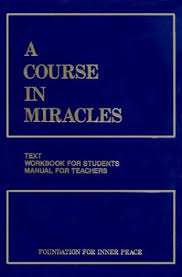 Two books (one new, one old) have suddenly grabbed public attention and captured the hearts of multitudes. One is long and instructional — a dictation from a channeled spirit guide. The other is a fictional testimony full of tear-jerking dialogue. A Course in Miracles (ACIM) is obviously occult, while the more subtle message of The Shack by William P. Young has been widely accepted in postmodern churches.
The two books share a common message. I saw a stark preview of it back in 1992. Skimming through a magazine called Well-Being Journal, I noticed this New Age “insight” from the author’s “inner guide:”
“Many people believe in evil, sin, and dark forces. It is your purpose to teach the opposite which is the Truth: there is no devil, no hell, no sin, no guilt except in the creative mind of humankind.”
I heard similar deceptions at Gorbachev’s 1997 State of the World Forum. At the time, keynote speaker Marianne Williamson was touting the Kabbalah, not A Course in Miracles (ACIM). While those New Age “insights” would fit both, they are best expressed through ACIM, which Williamson is now popularizing through Oprah Winfrey’s weekly radio program.
The Shack calls for a similar denial of reality. Yet countless pastors and church leaders are delighting in its message. By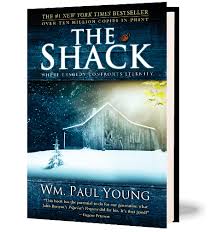 ignoring (or redefining) sin and guilt, they embrace an inclusive but counterfeit “Christianity” that draws crowds but distorts the Bible. Discounting Satan as well, they weaken God’s warnings about deception. No wonder His armor for today’s spiritual war became an early victim of this spreading assault on Truth.
Roger Oakland, author of Faith Undone, hinted at this transformation in his article “My Trip to the Rethink Conference:”
“For nearly two thousand years, most professing Christians have seen the Bible as the foundation for the Christian faith. The overall view at the Rethink Conference, however, is thatChristianity, as we have known it, has run its course and must be replaced…. Speakers insisted that Christianity must be re-thought and re-invented if the name of Jesus Christ is going to survive here on planet earth.”[3]
No room for the historical Jesus? Must we reimagine God to make Him fit the rising universal church?
That seems to be the aim of The Shack’s female “God.” Here she is speaking to the main character, Mackenzie (Mack for short):
“For me to appear to you as a woman and suggest that you call me Papa is simply to mix metaphors, to help you keep from falling so easily back into your religious conditioning.”[1,p.93]
“Religious conditioning?” Is that how Mr. Young views Biblical Christianity?
It’s easy to be persuaded by his clever arguments. The Shack is written as a personal testimony that draws readers into virtual dialogues with a playful, culturally relevant “God.” In contrast to the dry, occult lessons in ACIM, The Shack leads readers into vicarious experiences in a world of revelations and sensations. The only sin-like issue here is independence — what ACIM calls “separateness” — a refusal to accept universal oneness with “God” and man. Unhindered by Biblical guidelines, The Shack offers no standard for right or wrong, so there’s no real need for Biblical repentance. It fits right into the popular vision of a unifying, non-judgmental church.
“So how do I become part of that church?” asks Mack.
“It’s simple,” answers the fictional “Jesus.” “It’s all about relationships and simply sharing life… being open and available to others around us. My church is all about people, and life is all about relationships.”[1,p.178]
That sounds partly true, as do most spiritual lies! For example, Jesus criticized the Pharisees who “searched the Scriptures” but refused to “come” to Him. Today’s postmodern seekers are just as foolish. They ignore unwanted Scriptures, and then flock to the culturally attuned “Jesus” of their imaginations.
In The Shack, readers meet a permissive “God” that “submits” to their human ways. They look through the veil between life and death, see the joy beyond, and communicate with loved ones — subtle examples of “calling up the dead,” which the Bible bans (Deut. 18:11). Mack “sees” the colorful “auras” that show spiritual maturity among the dead-but-alive. He even practices astral travel — what The Shack calls “flying” — a word popularized by Maharishi Yogi long ago.
“Such a powerful ability, the imagination!” said The Shack’s fictional “Jesus.” That power alone makes you so like us.”[1,p.140]
Here the boundaries of the church are broadened to include almost everyone. The only exception seems to be “independent” folk who refuse to “come” to this universal “God.” This isn’t Christianity — and this false “Jesus” would agree. When Mack asks him what it “means to be a Christian,” he answer:
“’Who said anything about being a Christian? I’m not a Christian.’ The idea struck Mack as odd and unexpected and he couldn’t keep himself from grinning. ‘No, I suppose you aren’t.'”[1,p.182]
Of course, he’s not! The word “Christian” refers to Christ’s followers — not to Jesus — and it has always clashed with trendy cultures. Even when ‘the disciples were first called Christians in Antioch” (Acts 11:26), that word was a derogatory label used by enemies of the Church. But that didn’t keep faithful Christians from joyfully claiming that name and sharing His Word!.
Reimagining the Trinity
The Shack opens in the context of tragedy. Four years have passed since the cruel murder of Missy, Mack’s precious six-year-old daughter. Enveloped in grief, he receives a strange invitation. “I’ve missed you,” it says. “I’ll be at the shack next weekend if you want to get together. Papa.” What could it mean?
Doubtful, but drawn to the meeting, Mack heads for the Oregon wilderness and finds the dilapidated old shack. “God” miraculously transforms it into a cozy cottage, and Mack meets his supposed maker:
“…the door flew open, and he was looking directly into the face of a large beaming African-American woman. Instinctively he jumped back, but he was too slow. With speed that belied her size, she crossed the distance between them and engulfed him in her arms….”[1,p.82]
“Just as she turned… a small, distinctly Asian woman merged from behind her…. He then glanced past her and notices that a third person had emerged… a man. He appeared Middle Eastern.”[1,p.84]
“When they finally stopped giggling, the large woman… said, ‘Okay, we know who you are, but we should probably introduce ourselves to you. …you could call me what Nan [Mack’s wife] does: Papa.’…
“’And I,’ interrupted the man, who looked to be about in his thirties…. ‘I am Hebrew….’
“Mack was suddenly staggered by his own realization. “Then, you are….”
“’Jesus? Yes….’“Mack stood dumbfounded…. Just as he was about to crumple to his knees, the Asian woman stepped closer and deflected his attention. ‘And I am Sarayu [the Holy Spirit, Creativity].’ she said…
“Thoughts tumbled over each other as Mack struggled to figure out what to do…. Since there were three of them, maybe this was a Trinity sort of thing…. ‘Then,’ Mack struggled to ask, ‘which one of you is God?’”
“’I am,’ said all three in unison.'”[1,p.86-87]
Their ongoing dialogues reinforce this new view of God. They immerse Mack in spiritual re-education, for each comment contradicts his previous understanding of God. For example, this new “Jesus” never returned to heaven. Was there no real resurrection? Not according to the female “God”:
“Although by nature he is fully God, Jesus is fully human and lives as such. While never losing the innate ability to fly [which he demonstrates in the book], he chooses moment-by-moment to remain grounded. That is why his name is Immanuel, God with us….”[1,p.99-100]
But the Bible tells us that Jesus did return to His heaven after His crucifixion. Besides, neither God our Father nor the Holy Spirit made themselves finite or visible to man. “No one has seen God at any time,” said the true Jesus. (John 1:18) Yet, here we see all three in human form — on earth! “God” explains:
“‘By nature I am completely unlimited… I live in a state of perpetual satisfaction as my normal state of existence:’ she said, quite pleased. ‘Just one of the perks of Me being Me.’
“That made Mack smile. This lady was fully enjoying herself…
“We created you to share in that. But then Adam chose to go it on his own, as we knew he would, and everything got messed up. But instead of scrapping the whole Creation we rolled up our sleeves and entered into the middle of the mess—that’s what we have done in Jesus…. When we three spoke ourself into human existence as the Son of God, we became fully human. We also chose to embrace all the limitations that this entailed. …flesh and blood.”[1,p.98-99]
Denying sin, guilt and God’s authority
Unlike the true God, this false trinity exercises no authority over man. That should please today’s postmodern church leaders! They seem to shun words such as “sovereignty” and “authority.” After all, a reigning God who sets the moral standard for all time could cause division. He could impede their main purpose: inclusive relationships and “authentic community.”
No wonder Mack is confused when he asks, “Why would the God of the universe want to be submitted to me?”
“Because we want you to join us in our circle of relationships,” answers “Jesus.” [1,p.145] Together the “trinity” explains:
“Authority, as you usually think of it, is merely the excuse the strong use to make others conform to what they want…. We carefully respect your choices….” [1,p.123]
“‘Are you saying I don’t have to follow the rules?’…
“‘Yes. In Jesus you are not under any law. All things are lawful.‘
“‘You can’t be serious! You’re messing with me again,’ moaned Mack.
“‘Child,’ interrupted papa, ‘you ain’t heard nuthin’ yet.’…
“‘…enforcing rules [says Sarayu] …is a vain attempt to create certainty out of uncertainty. And contrary to what you might think, I have a great fondness for uncertainty. Rules cannot bring freedom; they only have the power to accuse.'”[1,p.203] [ACIM uses the word “attack” instead of “accuse.”]
Are God’s guidelines really “a vain attempt to create certainty?” Of course not! To impress God’s unchanging values in the minds for faithful believers is no “vain attempt.” But there’s plenty of uncertaintyfor those who believe in evolving Truth and adaptable Scriptures. Such “uncertainty” can lay no firm foundation for either peace or confident faith! In fact, many “Christian” pastors today suffer from agonizing doubts — even about the existence of God! Small wonder, when they build their ministries on the shifting sands of people-pleasing “truths,” not on the solid Rock of God’s Word.
In this new story, sin no longer separates unholy people from our holy God. It fits right into postmodern churches that ignore Biblical commands such as “Do not be conformed to the world” and “Abhorevil” (Romans 12:2,9). Chipping away at the reality of sin, guilt and God’s just judgments, this transformational process undermines any real understanding of our need for discernment, repentance or thecross. Even God’s amazing grace becomes meaningless!
Notice how The Shack’s false “God” mocks our true God by minimizing His sovereignty and judgments:
“I’m not a bully, not some self-centered demanding little deity insisting on my own way. I am good, and I desire only what is best for you. You cannot find that through guilt or condemnation….”[1,p.126]
“You don’t need me at all to create your list of good and evil. But you do need me if you have any desire to stop such an insane lust for independence…. Mackenzie, evil is a word we use to describe the absence of Good, just as we use the word darkness to describe the absence of Light. …evil and darkness can only be understood in relation to Light and Good; they do not have any actual existence.”[1,p.136]
That’s a lie! Though the wonders of God’s love and promises are vastly beyond our comprehension, He has told us His standard for good and evil — and He will punish those who minimize sin (and thus the need for the cross) or reject His ways and warnings. :
“They are foolish; for they do not know the way of the Lord, the judgment of their God….” Jeremiah 5:4
“You thought I was altogether like you, but I will rebuke you…” Psalm 50:21
“…the wrath of God is revealed from heaven against all ungodliness and unrighteousness of men, who suppress the truth in unrighteousness…. Professing to be wise, they became fools…”Romans 1:18, 22
“Behold, I will certainly bring calamity on this people— the fruit of their thoughts, because they have not heeded My words….” Jeremiah 6:19
A Course in Miracles [ACIM] echoes those views of authority, sin and guilt:
“Sin is insanity…. Sin is the home of all illusions…. There is no sin.“[4]
“…guilt is always totally insane, and has no reason….”[5]
“The Holy Spirit never commands. To command is to assume inequality, which… does not exist.”[2,p.103]
“…you have let the belief in darkness enter your mind and so you need a new light…. The voice of the Holy Spirit does not command, because it is incapable of arrogance. It does not demand, because it does not seek control.” [2,p.76]
“There is no guilt in you…. Your only calling here is to devote yourself, with active willingness, to the denial of guilt in all its forms…. We are all joined in the Atonement…. So will the world of separation slip away…. For peace is the acknowledgment of perfect purity, from which no one is excluded. Within its holy circle is everyone whom God created as his Son.”[2,p.282-283]
These absurd claims remind me of Ray Yungen wise words, “Satan is not simply trying to draw people to the dark side of a good versus evil conflict. Actually, he is trying to eradicate the gap between himself and God, between good and evil, altogether.”[6]
But God says, “Do not be unequally yoked together with unbelievers. For what fellowship has righteousness with lawlessness? And what communion has light with darkness?… ‘Come out from among them and be separate,’ says the Lord.” 2 Cor. 6:14-18
“Whatever I command you, be careful to observe it; you shall not add to it nor take away from it.”[7] Deut. 12:32
Unconditional Forgiveness
Both books demonstrate a perverted kind of forgiveness — the world’s way of promoting unity and healing apart from the cross. Not only does Mack learn to “forgive” all who have hurt him, he also forgives “God.” As if God had done something wrong!
Following the same reasoning, ACIM’s “Jesus” offers this bit of twisted theology:
“Forgive, and you will see this differently…. These are the words which end the dream of sin, and rid the mind of fear. These are the words by which salvation comes to all the world.”[8]
It may sound loving to claim universal salvation through human forgiveness. But it’s not Biblical! This counterfeit “Jesus” has totally divorced himself from God’s Word — the living Word which is the true Jesus. (See John 1:14)
Our God is Judge as well as Love. And since He is also sovereign and holy, he must deal with the reality of sin. It can’t simply be dismissed or justified. His salvation is only through the Biblical cross, in spite of ACIM’s denials and The Shack’s deceptions. We partake in His atonement (not a New Age atONEment) through Biblical faith, not positive presumptions.
“…if anyone preaches any other gospel to you than what you have received, let him be accursed. For do I now persuade men, or God? Or do I seek to please men? For if I still pleased men, I would not be a bondservant of Christ.” Galatians 1:9-10
An evolving process hides the unchanging truth
“There is a new world emerging….” writes Tamara Hartzell, author of In the Name of Purpose. “This new world stands against the truth, against the Lord Jesus Christ, and against God. Its rise is coming about in the power and authority and deception of the god of this world (angel of light), who will easily lure the spiritually-prepared masses into worshipping him and his Coming One.”[9]
Her insightful report on “The New Age Ark of Oneness” gives us an overview of this spreading deception:
• relativism is replacing truth
• worldliness is replacing righteousness
• the New Gospel of peace with the world through Oneness is replacing the original Gospel
of peace with God through the Lord Jesus Christ
• the New Spirituality is replacing the true faith that comes from the Word of God
• the unity in diversity of Oneness is replacing the salvation of the Lord Jesus Christ
• unity-seeking dialogue and spiritual experiences are replacing the Word of God.[9]
It’s not surprising that so few Christians notice or resist this process. Ever since John Dewey and Julian Huxley began to replace factual learning with subjective socialization, our ability to discern error has been undermined. As Donna Garner said, “We now have twenty years of indoctrinated people.”[10]
Leaders inside and outside churches have discovered that facilitated group experiences create new perceptions, which produce corresponding feelings that establish new beliefs. These steps are key to change. The Shack’s “God” agrees:
“Paradigms power perception and perceptions power emotions…. So check our perceptions, and beyond that check the truthfulness of your paradigms — what you believe.”[1,p.197]
“…religion is about having the right answers…. [in contrast] I am about the “You cannot see in your mind’s eye something that you cannot experience.”[1,p.201]
“It is impossible not to believe what you see,” says ACIM’s “Jesus,” “but it is equally impossible to see what you do not believe. Perceptions are built up on the basis of experience, and experience leads to beliefs. It is not until beliefs are fixed that perceptions stabilize. In effect, then, what you believe you do see.”[2,p.207]
Like other virtual experiences, reading The Shack stirs the imaginations of the gullible. It plants perceptions that shape new beliefs in “open” minds. What few realize is that the end of this process will be a bit like Pinocchio’s experience. The cruel tempter had promised Pinocchio all kinds of fun and food on “Pleasure Island.” But when he arrived, he changed into a donkey and became a slave.
In the midst of today’s deadly deceptions, the true God offers hope:
“If you abide in My word, you are My disciples indeed. And you shall know the truth, and the truth shall make you free.” John 8:31-36
See COMMENTS on this page.
From God’s Truth to the “New Spirituality” [chart] and New Spirituality for an Emerging New Earth
The Shack Author Rejects Biblical Substitutionary Atonement
You may want to read our rebuttal to an article dealing with the same issues.
Endnotes:
1. William Young, The Shack (Windblown Media, 2007), www.theshackbook.com
2. A Course in Miracles, “dictated” by a demonic spirit guide who called himself “Jesus” (Foundation for Inner Peace, 1976), 149.
3. Roger Oakland, “My Trip to the Rethink Conference,” January 2008, http://www.understandthetimes.org/commentary/c73.shtml
4. A Course in Miracles, What Is Sin? at http://acim.home.att.net/workbook250a.html
5. A Course in Miracles, Release from Guilt at http://acim.home.att.net/text-13-11.html
6. Ray Yungen, A Time of Departing (Silverton, OR: Lighthouse Trails Publishing Company, 2002), page 101.
7. http://www.crossroad.to/HisWord/verses/topics/Word.htm#alter
8. Workbook Lesson 193, http://acim.home.att.net/workbook193.html
9. Tamara Hartzell, “Are you ‘”Being led away ‘with the Error of the Wicked’ to the New Age Ark of Oneness?” February 2008.
10. “Process over content,” www.crossroad.to/Quotes/brainwashing/2008/process-content.htm
Mary Worship?
MARY WORSHIP?
A Study of Catholic Practice and Doctrine
Mary Ann Collins (A Former Catholic Nun)
 Jesus said that the truth will set us free. (John 8:32) However, He did not say that the truth would necessarily be easy to accept. It was painful for me to learn the information that I am about to share with you, but it was also liberating and it led to a closer relationship with God.
As a faithful Catholic, and later as a nun, I practiced Mary worship for many years without realizing it. The prayers and practices were so familiar. They were taught to me by good people, sincere people that I trusted. I prayed rosaries and wore a scapular and engaged in other “devotions” which I honestly thought were good and pleasing to God. Because of my lack of knowledge of the Bible and of Church history, I honestly had no idea that I was actually worshipping Mary.
If modern Catholic teachings and doctrines about Mary are true, then they will not be contrary to Scripture, the writings of the Early Fathers, or the decrees of past popes. For a devout Catholic to question these issues and put them to the test can be painful. It certainly was for me. However, it would be far more painful to have God correct us when we face Him on Judgment Day.
LETTING THE CATHOLIC CHURCH SPEAK FOR ITSELF
I believe in letting people speak for themselves. Therefore my primary sources about Catholic doctrines and history come from the Catholic Church.
First and foremost is the official Catechism of the Catholic Church which was written for the purpose of summarizing the essential and basic teachings of the Roman Catholic Church. It was approved by Pope John Paul II in 1992 and the English translation was released in 1994. The latest English edition was printed in 2000. Most of my other sources are either practicing Catholics or else former Catholics whose approach is loving and respectful and who have thoroughly documented their work.
When I cite the Catechism I will give paragraph numbers rather than page numbers. I will summarize what it says. If you want to see the paragraphs for yourself, there are two web sites with search engines for the Catechism. (Their addresses are given in the Notes.) You can search by topic or by paragraph number. [1]
Scripture quotations are from the King James Version of the Holy Bible.
If you really want to understand Catholic teaching in the light of Scripture and the history of the Catholic church, then I strongly recommend reading the following two books. The authors are former Catholics who love and respect Catholics. They are gentle and respectful in their approach. (See the Bibliography for information about these books.)
The Gospel According to Rome: Comparing Catholic Tradition and the Word of God, by James G. McCarthy. This book is easy to read, well documented, objective, and gentle. It is a comprehensive guide to Catholic beliefs, based on Catholic sources. It examines Catholic teachings in the light of Scripture.
The Church of Rome at the Bar of History by William Webster. This book compares modern Catholic doctrines with the teachings of the early Church.
For a good overview of Catholicism, I recommend the video Catholicism: Crisis of Faith. A friend of mine said that in one hour, this video gave him a better understanding of Catholicism than he had received from a college course on the subject. This video is gentle and respectful. An annotated transcript is available on‑line. (Information about videos follows the Bibliography.)
WILL THE REAL CATHOLIC CHURCH PLEASE STAND UP?
When I was in the convent, our mother superior told us about Catholics in Mexico who, in their devotion to Mary, were doing things that we would only do when worshipping God. We were concerned about this. We considered this practice to be unusual and unbalanced. We thought that the American practice of Catholicism was the true thing. However, many years later I realized that if you want to know what something really is, then look at how it behaves when it is in a position of power. In America, Catholics are in the minority. To see the true spirit behind Catholicism, watch what the Catholic Church does in countries where it is in power.
One place where the Catholic Church is strong is Spain, which is known for the Spanish Inquisition. I always thought that the Inquisition was ancient history. However, the last official Spanish execution for heresy occurred in 1826. A schoolmaster was hanged because he substituted the phrase “Praise be to God” in place of “Ave Maria” (“Hail Mary”) during school prayers. [2]
I always thought that abuses of power by the Catholic Church were something that happened long ago. However, look at the following example from the Philippines, where the Catholic Church is strong.
Beginning in 1948 there was a series of apparitions of Mary in the city of Lipa. These apparitions were sometimes accompanied by showers of rose petals and other supernatural phenomena. They occurred in a convent. The local bishop personally experienced a shower of rose petals and thereafter supported the apparitions. The media mocked the supernatural events in Lipa and street vendors sold phony “holy rose petals.” In response to the bad publicity, the Vatican sent a Papal Administrator to take over the diocese where the apparitions occurred. He replaced the bishop and the mother superior. The nun who saw the apparitions was forced to leave the convent. The nuns were ordered to destroy all materials associated with the apparitions, including a statue. The convent was sealed and the nuns were not allowed to talk to anyone outside the convent. An official Commission of Inquiry was convened, which unanimously ruled that the apparitions were not valid. However, they did not interview anybody who had personal, first-hand knowledge of the events. Several of the bishops who were part of the Commission of Inquiry stated on their deathbeds that the Papal Administrator had forced them to sign the verdict by threatening to excommunicate them if they did not sign it. [3]
After years of no longer being a Catholic, I attended a Catholic funeral. When I went into the church something hit me hard. It had always been there, but I had never noticed it before because I was used to it. There were statues of Mary and the saints. They looked solid, real, as if they represented people of power. Jesus only appeared as a helpless baby in Mary’s arms, as a dead man nailed to a cross, and as little wafers of bread hidden inside a fancy box. Visually and emotionally the message was very clear – if you want real power, if you want someone who can do something for you, then go to Mary and the Saints.
DEVOTION TO MARY
 If you want to see what a person’s real priorities are, then watch what they do when their life, or the life of a loved one, is in danger. When Pope John Paul II was shot, while the ambulance was rushing him to the hospital, the Pope was not praying to God or calling on the name of Jesus. He kept saying, over and over, “Mary, my mother!” Polish pilgrims placed a picture of Our Lady of Czestochowa on the throne where the Pope normally sat. People gathered around the picture. Vatican loudspeakers broadcasted the prayers of the rosary. When the Pope recovered, he gave Mary all the glory for saving his life, and he made a pilgrimage to Fatima to publicly thank her. [4]
Jesus said, “[W]here your treasure is, there will your heart be also.” (Luke 12:34) Some statues of Mary have real crowns made of gold. The web sites listed in the Notes show pictures of statues of Our Lady of Fatima and Our Lady of Lourdes wearing crowns. [5] The statues in the pictures are replicas, and their crowns are ceramic and painted gold. But the crowns on the original statues at Fatima and Lourdes are real crowns made of real gold.
Vast sums of money are spent on some special statues of Mary. For example, the statue of Our Lady of the Pillar in Saragossa, Spain has a crown made of 25 pounds of gold and diamonds, with so many diamonds that you can hardly see the gold. In addition, it has six other crowns of gold, diamonds and emeralds. It has 365 mantles which are embroidered with gold and covered with roses of diamonds and other precious stones. It has 365 necklaces made of pearls and diamonds, and six chains of gold set with diamonds. [6]
In Sabana Grande, Puerto Rico, preparations are underway to construct a huge statue of Our Lady of the Rosary. Inside the base of the statue there will be chapels, conference rooms, apartments, a food court, and radio and TV stations. There will also be observation decks. This statue will be part of a 500-acre “Mystical City” complex. According to an article in Caribbean Business, this statue “will top at 1,500 feet.” According to an article by the Associated Press, the statue will be 305 feet high. [7] The discrepancy in numbers can be explained by looking at the Statue of Liberty, which is a 151 foot statue on top of a 154 foot base. Some sources say that the Statue of Liberty is 305 feet high (which includes the height of the base) and some say that it is 151 feet high (which is the height of the actual statue). What we probably have in Sabana Grande is a 305 foot statue with a 1,200 foot base.
I have personally participated in American processions which honored Mary. We walked through the streets following a statue of Mary which was carried on a platform, high up where it was clearly visible. We sang songs in Mary’s honor. We prayed rosaries and other prayers to her. These were small processions. At Fatima, Portugal, crowds of over a million people gather on the anniversary of the apparition of Our Lady of Fatima. The celebration includes a procession of a million people following a statue of Mary and singing her praises.[8]
One popular prayer in Mary’s honor is the Hail Holy Queen, which is known in Latin as the Salve Regina. It is traditionally included as part of praying the rosary.
For Catholics who are reading this, please try to overcome your familiarity with this text and really look at the words. Doesn’t this sound like worship?
“Hail, holy Queen, Mother of Mercy! Our life, our sweetness and our hope! To thee do we cry, poor banished children of Eve. To thee do we send up our sighs, mourning and weeping, in this valley of tears. Turn, then, most gracious Advocate, thine eyes of mercy toward us; and after this our exile show unto us the blessed fruit of thy womb, Jesus. O clement, O loving, O sweet Virgin Mary.”
Alfonsus de Liguori (1696-1787) was a principal proponent of the Marianist Movement, which glorifies Mary. He wrote a book entitled The Glories of Mary which is famous, influential and widely read. In this book, de Liguori says that Mary was given rulership over one half of the kingdom of God; Mary rules over the kingdom of mercy and Jesus rules over the kingdom of justice. De Liguori said that people should pray to Mary as a mediator and look to her as an object of trust for answered prayer. The book even says that there is no salvation outside of Mary. Some people suggest that these views are extreme and not representative of Catholic Church teaching. However, instead of silencing de Liguori as a heretic, the Catholic Church canonized him as a saint and declared him to be a “doctor of the Church” (a person whose teachings carry weight and authority). Furthermore, his book is openly and officially promoted by the Catholic Church, and his teachings have influenced popes. [9]
Pope Benedict XV said of Mary that “[O]ne can justly say that with Christ, she herself redeemed mankind.” [10] Pope Pius IX said, “Our salvation is based upon the holy Virgin… so that if there is any hope and spiritual healing for us we receive it solely and uniquely from her.” [11]
A lay movement called “Vox Populi” (“Voice of the People”) gathers signed petitions to send to the Pope, seeking to have him officially declare that Mary is Co‑Redemptrix. Over six million signatures have been sent to him, representing 138 countries and all seven continents. This doctrine is supported by over 40 cardinals and 600 bishops worldwide. [12]
The Catholic Church exalts Mary as an idealized, larger-than-life, perfect mother. However, the Bible shows that at one point Mary misunderstood Jesus’ calling to the point that she thought He was insane and she tried to prevent Him from doing what God wanted Him to do. Look at Mark 3:20-34.
“And the multitude cometh together again, so that they could not so much as eat bread. And when his friends heard of it, they went out to lay hold on him: for they said,He is beside himself.’” (Mark 3:20-21, emphasis added)
The New International Version says “His family.” The New King James Version says “His own people.” The King James Version says “his friends.” According to Strong’s Greek/Hebrew Dictionary the Greek word has a variety of meanings, including “kinsmen.” However, we don’t have to depend on the exact meaning of the word here because it will be made clear in verse 31. Strong’s defines “lay hold on” as “to use strength, i.e. seize or retain.” It defines “beside himself” as “become astounded, insane.”
Verses 22 through 30 describe a confrontation between Jesus and the scribes. Then we get back to what is happening with the people who thought that Jesus was out of His mind and were so concerned that they were coming to “lay hold on him” (seize him).
“There came then his brethren and his mother, and, standing without, sent unto him calling him. And the multitude sat about him, and they said unto him, Behold, thy mother and thy brethren without seek for thee. And he answered them, saying, Who is my mother, or my brethren? And he looked round about on them which sat about him, and said, Behold my mother and my brethren! For whosoever shall do the will of God, the same is my brother, and my sister, and mother.” (Mark 3:31-35, emphasis added)
CATHOLIC DOCTRINES ABOUT MARY COMPARED WITH WHAT THE BIBLE SAYS
My sources for this section are the Bible and the Catechism of the Catholic Church, which has numbered paragraphs. For the sake of simplicity and brevity, I will just sayCatechism plus the number of the paragraph(s). For example, “Catechism 411, 493” means “Catechism of the Catholic Church, paragraphs numbered 411 and 493.”
For each doctrinal category, I will indicate the Catholic doctrine, followed by the appropriate references from the Catechism. I will follow this with quotations from the Bible which relate to the doctrine. For the sake of clarity, I will emphasize some portions of Biblical quotations by using boldface type. The last book in the Bible is called “The Book of Revelation” in Protestant Bibles and “The Apocalypse” in Catholic Bibles. I will refer to it as “Revelation.”
IMMACULATE CONCEPTION — Mary was preserved from all stain of original sin from the first instant of her conception. (Catechism 490-492).
In Luke 1:46-47, Mary said: “My soul doth magnify the Lord, And my spirit hath rejoiced in God my Saviour.” Mary knew that she needed a savior.
The doctrine of the Immaculate Conception was first introduced by a heretic (a man whose teachings were officially declared to be contrary to Church doctrine). For centuries this doctrine was unanimously rejected by popes, Fathers and theologians of the Catholic Church. [13]
ALL HOLY – Mary, “the All-Holy,” lived a perfectly sinless life. (Catechism 411, 493)
Romans 3:23 says “For all have sinned, and come short of the glory of God.” Revelation 15:4 says, “Who shall not fear thee, O Lord, and glorify thy name? For thou only art holy.” Romans 3:10 says, “There is none righteous, no, not one.”
Jesus is the only person who is referred to in Scripture as sinless. Hebrews 4:15 says, “For we have not an high priest which cannot be touched with the feelings of our infirmities; but was in all points tempted like as we are, yet without sin.” 2 Corinthians 5:21 says, “For he hath made him to be sin for us, who knew no sin; that we might be made the righteousness of God in him.” 1 Peter 2:22 says, “Who did no sin, neither was guile found in his mouth.”
In contrast, Mary said that God is her Savior. (Luke 1:47) If God was her Savior, then Mary was not sinless. Sinless people do not need a Savior.
In the Book of Revelation, when they were searching for someone who was worthy to break the seals and open the scroll, the only person who was found to be worthy was Jesus. Nobody else in Heaven or on earth (including Mary) was worthy to open the scroll or even look inside it. (Revelation 5:1-5)
PERPETUAL VIRGINITY – Mary was a virgin before, during and after the birth of Christ. (Catechism 496-511)
Matthew 1:24-25 says, “Then Joseph being raised from sleep did as the angel of the Lord had bidden him, and took unto him his wife: And knew her not till she had brought forth her firstborn son: and he called his name JESUS.” “Till” (until) means that after that point, Joseph did “know” (have sexual relations with) Mary. (See Genesis 4:1 where Adam “knew” Eve and she conceived and had a son.)
Jesus had brothers and sisters. The Bible even tells us their names. Matthew 13:54-56 says,
“And when he was come into his own country, he taught them in their synagogue, insomuch that they were astonished, and said, Whence hatch this man this wisdom, and these mighty works? Is not this the carpenter’s son? Is not his mother called Mary? And his brethren, James, and Joses, and Simon, and Judas? And his sisters, are they not all with us?”
Other Scripture verses which specifically refer to Jesus’ brothers are: Matthew 12:46; John 2:12; John 7:3; Acts 1:14; and Galatians 1:19.
I was always taught that “brothers” and “sisters” were general terms that really could refer to any kind of kinsman, including cousins. This is true in the Hebrew language. However, the New Testament is written in Greek, which is an extremely precise language. It makes a clear distinction between the words used to describe family relationships. There is a Greek word which refers to people who are relatives but not of the immediate family, such as aunts, uncles, nephews, nieces and cousins. There are other Greek words which refer specifically to a person’s brother or sister within a family. [14]
MOTHER OF GOD – Because she is the mother of Jesus, and Jesus is God, therefore Mary is the Mother of God. (Catechism 963, 971, 2677).
The Incarnation means that Jesus was both fully God and fully man. Mary was only the mother of Jesus as man, and not the mother of Jesus as God. According to the Bible, the world was created through Jesus. This was long before Mary was born. Hebrews 1:1-2 says,
“God, who at sundry times and in divers manners spake in time past unto the fathers by the prophets, hath in these last days spoken unto us by his Son, whom he hath appointed heir of all things, by whom also he made the worlds.”
Colossians 1:16-17 says,
“For by him [Jesus] were all things created, that are in heaven, and that are in earth, visible and invisible, whether they be thrones, or dominions, or principalities, or powers; all things [including Mary] were created by him, and for him: And he is before all things [including Mary] , and by him all things consist.”John 8:58 says, “Jesus said unto them, Verily, verily, I say unto you, before Abraham was, I am.” Jesus existed before Abraham was born. That means that He also existed before Mary was born. In John 17:5, Jesus says, “And now O Father, glorify thou me with thine own self with the glory which I had with thee before the world was.” So Jesus existed even before the world began. Jesus came first – not Mary.
MOTHER OF THE CHURCH – Mary is the Mother of the Church. (Catechism 963, 975).
Acts 1:13-14 gives a picture of a group of people praying together. Mary is mentioned as one of them, but nothing indicates any special prominence.
“And when they were come in, they went up into an upper room, where abode both Peter, and James, and John, and Andrew, Phillip, and Thomas, Bartholomew, and Matthew, James the son of Alphaeus, and Simon Zelotes, and Judas the brother of James. These all continued with one accord in prayer and supplication, with the women, and Mary the mother of Jesus, and with his brethren.”
Mary was probably in the Upper Room when the tongues of fire fell upon the 120 disciples. However, she is never mentioned again in the Book of Acts, which is our only historical record of how the Church was born. She is also not specifically identified in the epistles. Paul did send greetings to “Mary”, but that was a common name. (In the Gospels and in the Book of Acts, she is referred to as “Mary the mother of Jesus” to distinguish her from other women named Mary.)
It is notable that John, who took Mary into his home after Jesus was crucified, does not mention her in his epistles, and he only mentions her on two occasions in his Gospel (the wedding at Cana and the crucifixion of Jesus). John mentions Mary Magdalene more than he mentions Jesus’ mother.
ASSUMPTION – At the end of her life, Mary was taken up (“assumed”) body and soul into Heaven. (Catechism 966, 974)
There is no biblical reference to the assumption of Mary. The Gospel of John was written around 90 A.D., which is more than 100 years after Mary was born. (Surely Mary was more than ten years old when Jesus was conceived.) If Mary had been supernaturally assumed into Heaven, wouldn’t John (the disciple that Mary lived with) have mentioned it? When Enoch and Elijah were taken up to Heaven, the Bible recorded it. With Elijah it was recorded in some detail. (See Genesis 6:24 and 2 Kings 2:1‑18.)
The Assumption of Mary was officially declared to be a dogma of the Roman Catholic faith in 1950. This means that every Roman Catholic is required to believe this doctrine without questioning it. However, as we will see, the teaching of the Assumption originated with heretical writings which were officially condemned by the early Church.
In 495 A.D., Pope Gelasius issued a decree which rejected this teaching as heresy and its proponents as heretics. In the sixth century, Pope Hormisdas also condemned as heretics those authors who taught the doctrine of the Assumption of Mary. The early Church clearly considered the doctrine of the Assumption of Mary to be a heresy worthy of condemnation. Here we have “infallible” popes declaring something to be a heresy. Then in 1950, Pope Pius XII, another “infallible” pope, declared it to be official Roman Catholic doctrine. [15]
CO-MEDIATOR – Mary is the Co-Mediator to whom we can entrust all our cares and petitions. (Catechism 968-970, 2677)
There is only one mediator and that is Jesus. 1 Timothy 2:5-6 says, “For there is one God, and one mediator between God and men, the man Christ Jesus: Who gave himself a ransom for all, to be testified in due time.” Hebrews 7:25 says,Wherefore he [Jesus] is able to save them to the uttermost that come unto God by him, seeing he ever liveth to make intercession for them.” Ephesians 3:12 says, “In whom [Jesus} we have boldness and access with confidence by the faith of him.”
If Jesus is constantly interceding for us and He is able to save us “to the uttermost,” (utterly, completely) then He doesn’t need Mary’s help. If we can approach God with “boldness” and “confidence” because of our faith in Jesus, then we don’t need Mary’s help either.QUEEN OF HEAVEN – God has exalted Mary in heavenly glory as Queen of Heaven and earth. (Catechism 966) She is to be praised with special devotion. (Catechism 971, 2675)
Psalm 148:13 says, “Let them praise the name of the Lord: for his name alone is excellent; his glory is above the earth and heaven.” This makes it quite clear thatonly God’s name (not Mary’s) is to be exalted. (In Catholic Bibles the numbering of the chapters and verses of some of the Psalms is slightly different.)
When people tried to give Mary special honor and pre-eminence because she was His mother, Jesus corrected them.
“And it came to pass, as he spake these things, a certain woman of the company lifted up her voice, and said unto him, Blessed is the womb that bare thee, and the paps which thou hast sucked. But he said, Yea rather, blessed are they that hear the word of God, and keep it.” (Luke 11:27-28)
In chapters four and five of the Book of Revelation, we are given a quite detailed picture of Heaven. God is seated on the throne, surrounded by 24 elders and four living creatures. The Lamb (Jesus) is standing in the center of the throne. Thousands upon thousands of angels circle the throne, singing God’s praises. And Mary is not in the picture at all.
COMPARING CATHOLIC TEACHINGS ABOUT MARY WITH MODERN GODDESS WORSHIP
Goddess worship is not ancient history. It is going on today. It is practiced in Wicca and a variety of modern pagan religions. (Wicca is a religion based on witchcraft. It involves goddess worship, rituals and spells.)
The credibility of goddess worship has been increased through its acceptance by university professors and its incorporation into textbooks. Wiccan doctrines are being promoted in publicly funded, accredited colleges and universities. Nursing school textbooks are overtly promoting goddess worship, including textbooks written by the National League for Nursing (an accrediting agency for nursing schools). [16]
The following table compares the Mary of Roman Catholic theology and religious practice with the Biblical portrayal of Mary and with the goddess which is worshipped by Wiccans and modern pagans. My information about Wicca comes from the book Wicca: Satan’s Little White Lie by Bill Schnoebelen (who was the high priest of a Wiccan coven before he became a Christian), the World Book, the on-line version of The Encyclopedia Brittanica, and numerous web sites. [17]
|
BIBLICAL MARY |
CATHOLIC MARY |
THE GODDESS |
| Humble and obedient. Calls herself “the handmaid of the Lord.” | The Pope officially gave Mary the title “Queen of Heaven” and established a feast day honoring Mary, Queen of Heaven. | Wiccans call their goddess the “Queen of Heaven.” |
| Knew she needed a savior: “And my spirit hath rejoiced in God my saviour.” (Luke 1:47) | “Immaculate Conception” (Mary was conceived sinless, without original sin) and “All-Holy” (Mary lived a sinless life). | Goddesses don’t need salvation. They make the rules. |
| Normal wife and mother who had other children. | “Perpetual Virginity” (Jesus’ brothers and sisters are considered to be cousins). | Goddesses don’t have human children. |
| No biblical evidence that Mary didn’t die like a normal person. | “Glorious Assumption” (Mary was bodily taken up into Heaven). | Goddesses don’t die. |
| Jesus told John to take Mary into his home and take care of her as if she was his own mother. | Catholics are the adopted children of Mary. “Woman behold your son” (John 19:26) is taken to apply literally to every Catholic. | Witches are the adopted, “hidden children” of the Queen of Heaven. |
| Normal woman. | Sometimes pictured standing on a crescent moon, wearing a crown or with a circle of stars around her head. | Moon goddess. |
| Normal woman. | Supernatural (apparitions accompanied by miracles and healings). | Supernatural. |
| Points people to Jesus. Mary said, “Whatsoever he saith unto you, do it.” (John 2:5) | Can make Jesus do things. A full page newspaper ad showing Mary and Jesus says, “He hasn’t denied her anything in 2,000 years. What would you have her ask Him?” This is not official Catholic doctrine but it is a widespread attitude which is encouraged by pious literature. | Points to herself.Wants to be worshipped. |
| Knew that she needed a savior. (Luke 1:47) | Apparitions of “Mary” have promised that if people wear certain objects (such as a Scapular or Miraculous Medal) or say certain prayers then they are guaranteed to go to Heaven. The Catholic Church has not officially approved of these practices, but it has also not discouraged them. | Invoked to make supernatural things happen through witchcraft (the use of special objects and special verbal formulas).Goddesses don’t need a savior. |
Goddess worship has infiltrated main-line Christian denominations. In November 1993, a Re‑Imagining Conference was held in Minneapolis, Minnesota. Most of the 2,000 participants were women. This ecumenical church conference was sponsored by and attended by members of over a dozen denominations, including Presbyterians, Episcopalians, Catholics, Lutherans and Methodists. They prayed to Sophia, the goddess of Wisdom, calling her their Creator. They did rituals for this goddess, including a communion service where bread and wine were replaced by milk and honey. They openly rejected the doctrines of the incarnation and the atonement. This conference was repeated in 1996, 1998 and 2000. [18] An on‑line report (with photographs) is available at http://www.layman.org/layman/news/reimagining‑revival.htm
There are Wiccan web sites with web pages devoted to individual goddesses. The Virgin Mary is included among the goddesses of the following web sites: The Spiral Goddess Grove, The White Moon, and Goddess 2000. They consider Mary to be the “Divine Feminine” and say that for centuries, many people have “blended” their ancient goddesses with Mary. [19]
HOW DID WE GET HERE?
How did modern Catholic doctrine about Mary wander so far away from the teachings of the Bible and the Early Fathers? Two reasons are the importance given to Church tradition and the doctrine of papal infallibility.
The Catholic Church officially states that Church tradition is equal in authority to the Bible. (Catechism 80, 84, 86, 97) The problem is that Catholic tradition consists of various expressions of worship and belief of the Catholic people. (Catechism 78, 98, 113, 2650, 2661) It is nebulous. It keeps changing. You cannot find it written in one place. You can’t really put your hands on exactly what it is.
The Early Fathers used Scripture as the standard against which they tested Church tradition. The modern Catholic doctrine that Church tradition is equal in authority with the Bible is contrary to the writings of the Early Fathers. [20]
According to Jesus, Scripture is the plumb line for measuring everything else. He judged religious traditions by comparing them to Scripture. When religious traditions contradicted Scripture, he condemned them. This shows clearly that nothing is equal in authority to Scripture. The Bible stands alone as the standard by which all other things are to be judged.
“Then came together unto him the Pharisees, and certain of the scribes, which came from Jerusalem. And when they saw some of his disciples eat bread with defiled, that is to say, with unwashen, hands, they found fault. For the Pharisees, and all the Jews, except they wash their hands oft, eat not, holding the tradition of the elders. And when they come from the market, except they wash, they eat not. And many other things there be, which they have received to hold, as the washing of cups, and pots, brasen vessels, and of tables. Then the Pharisees and scribes asked him, Why walk not thy disciples according to the tradition of the elders, but eat bread with unwashen hands? He answered and said unto them, Well hath Esaias prophesied of you hypocrites, as it is written, This people honoureth me with their lips, but their heart is far from me. Howbeit in vain do they worship me, teaching for doctrines the commandments of men. For laying aside the commandment of God, ye hold the tradition of men, as the washing of pots and cups: and many other such like things ye do. And he said unto them, Full well ye reject the commandment of God, that ye may keep your own tradition. For Moses said, Honour thy father and thy mother; and Whoso curseth father or mother, let him die the death: But ye say, If a man shall say to his father or mother, It is Corban, that is to say, a gift, by whatsoever thou mightest be profited by me; he shall be free. And ye suffer him no more to do ought for his father or his mother; Making the word of God of none effect through your tradition, which ye have delivered: and many such like things do ye.” (Mark 7:1-13, emphasis added.)
According to the official teaching of the Catholic Church, Catholic men and women are not allowed to believe what they read in the Bible without checking it out with the Catholic Church. They are required to find out how the bishops of the Church interpret a passage and they are to accept what the bishops teach as if it came from Jesus Christ Himself. They are not allowed to use their own judgment or follow their own conscience. They are required to believe whatever the bishops teach without questioning it. (Catechism 85, 87, 100, 862, 891, 939, 2034, 2037, 2041, 2050)
The Catholic Church teaches that when the bishops officially teach doctrine relating to faith and morals, then God super–naturally prevents them from making any errors. This is called “infallibility.” It applies to official councils, such as the Second Vatican Council. It also applies to other teachings, as long as the bishops and the Pope are in agreement about them. (Catechism 890, 891, 939, 2033, 2034, 2049)
The Pope is said to be infallible whenever he makes an official decree on matters of faith and morals. According to Catholic doctrine, it is impossible for the Pope to teach false doctrine. Catholics are expected to obey the Pope without question even when he is not making an “infallible” statement about doctrine. They are expected to submit their wills and minds to the Pope without question. (Catechism 892, 2037, 2050)
The Early Fathers, and the theologians and canon lawyers of the Middle Ages, never taught that the bishops or the Pope were infallible. This is demonstrated by the fact that in 680 A.D. the Sixth Ecumenical Council condemned a pope as a heretic. It was not until the fourteenth century that the theory of infallibility began to emerge. With the development of this theory came a change in the interpretation of some biblical passages. [21]
The history of the early Church shows that the Bishop of Rome was considered to be just another bishop. For example, Pope Gregory (590-604 A.D.) explicitly stated that all of the bishops were equal. He specifically repudiated the idea that any one bishop could be the supreme ruler of the Church. [22]
The claim for papal infallibility does not stand up to the test of history. For example, Pope Zosimus (417-418 A.D.) reversed the pronouncement of a previous pope. He also retracted a doctrinal pronouncement that he himself had previously made. Pope Honorious was condemned as a heretic by the Sixth Ecumenical Council (680-681 A.D.). He was also condemned as a heretic by Pope Leo II, as well as by every other pope until the eleventh century. So here we have “infallible” popes condemning another “infallible” pope as a heretic. In 1870, the First Vatican Council abolished “infallible” papal decrees and the decrees of two “infallible” councils. [23]
In the seventeenth century, the Catholic church officially condemned Galileo as a heretic because he taught that the earth revolves around the sun. This did not conflict with the Bible or with the teachings of the Early Fathers. However, it was contrary to seventeenth century Catholic theology. The Greek philosopher Aristotle taught that the sun revolves around the earth. Aristotle influenced Thomas Aquinas, a thirteenth century theologian and “doctor of the Church” whose theology had a major impact on the Catholic Church. Some modern astronomers believe that Galileo was right. Others believe that Einstein’s theory of relativity makes the question irrelevant. [24] Either way, Galileo was not a heretic for disagreeing with Aristotle. The “infallible” pronouncement of the Catholic Church regarding Galileo’s teaching was wrong.
Most people have heard of “papal bulls” and “infallibility.” Have you ever seen what they actually look like? Following is the ending of the bull Ineffabilis Deus in which Pope Pius IX declared the dogma of the Immaculate Conception of Mary in 1854:
“Therefore, if some should presume to think in their hearts otherwise than we have defined (which God forbid), they shall know and thoroughly understand that they are by their own judgment condemned, have made shipwreck concerning the faith, and fallen away from the unity of the Church; and, moreover, that they, by this very act, subject themselves to the penalties ordained by law, if, by word or writing, or any other external means, they dare to signify what they think in their hearts.” [25]
The phrase “subject themselves to the penalties ordained by law” is significant because less than 30 years earlier, a man in Spain was executed for heresy. [26]
MARIAN APPARITIONS
On May 13, 1981, a man shot Pope John Paul II. As the ambulance carried him to the hospital, the Pope kept praying, “Mary, my mother! Mary, my mother!” One year later, the Pope made a pilgrimage to Fatima to thank Our Lady of Fatima for saving his life and to consecrate the entire human race to her. [27] The video Catholicism: Crisis of Faith shows the Pope kissing the feet of a statue of Mary. [28]
Millions of pilgrims go to shrines which honor apparitions of Mary. Every year fifteen to twenty million pilgrims go to Guadalupe in Mexico, five and a half million go to Lourdes in France, five million go to Czestochowa (Jasna Gora) in Poland, and four and a half million go to Fatima in Portugal. Special dates draw huge crowds. On August 15, half a million pilgrims go to Czestochowa. On October 13, a million people go to Fatima. On December 12, 1999, five million pilgrims went to Mexico to honor Our Lady of Guadalupe. [29]
Are these pilgrims worshipping Mary? You can observe them and see for yourself, thanks to a video entitled Messages from Heaven. (Information about this video is given following the Bibliography.)
If you watch the video, you will see the Pope bow in front of a painting of Mary and cover the area with incense. You will see a million pilgrims walking in a procession, following a statue of Our Lady of Fatima and singing songs in her honor. You will see several million people in a procession following a painting of Our Lady of Guadalupe. You will see people weeping and raising their arms towards Mary. You will see the largest assembly of bishops and cardinals since the Second Vatican Council, gathered together to join Pope John Paul II in solemnly consecrating the entire world to the Immaculate Heart of Mary.
CONCLUSION
Proverbs 14:12 says, “There is a way which seemeth right unto a man, but the end thereof are the ways of death.” Our minds can be deceived and so can the minds of bishops and popes. Only the Bible is totally trustworthy. When religious traditions conflict with the plain meaning of Scripture then we need to discard those traditions. We cannot afford to do otherwise, because our eternal destiny is at stake.
The Apostles told the religious leaders of their day, “We ought to obey God rather than men.” (Acts 5:29b) As an old hymn says, “On Christ the solid rock I stand. All other ground is sinking sand.”If you are not persuaded that Catholicism encourages and even requires a level of “devotion” to Mary that really is a form of worship, then I challenge you to ask God what He thinks about it. If you are sincere in your prayer and open to letting God show you the truth, then He will.
CONTACTS
To contact the author, send an e-mail message to MaryAnnCollins@juno.com.
If you would like to discuss specific issues, please contact the following ministry. The members are former Catholics. Their approach is loving, respectful and well informed. Their web site has many documents which you can print, including an annotated transcript of the video Catholicism: Crisis of Faith. Some of their documents are also available in Spanish.
Good News for Catholics
P.O. Box 595
Cupertino, CA 95015
E-mail: gnfc@gnfc.org
Web Site: http://www.gnfc.org
USING THIS ARTICLE
You have my permission to copy this article, in whole or in part. You have my permission to quote from it. You have my permission to post it on your web site. You have my permission to incorporate the entire article, or portions of it, into publications of your own. You have my permission to sell it for profit. I do not want any fees or royalties or financial remuneration of any kind.
The information in this article is the result of many years of personal struggle and search for truth. I want to make it as easy as possible for people to get this information and to pass it on to anyone who might be helped by it.
May the Lord bless, guide, and reveal His truth to everyone who reads this article.
Mary Ann Collins. July 1, 2001
BIBLIOGRAPHY
Aardsma, Gerald E. “Geocentricity and Creation”, Vital Articles on Science/Creation, July 1994, Impact No 253. Santee, California: Institute of Creation Research. It is available on‑line at http://www.icr.org/pubs/imp/imp-253.htm.
Anderson, James (Associated Press). “Giant statue of Mary part of shrine plan,” Lexington Herald-Leader, July 17, 1999. This is available on-line with two different titles, at:http://www.kentuckyconnect.com/heraldleader/news/071799/faithdocs/shrine17.htm and http://www.star-telegram.com/news/doc/1047/1:RELIGION64/1:RELIGION64071699.html
Beauclair, Steve. “Skyscraper statue slated for Sabana Grande; $42 million Virgin Mary part of Mystical City,” Caribbean Business, February 26, 1998 (Late News cover story).
Bloesch, Donald G. Essentials of Evangelical Theology, Vol. I. San Francisco, California: Harper & Row, Publishers, 1982. The author is an evangelical Christian. He quotes some papal encyclicals.
Catechism of the Catholic Church. Washington, DC: U.S. Catholic Conference, 2000. This book comes in numerous editions and languages. Because it has numbered paragraphs, statements can be accurately located in spite of the variety of editions.
Davis, Philip G. Goddess Unmasked: The Rise of Neopagan Feminist Spirituality. Dallas, Texas: Spence Publishing Company, 1998. This book can be ordered directly from the publisher (888‑773‑6782).
Heintz, Peter. A Guide to Apparitions of Our Blessed Virgin Mary, Part I, 20th Century Apparitions. Sacramento, California: Gabriel Press. This is a Catholic book. It covers 60 apparitions in detail. It is methodical, with 33 categories of information for every apparition. The book is out of print. According to the publisher (who is now out of business), copies of the book were sent to major Marian institutions. The book can be obtained from the following web site: http://www.marianland.com/101books.html
Hunt, Dave. A Woman Rides the Beast. Eugene, Oregon: Harvest House Publishers, 1994.
Johnson, Paul. A History of Christianity. New York: Simon & Schuster, a Touchstone Book, 1995. The author is Catholic.
McCarthy, James G. The Gospel According to Rome: Comparing Catholic Tradition and the Word of God. Eugene, Oregon: Harvest House Publishers, 1995. The author is a former Catholic.
Queenship Jubilee Year 2000 Catalog. Queenship Marian Center for World Peace. This is a Catholic publication. The catalog has a section called “Vox Populi” where they promote books which support the doctrine that Mary is our Advocate, Mediator, and Co-Redemptrix. They promote petitions asking the Pope to officially give Mary those titles. They promote an inexpensive pamphlet (for wide distribution) which supports those doctrines. They also summarize the status of the petition, giving numbers of people who have signed it, and the numbers of cardinals and bishops that support the doctrines.
Schnoebelen, Bill. Wicca: Satan’s Little White Lie. Chino, California: Chick Publications, 1990. Before his conversion to Christianity, the author was the high priest of a Wiccan coven for over 12 years. He taught and initiated hundreds of Wiccan novices. He shows the truth behind “white” witchcraft and “Earth Religion” including insights which trace the epidemic of child abuse directly to the root of the rapid spread of Wicca.
Tetlow, James. Messages from Heaven. This book is scheduled to be published in the summer of 2001. It can be ordered by phone (877-370‑7770). James Tetlow is a former Catholic. In doing the research for this book, he read literally hundreds of Catholic books about Marian apparitions.
Webster, William. The Church of Rome at the Bar of History. Carlisle, Pennsylvania: The Banner of Truth Trust, 1996. The author is a former Catholic.
VIDEOS
Catholicism: Crisis of Faith. Lumen Productions, P.O. Box 595, Cupertino, CA 95015. ISBN Number 0-962-9152-0-3. This video was produced by James G. McCarthy, a former Catholic and the founder of Good News for Catholics. It covers a wide range of issues, including Mary. You can order it through D&K Press (800-777‑8839). An annotated transcript of the English version, with 83 footnotes, is available on‑line at http://www.gnfc.org/transcript.html Information about foreign language versions is available at http://www.gnfc.org/ccf.html
Messages from Heaven. Eternal Productions, P.O. Box 324, Fairport, NY 14450. ISBN Number 1-57341-119-1. This video deals primarily with apparitions of Mary. It also deals with UFOs and angels. The producer is a former Catholic who has read literally hundreds of Catholic books about Marian apparitions. You can order the video by phone (877-370‑7770) or on‑line at http://video.labargemedia.com It is also available at D&K Press (800-777‑8839).
NOTES
(links may become invalid after time)
[19] http://www.goddess2000.org/Mary.html http://www.thewhitemoon.com/mary/main.htmlhttp://www.spiralgoddess.com/Mary.html
[29] James Tetlow, Messages from Heaven, Chapter 1. Mr. Tetlow also produced a video with the same title. If you can afford to get both, I would recommend it. The book gives a lot of information and it is thoroughly documented. The author is a former Catholic. The book and video are respectful and gentle in their approach.
[Reprinted by Permission]
Original Source: http://www.biblebelievers.com/bennett/bennett_mary-worship.html
Rick Warren: Fundamentalism… “one of the big enemies…” True or not?

“Are you a fundamentalist preacher?”
Rick Warren:
“No. A fundamentalist is somebody who stops listening. There are fundamentalist Christians, fundamentalist Jews, fundamentalist Muslism, fundamentalist atheist, fundamentalist Secularist…. Its an attitude that doesn’t listen to anyone else.” “God get’s enjoyment out of watching you be you. [-speaking to Colbert turns God’s Word into jokes] … When my children were little, I used to watch them sleep at night…. I got so much pleasure out that, cause I made them. I’m their Daddy…. When you be you, God looks down and He goes, ‘That’s my boy!'” … [ed: Even if you’re not “born again” into His family?]
“If you ask Jesus to come into your life, will he?”
Rick Warren:
“Absolutely.” [ed: Even if you’ve never been convicted of sins, learned about the Biblical Jesus, repented, or heard the true whole Gospel?]
This preview was prompted by the following note from Lighthouse Trails Research Project:
January 10, 2006: According to a news story in the January 8th edition of the Philadelphia Inquirer, Rick Warren says Christian fundamentalism will be an enemy of the 21st century.
Excerpt from article: “Warren predicts that fundamentalism, of all varieties, will be ‘one of the big enemies of the 21st century.’ … ‘Muslim fundamentalism, Christian fundamentalism, Jewish fundamentalism, secular fundamentalism – they’re all motivated by fear. Fear of each other.’ “
What does Rick Warren define Christian Fundamentalism to be?
In a May 2005 interview between Rick Warren and the Pew Forum on Religion, Warren stated:
“Today there really aren’t that many Fundamentalists left; I don’t know if you know that or not, but they are such a minority; there aren’t that many Fundamentalists left in America … Now the word ‘fundamentalist’ actually comes from a document in the 1920s called the Five Fundamentals of the Faith. And it is a very legalistic, narrow view of Christianity.” Quote by Rick Warren, May 2005
What are those Five Fundamentals of the faith?
[www.lighthousetrailsresearch.com/pewreligion.htm#fundamentals]
1. The Deity of our Lord Jesus Christ (John 1:1; John 20:28; Hebrews 1:8-9).
2. The Virgin Birth (Isaiah 7:14; Matthew 1:23; Luke 1:27).
3. The Blood Atonement (Acts 20:28; Romans 3:25, 5:9; Ephesians 1:7; Hebrews 9:12-14).
4. The Bodily Resurrection (Luke 24:36-46; 1 Corinthians 15:1-4, 15:14-15).
5. The inerrancy of the scriptures themselves (Psalms 12:6-7; Romans 15:4; 2 Timothy 3:16-17; 2 Peter 1:20).
See also Spirit-Led or Purpose-Driven? Part 4: Dealing with Resisters:
“When a human body is out of balance we call that disease…. Likewise, when the body of Christ becomes unbalanced, disease occurs…. Health will occur only when everything is brought back into balance. The task of church leadership is to discover and remove growth-restricting diseases and barriers so that natural, normal growth can occur.” Rick Warren,The Purpose Driven Church, page 16.
Scott Peck, famed author of The Road Less Traveled, used the same analogy. “There’s a term therapists use; it’s ‘resistance,” he wrote in Reflections on Leadership, “which refers to people who don’t like to or want to be healed or converted, so they resist.”[5, page 92]
Yes, those who trust the fundamental truths in God’s Word for guidance will look like enemies to church leaders who demand conformity to man’s social guidelines. Those who refuse to compromise their faith cannot share the global vision for pluralistic solidarity. Unwilling to set aside God’s “divisive” old truths, they cannot march to the drum beat of facilitators trained to manipulate minds and mold collective thinkers.
Here are a few links and summaries that expose the conflict and confusion that surround the word “fundamentalism.” The first link offers a Biblical definition and explanation. The others expose the world’s hatred for Biblical truth:
Are We Fundamentalists? There are now two kinds of evangelical…. The old is the authentic, biblical position. The new is far off the track, not in its basic view of salvation, but in its readiness to compromise with doctrinal error and worldly ways. The new is selling the faith for earthly respect and recognition… and churches are being ruined.
“Today, old-style evangelicals are in the minority…. This booklet attempts to give a clear picture of the present alarming scene, in order to encourage believers to take a clear stand.
“Old -style evangelicals are often called fundamentalists, particularly in the USA. New -style evangelicals adopted the term, ‘new evangelical’ to describe themselves in the 1950s. …We are told that the fundamentalist label was first coined in America in 1920 to describe militant evangelicals. … It would be fairer to say that fundamentalist is someone who cares about the defense and preservation of the Gospel…” More
Postmodernism and You: “To the majority of Americans below fifty today, questioning the truthfulness of another’s religious views is intolerant and morally offensive. This prohibition against differing with other’s viewpoints is postmodern. Strangely, it turns out that one exception is allowed…. it’s okay to question and even denounce religious views when dealing with what is pejoratively labeled ‘fundamentalism.’ Today, when people refer to ‘fundamentalists’ they no longer mean just religious extremists like the Shiites waging holy war against the West. Today, fundamentalism may refer to anyone who claims to know truth or who charges another religion with falsehood.” See
Ministries will Restructure, as will Churches, Businesses, Individuals, and Families: “While preparing to minister in Dallas on January 5, I heard the Holy Spirit very clearly say, ‘Tell them…’ I quickly grabbed a pen and wrote the following as it was given to me:
“‘Opposition to the apostolic and prophetic will also be the greatest this year.’ He is going to expose wineskins (new or old) and religious spirits, taking off the masks of those who oppose His move. Those who refuse to move in current truth will begin to openly criticize leaders in the Body of Christ that are moving in the flow of the apostolic and the prophetic. Some have been doing so in a very subtle way, but this year, it will become obvious. When they do, God is going to begin to judge them….
“‘I must bring further changing of paradigms, not just to those who have not been moving in the flow of My Spirit, but even to those who are in the flow of My Spirit.’ I heard Him say, “Restructure, Restructure, Restructure.”
“Ministries will restructure, churches will restructure, businesses will restructure, individuals will restructure (the way they do things, their time, the way they think, and the way they operate), and families will restructure.
“Teaching on the kingdom of God will bring about great changes of paradigms, taking us back to the original mandate of Genesis…. Kingdom theology is going to be at the forefront.”
Fundamentalism Education Project (link apparently obsolete): “The growing influence of fundamentalist religious movements poses a challenge to our mainstream religious communities, civic freedoms, and our safety and well-being. This phenomenon is of concern to mainstream religious leaders and their congregations because fundamentalists create sharp divisions among communities of faith…. Religious clergy and lay people have immense interest in understanding and exposing how fundamentalists distort the inclusive messages within Christianity, Judaism, and Islam…
“Understanding and countering this phenomenon is important for all of us…. The Texas Faith Network is organizing the Fundamentalism Education Project to provide resources for clergy, lay people, activists and others about religious fundamentalism, and to energize and organize religious leaders to rightfully reclaim the compassionate and tolerant foundations within their respective religious traditions.” This fits right into UNESCO’s Declaration on the role of religion.
Bush, Gorbachev, Shultz and Soviet Education: “‘There really is only one sin–separateness,’ Corinne McLaughlin states in her book. ‘…war is more likely to spring from rampant nationalism, ethnocentrism, and intolerant religious fundamentalism — all extreme and separative attitudes…. [A} primary cause of the earth’s suffering is that humanity is caught in the illusion of separation…. What is needed as a cure for separateness is a deep sense of community — that we’re all in this together.’ Mikhail Gorbachev shares her contempt for nationalism and religious fundamentalism, i.e. Biblical Christianity.”
Why 9-11? “…after the Oklahoma City bombing and after the downing of TWA Flight 800, the Clinton administration’s FBI put out a report on terrorism. It was called Project Megiddo. And it explained… that right-wing Christian terrorists posed the gravest danger to the republic and were most likely to incite violence in the months and years ahead…. Right-wing Christians were the perceived threat. They were the enemy. Islamists got short shrift in the FBI report.” John 16:2 and Preparing for Persecution
The UN Plan for Your Mental Health: “Children who refuse to conform may be considered handicapped. According to a Teacher Training Manual from the National Training Institute for Applied Behavioral Science, ‘Although they appear to behave appropriately and seem normal by most cultural standards, they may actually be in need of mental health care in order to help them change, adapt, and conform to the planned society in which there will be no conflict of attitudes or beliefs.'”
Anarchist website targets Christians: “The American Family Association is likened to Afghanistan’s fundamentalist Taliban movement at the website infoshop.org, which describes itself as ‘your online anarchist community.’… It invites visitors to ‘join us as we kick some dirt into their graves, burying their hideous fascism once and for all.'” Matt 24:9
Redefining ‘terrorism’ threatens our liberty: “In the Dec. 17 Newsweek, Anna Quindlen draws first blood in her column ‘The Terrorists Here at Home.’ What ‘terrorists’ does she refer to? Abortion opponents, whom she characterizes as ultraviolent. Quindlen writes: ‘There’s no real ideological difference between these people and the people who flew planes into the World Trade Center….’ By blurry implication, she tars the entire pro-life movement as violent.” Luke 6:22-23
Christianity Under Siege: The Stones Cry Out: “Around the world, Christians not only are being subjected to name calling, they also are being denied basic rights. They are being killed or forcibly converted to Islam. In the United States they are one way or another being forced to convert to a brand of secular humanism gleaned from Hegel, Marx, Freud,Marcuse, Gramsci, Dewey, Maslow, Rogers and Darwin and the entire pantheon of secular gods. If they are not converted, they are silenced in a thousand subtle and not so subtle ways. …” See Preparing for Persecution, Luke 6:22-23 and The Mainstream Media
Christians a ‘hate group’ (link apparently obsolete): “Much of the manual prepared by President Bill Clinton’s attorney general, already used to indoctrinate an untold number of law enforcement agencies in this state, has stirred disquiet in the ranks of the West Virginia Family Foundation…. Under ‘hate group ideology’ identification, for instance, it is written, ‘Homophobia recently has been added to their agenda.’ …The same section identifies some hate-mongers as those who ‘blame the federal government, an international Jewish conspiracy or communism for most of this country’s problems.’
“Another catch phrase which has crept into the vocabulary of hate crime law advocates is ‘domestic terrorism.’ An 8-hour course, billboarded on the West Virginia State Police Academy, is titled simply ‘Domestic Terrorism,’ and topics advertised are ‘philosophies of hate and anti-government groups,’ and threats such people pose.” See Clinton’s War on Hate Bans Christian Values
The Enemy of The People? (After Oklahoma Bombing)
“Day after day, the media’s accusing pens pointed to suspected foes of American togetherness — those whose ‘enraged rhetoric’ had created a national ‘climate of hate and paranoia.’ … ‘Their coalition,” said Time, ‘included well known-elements of far-right thought: tax protesters, Christian homeschoolers, conspiracy theorists…’ All were implicated, for all had questioned the government’s growing control over local schools, private property, and personal lives.’… ”
We shouldn’t be surprised. The Bible tells us that ‘the whole world is under the control of the evil one,’ and he has always despised God and His people. Today, as our culture shifts to the global paradigm, political and educational ‘change agents’ are turning biblical values upside down.
“Emotional appeals work. It’s easier to shout, ‘Stop spreading hate!’ than to encourage rational debate. It’s more effective to discredit discerning citizens by linking them to violent anarchists than to give factual answers to legitimate questions. It’s quicker to invalidate unwanted information by tying it to wild speculations than to provide honest responses — especially when facts and truth would undermine the planned transformation.
“History has shown that nothing crushes well-informed resistance faster than well-planned disinformation and false accusations. Nothing unifies a nation faster than a common enemy. Hitler knew those lessons well. He had watched the Bolshevik Revolution. His book, Mein Kampf, explains the winning strategies to any future revolutionary. Notice his insight into group psychology:
‘The art of truly great popular leaders in all ages has consisted chiefly in not distracting the attention of the people, but concentrating always on a single adversary…. It is part of a great leader’s genius to make even widely separated adversaries appear as if they belonged to one category, because… the recognition of various enemies all too easily marks the beginning of doubt of one’s own rightness.’
“Hitler focused his fury on an influential, well educated ethnic group whose religious beliefs opposed his own.”It was a stroke of genius on the part of Hitler to find this common denominator in the Jew,’ explains the Encyclopaedia Britannica. ‘This enabled him to discover the Jew behind all his changing adversaries… in short, behind everybody and everything that at a given moment opposed his wishes or aroused his wrath.'” See Preparing for Persecution
From Mary Thompson: “…’absolutism] in the pursuit against ‘absolutism/fundamentalism’ is a contradiction in terms which seems to escape them. By lumping every profession of faith, without discernment, they create another form of absolutism of their own making. Their ‘fundamentalism’ is the denial of the existence of absolute Truth itself. They will use any militant ‘ism’ in the quest to denigrate fundamental Christianity, the real target.”
Megashift (by Jim Rutz): “Pew warmers are passé. They’re stuck at half past yesterday and simply are not ready for the high demands of the current explosion.” Page 87
“Why should we keep changing? Because the world is changing daily…. Old wineskins simply will not hold new wine.” 142
Finally, a memorable warning by Rev. Dr. Martin Niemoeller, written July 1, 1937. Niemoeller, a committed Christian pastor who refused to conform to Hitler’s rules for churches, was arrested by the Third Reich and probably tortured and killed within its cruel system for punishing dissenters.
“In Germany, they came first for the Communists, and I didn’t speak up because I wasn’t a Communist. Then they came for the Jews, and I didn’t speak up because I wasn’t a Jew. Then they came for the Trade Unionist, and I didn’t speak up because I wasn’t a Trade Unionist. Then they came for the Catholics, and I didn’t speak up because I was a Protestant. Then they came for me, and by that time, no one was left to speak up.”
Conforming the Church to the New World Order
Conforming the Church to the New World Order
by Berit Kjos – 2000
“We restored the vital center, replacing outdated ideologies with a new vision anchored in basic, enduring values: opportunity for all, responsibility from all, and a community of all Americans…. We must shape a 21st Century American revolution – of opportunity, responsibility, and community. … a new nation.” President Clinton, 2000 State of the Union message.
“One Church for One World.” World Council of Churches , 1948
“. . . change will probably be radical, if not total. Those whose lives are dedicated to serving the Church of the past will resist these suggestions with a vehemence that always emerges from threatened hierarchies and dying institutions…. But the seeds of resurrection are present in the exile, and in time those seeds will sprout and bloom. When they do, we will once again be able to see continuity between the Church of the past and the purged and opened church of the future.” Episcopal Bishop John Shelby Spong, Why Christianity Must Change or Die [1]
Year 2000 has arrived, ushering in the United Nations’ “International Year of the Culture of Peace.” It brings new pressures to establish the global management system President Clinton calls the Third Way – one that allows governments to yield responsibilities, but not control, to their “private” and “civil” partners who will be required[2] to implement the vision.
The church-state partnerships touted by candidates Bush and Gore fit the picture. These political alliances are already being established from coast to coast, not by law, but by an army of willing and often well-meaning religious leaders. Those who share the UN vision of the 21st Century community usually lead the parade. They seek a global village of peace and social equality – unified, not by faith in the Biblical God, but by faith in human nature and a pluralistic god-spirit operating in and through each person.
Christian evangelism doesn’t fit this utopian vision. It offends people of other faiths. It threatens the religious leaders who have built their platform on humanitarian ideals rather than the Bible. And it clashes with the international standards for tolerance and mental health.
This spiritual shift didn’t start in the nineties. Liberal ecclesiastical leaders realized more than fifty years ago that Biblical absolutes, separateness, and evangelism would block their agenda. To clear the way, they built the foundations for today’s worldwide movement that would
- Equate Biblical truth and evangelism with hate and intolerance
- Redefine Christianity
- Hold Christians accountable to global standards for mental health
- Conform churches to the demands in UNESCO’s Declaration on Religion in a Culture of Peace
- Build the framework for global control
- Establish the one world church
Equate Biblical Truth and Evangelism with Hate and Intolerance
It’s not surprising that Chicago’s liberal Council of Religious Leaders opposes a Baptist plan to send 100,000 missionaries into their domain next summer. Nor is it strange that the Southern Baptist Convention’s refusal to cancel its plans fueled the fury of two groups: those who equate Biblical values and evangelism with hate and intolerance and those who feel they had been specifically targeted for conversion.[3]
“The evangelical fervor of the Southern Baptists, America’s largest Protestant denomination, remain undiminished despite criticism over their controversial ‘prayer book,’” wrote Ramesh Chandran in The Times of India News Service (12-9). The offensive prayer book describing Hindu beliefs and culture – one of several prayer books written for training purposes – dared to suggest that Hindu devotees had “darkness in their hearts”[4] and didn’t share in Christ’s promise of salvation.
Such Christian “intolerance” and “exclusiveness” is outlawed by UNESCO’s Declaration on Tolerance[5] and unacceptable to the Hindu, Muslim and Jewish leaders. Naturally, they don’t want Christians to pray for their salvation or write critical descriptions of their beliefs and culture in their training manuals.
Chicago’s Council of Religious Leaders has joined Mr. Chandran on this spiritual battlefield. Made up of 40 Catholic, Protestant, and Jewish institutions, this civil-minded Council wrote a letter to the Southern Baptist Convention (SBC) asking that it “enter into discussion with us and reconsider your plans….” In other words, it called for conflict resolution based on the consensus process and aimed at compromise and common ground.
Rabbi Ira Youdovin, executive director of the Chicago Board of Rabbis, was the chief author of this letter. He wrote,
“While we are confident that your volunteers would come with entirely peaceful intentions, a campaign of the nature and scope you envision could contribute to a climate conducive to hate crimes.”[6]
Hate crimes?
Richard Land, president of the SBC’s Ethics and Religious Liberty Commission wrote an answer. Its warning should concern everyone who values our increasingly fragile Constitutional right to follow and express our convictions:
“…To say that Southern Baptists should refrain from an evangelistic campaign because it might, as the council said, ‘contribute to a climate conducive to hate crimes,’ is not a very far step away from then claiming that the act of witnessing itself to those whom you believe need to be saved is a ‘hate crime.’
“…those who criticize Southern Baptist’ efforts to evangelize cities or groups always preface their criticism by acknowledging Southern Baptists’ right to express our belief. It seems they affirm our right to express our beliefs as long as we agree not to do so. As soon as we seek to practice what we preach, they severely criticize our “arrogance” and our ‘presupposition’ that non-Christians ‘are outside God’s plan of salvation’…
“I grieve… that a Methodist minister would make such statements in response to fellow believers’ attempts to heed the Great Commission commandment of Jesus our Savior, who it should be remembered did say, “I am the way, the truth, and the life: no man cometh unto the Father, but by Me.’ (John 14:6)”[7]
You may question the wisdom of the ways the SBC trains its missionaries and handles its private training books. But its intention was to spread love, not hate, and its plans include feeding and clothing the poor. “We have a message that we think will bring encouragement and hope to people,” said Herb Hollinger, an SBC spokesman.[8]
Still, their message will bring little hope to those who seek socialist solidarity. The Chicago Council can’t build its kind of unity without silencing contrary voices.
Redefine Christianity
Few things offend the liberal church establishment more than an uncompromising faith in Jesus Christ as the only way to God. It “smacks of a kind of non-Jesus-like arrogance,” said Bishop C. Joseph Sprague, a member of the Council of Religious leaders and the head of 425 churches in the United Methodist Church’s Northern Illinois Conference. Referring to the SBC summer campaign, he continued,
“I am always fearful when we in the Christian Community move beyond the rightful claim that Jesus is decisive for us, to the presupposition that non-Christians … are outside God’s plan for salvation.”[9]
Bishop Sprague apparently believes that people of every religious persuasion would be safe within God’s saving grace. If so, Christ’s death has little significance today, an evangelistic crusade would be futile, and the Bishop’s response would make perfect sense. This campaign could, he said, “upset the unity that has carefully developed between Protestants, Catholics and Jews in Chicago during the past few years.”[9]
He is right. It could. Bishop Sprague’s kind of community oneness permits diversity in the non-essentials, but it demands unity in some key areas that violate Biblical truth. It forbids divisive attitudes as well as Biblical values, and it sets its new social standards above God’s word.
Small wonder, then, that when World Net Daily asked the Methodist bishop if “preaching against homosexuality could be considered a hate crime,” he answered, “…it certainly can. It creates a climate in which hate can fester.”[9]
As chairperson of the National Shalom Committee and founder of Communities of Shalom, Bishop Sprague is committed to a course of action that would guard his city against “the offense of the cross.” He has no objections to social action, but Baptist evangelism would be unacceptable:
“They are welcome to come, if they’re coming to join with us in acts of mercy and justice on behalf of this community in general, and specifically on behalf of the marginalized and dispossessed…. We are not interested in their coming to proselytize or to suggest, however well intentioned, that Jews, Hindus, or others are second class.”[10]
At over 260 Shalom sites across the country (including Chicago) churches are working with their communities “toward systemic change.” Collaborating with community organizations and residents, they pursue benevolent social goals such as economic development, affordable housing, multicultural relationships, and “health and healing that addresses issues affecting physical, emotional, and social wholeness.”
“Spiritual and congregational development” is encouraged through “study circles” which pair “congregations from different faith traditions” in small groups “for dialogue.” Here they “grapple with public issues and build community.”
But in these consensus groups, everyone must follow certain guidelines. They must “seek common ground,” be willing to compromise, and come to consensus. To hold on to absolute truths and refuse to conform to the group values would be considered uncooperative and intolerant.
It’s an effective process. That’s why Marx promoted it and Lenin made it the cornerstone of the Soviet education system. It’s guaranteed to destroy Biblical faith and redefine Christianity. (See Mind Control)
The Shalom website includes the standard mission and vision statements that are part of the new global management systems. It quotes the Bible but puts Scriptures into a context that changes the meaning. It also shows why, from the bishop’s perspective, the Baptist plan would undermine his efforts to establish solidarity.
“The Biblical understanding of shalom (Hebrew word for peace), is not merely the absence of conflict but everything that makes for people’s highest good. It works toward hope and wholeness in which people, individually and collectively, experience health, prosperity, security, oneness with nature, and spiritual renewal. In John 14:27, Jesus, in one of his final moments with his disciples, offers peace… not as the world gives but as God gives (NRSV). Shalom is the transforming power of God at work through the church in individuals and the community. Through the power of God, Communities of Shalom work for spiritual renewal, community economic development, and healthy communities.”[11]
Notice the twisted truths. While Shalom is the Hebrew word for peace, John 14:27 points to a different kind of peace – an inner peace that can only be enjoyed by believers who trust and follow Jesus Christ, the Prince of Peace. Unlike the world’s peace, the peace He offers doesn’t depend on comfortable circumstances. “These things I have spoken to you, that in Me you may have peace,” He told His disciples. “In the world you will have tribulation; but be of good cheer, I have overcome the world.” (John 16:33)
In contrast, “healthy communities” refers to a U.S program linked to the World Health Organization, a specialized UN agency, which intends to impose its socialist uniformity on every community under the banner of peace. This global “mental health” system has nothing to do with God’s peace. Its “shalom” is only for those who conform to the new global values. Its aim is to measure and monitor beliefs and values everywhere, then remediate all who refuse to compromise. To “promote the… optimal development of the mental health of the population,”[12] it must stamp out Biblical faith and obedience. (See The UN Plan for Your Mental Health)
Hold Everyone Accountable to New Standards for “MENTAL HEALTH”
Bishop Sprague is not the first American church leader touting a public health program that includes “mental health” based on politically correct standards. He and his Shalom Community partners across America have joined hands with the World Health Organization (WHO) and the US Department of Health and Human Services.
In its 1954 Biannual Report (58-196), the National Council of Churches referred to its Commission on Religion and Health which would address the “mental health problem.” In his well-documented 1958 book, Collectivism in the Church, Edgar C. Bundy explains,
“Because ‘mental health’ has become available as a lever to be used for promoting political and ideological designs, a word on the subject is in order. No one is against adequate care for people who are, beyond reasonable doubt, insane…..
“Something new has come into the subject of insanity, however, within the past several years. People who are normal in every sense of the word but who hold unpopular political ideas, such as opposition to world government and to the United Nations, Federal aid to education, and socialism, are now being branded by their political opponents as ‘lunatics,’ ‘nuts’ and ‘idiots.’
“Some of the mental health legislation which has recently been introduced on state and Federal levels gives such wide latitude of interpretations to psychiatrists and politicians… that it is conceivable that anyone who takes a stand for the sovereignty of the United States, in favor of Congressional investigations, in opposition to fluoridation of public water supplies, and in favor of state’s rights could be committed to an asylum in order to silence opposition.”[13]
Do you find this hard to believe? Concerned that these warnings might be realized, U.S. Congressman Usher L. Burdick of North Dakota submitted Resolution 98 to the 85th Congress. Here are a few points in his resolution:
“WHEREAS … the language of this bill is subject to misinterpretations which could jeopardize Constitutional rights of the individual; and
“WHEREAS among the psychiatrists are those who advocate an ideology foreign to the United States, as set forth in ‘Mental Health and World Citizenship,’ the statement of the 1948 International Congress on Mental Health; and
“WHEREAS the mental health organizations are sponsoring in the several states commitment legislation which violates the rights guaranteed to every citizen under the Constitution of the United States….
“RESOLVED by the House of Representatives (the Senate concurring) That the Congress of the United States make a complete investigation into all ramifications and implications of mental health legislative programs which are currently being promoted.”[14]
If only the current Congress would take the same precautions. Right now, a far more sophisticated system for measuring and monitoring “the mental health of the population” is being implemented through WHO-federal-and-state partnerships that work in local communities to accomplish what Congress would never permit, the mainstream media may never tell, and the public may not realize until the system is in place.
Conform the Church to UNESCO’s Guidelines
The standards for 21st Century spirituality are outlined in UNESCO’s 1994 “Declaration on the role of religion in the promotion of a culture of peace.” You probably haven’t heard of this “soft” international law signed in Barcelona in December, 1994. Yet, its guidelines have spread throughout the world, fueled by multicultural education, interactive technology, books such as the Harry Potter series, the media, movies, television and last, but not least, American churches.
As you read these short excerpts from UNESCO’s Declaration on the Role of Religion, try to remember where and when you last heard these politically correct attitudes or assertions:
- “Religions have… led to division, hatred, and war.”
- “Peace entails that we understand that we are all interdependent…. collectively responsible for the common good.”
- “Our communities of faith have a responsibility to encourage conduct imbued with wisdom, compassion, sharing, charity, solidarity, and love; inspiring one and all to choose the path of freedom and responsibility. Religions must be a source of helpful energy.”
- “We should distinguish fanaticism from religious zeal.”
- “We will favor peace by countering the tendencies of individuals and communities to assume or even to teach that they are inherently superior to others.”
- “We will promote dialogue and harmony between and within religions… respecting the search for truth and wisdom that is outside our religion. We will establish dialogue with all, striving for a sincere fellowship….”
- “…we will build a culture of peace based on non-violence, tolerance, dialogue, mutual understanding, and justice. We call upon the institutions of our civil society, the United Nations System, governments, governmental and non-governmental organizations, corporations, and the mass media, to strengthen their commitments to peace and to listen to the cries of the victims….”
- “We call upon the different religious and cultural traditions to join hands… and to cooperate with us….” [Emphasis added]
In case you are wondering how UNESCO could possibly be linked to Chicago’s Council of Religious Leaders or to Methodist Bishop Sprague, lets go back to the fifties again. There we see both the roots of religious synthesis ( the blending and blurring of beliefs and convictions through the consensus process) and the hidden partnerships that link church leaders to powerful politicians who carry the “Christian” social and economic agenda into Congress and the White House.
Build the Framework for Global Control
In 1942, six years before the World Council of Churches was formally launched, its organizers within the Federal Council of Churches held a National Study conference at Wesleyan University in Ohio. Among the 30 delegates were 15 bishops, seven seminary presidents, and eight college and university presidents.
John Foster Dulles, who later became Secretary of State in the Eisenhower administration, chaired the conference. As head of the Federal Council’s inter-Church “Commission to Study the Bases of a Just and Durable Peace,” Dulles submitted the conference report. It recommended:
- a world government of delegated powers
- immediate limitations on national sovereignty
- international control of all armies and navies
- a universal system of money
- worldwide freedom of immigration
- a democratically controlled international bank
- even distribution of the world’s natural wealth.[15]
That was 1942! Soon afterwards, Time magazine wrote a summary of the report. In its statement below, notice these words: “a new order… through voluntary cooperation within the framework of democracy or through explosive political revolution.” This solution, “voluntary cooperation within the framework of democracy” gives us a glimpse of the true meaning of nice-sounding words such asdemocracy, volunteerism, participation (involving everyone in the consensus process), partnerships, and civil society:
“Some of the conference’s economic opinions were almost as sensational as the extreme internationalism of its political program. It held that a ‘new order of economic life is both imminent and imperative” – a new order that is sure to come either ‘through voluntary cooperation within the framework of democracy or through explosive political revolution.’ Without condemning the profit motive as such, it denounced various defects in the profit system for breeding war, demagogues and dictators…. Instead, ‘the church must demand economic arrangements measured by human welfare…’”[16]
In 1943, John Foster Dulles convened another Council of Churches conference. It endorsed “Six Pillars of Peace,” a plea for a world political organization – a United Nations. In his speech, recorded in the Council’s 1944 Biannual Report, Dulles said,
“Interest in this subject had been enormously increased by the declaration of the Moscow conference, which stressed the necessity of creating at the earliest possible moment a general international organization…. People in and out of the churches were urged to ‘remain united and vigorous to achieve such [an] international organization.’ … This statement, signed by more than 1,000 Protestant leaders, was given to the press and mailed to the President and members of Congress.”[17]
The most infamous of the Council leaders, Alger Hiss, was a secret member of the Communist party. [Finally the truth about soviet spy Alger Hiss] That didn’t keep him from serving President Roosevelt both in the State Department and as his adviser at the 1945 Yalta Peace Conference where the ailing Roosevelt was persuaded to yield Eastern Europe to Stalin.
Nor did it block his acceptance as coauthor of the UN charter and as Secretary General of the United Nations organizing conference in San Francisco in 1945. The Soviet connection may even have encouraged John Foster Dulles to recommend that Hiss head up the multimillion dollar Carnegie Endowment for International Peace. Strong links to high places would speed their agenda.
Establish the One World Church
While world socialism and economic redistribution [18] topped the Council agenda, global spirituality followed close behind. Speaking to the Methodist General Conference in 1948, Bishop G. Bromley Oxnam, President of the American wing of the newly formed World Council of Churches, announced the Council’s slogan: “One Church for One World.”[19] He continued,
“Methodism is determined to preach a gospel that insists that all men are brothers and children of one Father, to whom final loyalty is due….
“Fifty-two years from now, when man has reached the year 2000 and has won, let us pray, the justice, the brotherhood and peace of his dreams, let us hope that the contribution of the people called Methodist may have been so significant that history may proudly record, “A Man Named Wesley Passed this Way!”[20]
We have reached year 2000, and Bishop Oxnam’s followers still await the fulfillment of his dream. But they are closer. The mindset of the American public has slowly conformed to the global standards. That, too, was planned long ago. When the International Congress on Mental Health met in London back in 1948, it presented a report titled “Mental Health and World Citizenship.” Listen to the message:
“Social institutions such as family and school impose their imprint early…. Thus prejudice, hostility or excessive nationalism may become deeply embedded in the developing personality… often at great human cost…. Change will be strongly resisted unless an attitude of acceptance has first been engendered.”[21]
With church and education leaders paving the way, that “attitude of acceptance” has now been engendered. To the general public, politically correct spirituality and world government seem normal and necessary. Uniformity based on compromise has become far more acceptable – even in churches — than Biblical unity based on the cross. And those who, like the Baptist evangelists, resist the new ideology are painted as enemies to peace and progress.
Today, as two thousand years ago, contrary convictions disturb religious leaders whose goals demand solidarity and compliance. That’s why Jesus’ warning has continued to encourage Christians through the centuries:
“I chose you out of the world, therefore the world hates you…. If they persecuted Me, they will also persecute you…. because they do not know Him who sent Me.” John 15:20-21
Many churches ignore those verses. They seem so obsolete and irrelevant. But that’s changing. Those who resist “common ground” spirituality, will face increasing pressures to keep still or to compromise. History is repeating itself, and our models may be the forgotten faithful who fled to America three centuries ago seeking freedom to follow the uncompromising truth no longer tolerated by their religious leaders.
A little book called, Seeing the Invisible: Ordinary People of Extraordinary Faith, shows the similarities between politically correct 17th Century England and our nation at the dawn of the third millennium:
“October 1662 was a dark month for the church of Jesus Christ in Scotland, comparable only to Black Bartholomew’s Day in England two months earlier. Then two thousand English pastors and teachers had been evicted for their unwillingness to comply with the terms of the Act of Uniformity. Now all Scottish preachers were required to seek preordination at the hands of the bishops — a measure to which few could submit in good conscience…. Those who would not comply should lose their ministries forthwith, their pulpits being declared vacant….
The “compilers of this retrograde legislation imagined that most of Scotland’s preachers were like themselves, loving security and income above considerations of conscience. They anticipated that no more than ten men would prove awkward and refuse reordination. In the event, over four hundred Scottish preachers chose poverty, homelessness, suffering and even death rather than the path of compromise.”[22]
The framework for control is in place. So is the process for managing, molding and monitoring “healthy communities” and “healthy people” around the world. ( Three centuries ago, this nation offered a shelter – a place of refuge from the persecution that has pursued God’s faithful followers since Christ died on the cross. When our nation shuts its doors to Biblical truth, where will Christians hide?
The answer is simple: in Jesus. The Bible tells us that “all who desire to live godly in Christ Jesus will suffer persecution.” (2 Timothy 3:12). But, in the midst of the struggles, He will fill us with a peace the world can never understand. By His grace, we will stand firm and immovable while demonstrating His gentle love to all who hunger and thirst for the everlasting peace and unity only found in Him.
“Oh, how great is Your goodness,
Which You have laid up for those who fear You,
Which You have prepared for those who trust in You
In the presence of the sons of men!
You shall hide them in the secret place of Your presence
From the plots of man;
You shall keep them secretly in a pavilion
From the strife of tongues
Blessed be the Lord,
For He has shown me His marvelous kindness…”
Psalm 31:19-21
Endnotes:
[1] John Shelby Spong, Why Christianity Must Change or Die (HarperSanFrancisco, 1998), pages 198-199.
[2] Government partners must comply with Federal guidelines and standards, even when they clash with Biblical values. See Trading U.S. Rights for UN Rules and Federalism
[3] For more information, read “Witnessing vs. Proselytizing” and “Is Evangelism Possible without Targeting?”
[4] “Religious leaders fear Southern Baptist presence may spark hate crimes,” Associated Press, 28 November 1999.
[6]] Frank York, “Is Christianity a ‘hate crime?‘ World Net Daily, 3 December 1999.
[7] Southern Baptist leaders disagree with Chicago’s Leaders’ hate Crimes Assertion,” Zondervan Newz Service, 1/3/00, at www.zondervan.com/zns.htm
[8] “Religious leaders fear Southern Baptist presence may spark hate crimes,” Associated Press, 28 November 1999.
[[9] Frank York, “Is Christianity a ‘hate crime’? World Net Daily, December 3, 1999.
[10] Ibid.
[11] http://gbgm-umc.org/programs/shalom/scondlev.htm
[12] Nations for Mental Health: http://www.who.int/msa/nam/nam6.htm
[13] Edgar C. Bundy, Collectivism in the Church (,1958), page 196-197, referring to the World Council of Churches’ 1954 Biannual Report, page to page 58.
[14] Ibid., page 197-198.
[15] Ibid., page 165.
[16] Time, March 16, 1942.
[17] Bundy, page 91.
[18] Ibid., page 209. Here you see two of the three goals at the heart of Sustainable Development: Worldwide economic redistribution and socialist equality. The third is global management of the environment — another means of managing human resources. See Local Agenda – The U.N. Plan for Your Community.
[19] Ibid., 203.
[20] Ibid., 204-205. Some members of the U.S. Congress were not pleased with the World Council agenda. Some found it downright dangerous. On July 21, 1953, Bishop Oxnam was called before the Committee on Un-American Activities of the House of Representatives. (page 207)
[21] We have a copy of the report titled “Mental Health and World Citizenship.”
[22] Faith Cook, Seeing the Invisible: Ordinary People of Extraordinary Faith (Durham, England: Evangelical Press, 1998), page 141.
[Article Reprinted with Permission]
by Bert Kjos 2003
www.crossroad.to
Original Source: http://www.crossroad.to/text/articles/ConformingChurch1-00.html#religion
Purpose-Driven Deception on a Global Scale
Purpose-Driven Deception on a Global Scale
By Berit Kjos, 11-26-06
“When you write the best-selling book in the world for the last three years, that changes your life…. Ten percent of America’s churches have engaged in ’40 Days of Purpose’ programs, which have ‘spread’ to secular organizations, including sports teams and major corporations such as Ford, Wal-Mart and Coca-Cola, not to mention the military.”[1] RickWarren
“Dear Saddleback Family… This week I shared part of this message in New York City where I spoke at the United Nations, and also to The Council on Foreign Relations.” Group email to Saddleback sent by “Pastor Rick,” September 17, 2005.
“Dear Saddleback Family… No matter where I’ve been invited to speak – to Congress, to the Davos World Economic Forum, at Harvard and Oxford and Cambridge, to the United Nations, to the Foreign Affairs Council, from Rabbis at the University of Judaism to Muslim leaders in the Middle East, from Urban Gays to Rural Cowboys – my message is unchanged…” Group email to Saddleback sent by “Pastor Rick,” November 25, 2005. See also Warren’s personal bio
‘As a member of the Council on Foreign Relations and Oxford Analytica, I might know as much about the Middle East as you.”[2] A letter from Rick Warren to Joseph Farah
 “America’s Pastor” Rick Warren rarely misses an opportunity to highlight the sales of his books or the influence of his PEACE Plan. But his latest boast to Joseph Farah at WorldNetDaily reveals a depth of deception that demands both a sober response and a public warning. And it begs answers to these puzzling questions:
-
Why would the globalist Council on Foreign Relations (CFR) invite a Christian Pastor to join its semi-secret, anti-Christian organization?
-
How might Rick Warren benefit the elite Oxford Analytica, a UK-based “strategic consulting firm” (according to CRF) that works with globalist power brokers such as J.P. Morgan, the Aspen Institute, the World Bank]?[3]
-
What could drive Pastor Warren to lie and deny his taped dialogue with a Syrian Muslim leader?
First, let’s review some recent events. On November 13, Rick Warren met with Syria’s Grand Mufti Sheikh Badr al-Din Hassoun in Damascus. Their dialogue was publicized by the Syrian Arab News Agency (SANA) in an article titled, “American Priest Says no Peace without Syria:”
“Rick Warren on Monday said… that 80 percent of the American people rejected what the US Administration is doing in Iraq and considered the US policy in the Mideast as wrong…. Warren expressed admiration of Syria and the coexistence he saw between Muslims and Christians, stressing that he will convey this image to his church and country.”[4]
On November 16, WorldNetDaily founder Joseph Farah wrote,
“Rick Warren wrote to me this morning to protest this column. He claims he didn’t say anything he was actually quoted as saying by the official press in Syria. However, in a video… he says Syria ‘does not allow extremism of any kind.’ In fact, Syria is, in many ways, the No. 1 sponsor of terrorism in the world…. Here’s what the Syrian Arab News Agency reported: ‘…Pastor Warren hailed the religious coexistence, tolerance and stability that the Syrian society is enjoying due to the wise leadership of President al-Assad….'”[5]
Despite contrary evidence, Warren proclaimed what the Syrian President al-Assad apparently told him. But the soon-to-follow assassination of Pierre Gemayel, a Christian anti-Syrian official in the Lebanese government — therefore a foe to the Syria-backed Hezbollah terrorists — should shatter those public illusions of tolerant coexistence.[6]
Finally, in a startling expose on November 20, Joseph Farah wrote,
“I pointed out to Warren that WND had indeed attempted to contact him about his trip. No one from his Saddleback Church ever returned our calls the day the story broke. ‘I’m sure since you were warned in advance by the State Department that you took the precaution of recording your own words,’ I suggested in my response. ‘We look forward to seeing the transcripts.’…
“I really didn’t expect to hear back from Warren – but, a few minutes later, I did, with an absolutely stunning retort. He let me know he is a close friend of President Bush ‘and many, if not most, of the generals at the Pentagon.’ He also told me he did not tape anything while in Syria, ‘because it was a courtesy call, like I do in every country.’ Warren explained that he had also counseled with the National Security Council and the White House, as well as the State Department, before his little courtesy call…. ‘In fact, Warren added, ‘as a member of the Council on Foreign Relations and Oxford Analytica, I might know as much about the Middle East as you.’…
“Not one to let lies go unchallenged, I wrote back to Warren with a link to the YouTube video: ‘If you didn’t tape anything, what’s this?… It might be that Rick Warren, deep in the bush of Rwanda, never received those last questions, because he never responded – at least not in the last three days. He did, however, within minutes make sure the YouTube video he recorded independent of his meetings with the Syrian brown shirts was removed from the network.”[2]
1. Why would the globalist Council on Foreign Relations (CFR) invite a Christian Pastor to join its secretive, anti-Christian organizations?
To understand the gravity of this unlikely partnership, let’s summarize the history of the CFR. The following excerpts from our article, “Real Conspiracies — Past and Present,” provide a glimpse of the ruling network of masterminds behind the curtains of contemporary governments:
Few have done more to expose this global agenda than Bill Clinton’s mentor, Carroll Quigley, an influential former history professor at the Foreign Service Schools of Georgetown University. Ponder this revelation from his 1300-page report, Tragedy and Hope:
“There does exist, and has existed for a generation, an international Anglophile network which operates, to some extent in the way the radical Right believes the Communists act. In fact, this network, which we may identify as the Round Table Groups, has no aversion to cooperating with the Communists, or any other groups, and frequently does so. I know of the operation of this network because I have studied it for twenty years, and was permitted for two years, in the early 1960s, to examine its papers and secret records…. [I]n general my chief difference of opinion is that it wishes to remain unknown….”[7]
Quigley’s next page describes the birth of The Council of Foreign Relations (CFR). A driving force behind today’s global transformation, CFR insiders have helped steer the course of the current shift from U.S. sovereignty to a regional union under the UN (like the European Union) with open borders between Canada, the U.S. and Mexico. He writes,
“At the end of the war of 1914 [World War 1], it became clear that the organization of this [secret] system had to be greatly extended…. This front organization, called the Royal Institute of International Affairs, had as its nucleus in each area the existing submerged Round Table Group. In New York it was known as the Council on Foreign Relations, and was a front for J. P. Morgan and Company…. In fact, the original plans for the RoyalInstitute of International Affairs and The Council of Foreign Relations were drawn up at Paris.”[8]
Rick Warren’s global PEACE Plan fits right into this rising New World Order. As we explained in Warren’s P.E.A.C.E. Plan and UN Goals – Part 2, this Communitarian system is based on partnerships and networks between government (public sector), business (private sector) and churches — the most useful member of civil society (social sector). But it’s never a partnership of equals, since governments wield both financial and standard-setting power. In the global arena, it intends to use the social sector (especially the global network of churches) to meet the needs of its promised welfare system.[9]
Rick Warren seems more than happy to be the Pied Piper that ushers churches into the organizational web envisioned by the CFR — the guiding political force behind the visible global management system. [See “Warren’s P.E.A.C.E. Plan – Part 1] [10]
2. How might Rick Warren benefit the elite Oxford Analytica?
He fits right into its agenda! Many of the same power brokers that steer the CFR are also guiding the Oxford Analytica. Its founder, David R. Young, provides this background information:
“…I joined the National Security Council staff as Kissinger’s Administrative Assistant in late 1969. During the next four years in the White House – until 1973 – I observed among other things how Kissinger made ample use of his own personal network of friends around the world…. I could not avoid a very simple idea, namely: ‘What a reservoir of talent: there must be a way of harnessing it, and becoming a bridge for it to reach the business and government worlds outside.’ At the centre of this vision was the conviction that people in authority – the world over – would more often than not make better decisions if they were to regularly receive the benefit of totally dispassionate and detached analyses on the significance and implications of world events….
“…with the help and encouragement of my old mentor at the Rockefellers, J. Richardson Dilworth, I tried the idea on David Rockefeller, then Chairman of Chase Manhattan Bank; Walter Wriston, then head of Citibank… Robert Engle, then Treasurer of J.P. Morgan; and Sir Siegmund Warburg…. All of them felt the idea was sound and worth pursuing.”[11]
Most of these mighty elites have chosen to live in the shadow of the mainstream media they control. Not so Rick Warren. Yet his global ambitions and magnetic leadership skills would serve them well, and Warren knows it. “Billions of people suffer each day from problems so big no government can solve them,” Warren told the cheering crowd at Los Angeles’ Angel Stadium back in 2005. “The only thing big enough to solve the problems of spiritual emptiness, selfish leadership, poverty, disease, and ignorance is the network of millions of churches all around the world.”[12]
3. Why would Warren lie about his taped, much publicized dialogue with Syrian Muslim leader?
Like the CFR and the media it controls, Rick Warren has mastered the dialectic skill of speaking out of both sides of his mouth. He knows how to cloak worldly ambitions in words that resemble Biblical humility. He hides his emphasis on social collectivism behind Biblical words that promise oneness in Christ. And he promotes the Communitarian agenda while acknowledging the Kingdom of God.’[13]
But balancing such opposites leads to problems. Those who try to please influencers in every camp are likely to prove unreliable and dishonest. And in this case, Warren was obviously trapped by his own purpose-driven propaganda. In Syria he spoke words that would please the Muslim, anti-American leadership. In America, he tried to hide the facts in order to please his American fans.
Of course, positive proclamations can’t cure the hatreds brewing in Syria. Now that Gemayel’s assassination has fueled that fire, the noble sentiments of popular visionaries sound hollow indeed. As Rick Warren’s “close friend” President Bush said,
“it exposed the ‘viciousness of those who are trying to destabilize the country’ and pledged to stand with Lebanon ‘in the face of attempts by Syria, Iran and their allies within Lebanon to foment instability and violence.”[14]
Warren’s deceptions began years ago, when he first adapted his famous five purposes to a postmodern culture. The outline below shows his Biblical titles (click on the live links to see the Scriptures). But the practical expressions of those Biblical terms have been twisted to accommodate the human preferences indicated by surveys and marketing schemes.
1. Worship: Postmodern worship is designed to stir good feelings and collective zeal. It may echo Biblical words, but points to a positive and permissive God who will cheer our self-centered nature and excuse our unholy ways. It clashes with genuine expressions of Spirit-filled hearts that freely praise God without emotion-raising stimuli. (See Spirit-Led or Purpose-Driven)
2. Fellowship: Organized purpose-driven “fellowship” follows dialectical guidelines. Small group members are trained in unbiblical tolerance, feeling-based (not fact-based) “sharing,” and hostility toward “offensive” Biblical absolutes. In contrast, Biblical fellowship implies a gathering of genuine believers with a common delight in His Word, His will, and His holy ways.
“We’re all in this together,” said Rick Warren at the liberal Baptist World Alliance’s 2005 Congress. Baptists can “celebrate our diversity and celebrate our unity,” he continued. “I see absolutely zero reason in separating my fellowship from anybody.[15]
3. Discipleship: Today’s purpose-driven leadership calls for submission and loyalty to “the group” and its postmodern social ethics — not to God and His Word. It demands collective thinking and “service learning.”
4. Ministry: The shape and structure of purpose-driven ministries are increasingly defined by new management gurus, personality assessments, community surveys, and group appeal, not by Biblical teaching nor God’s actual purposes.
5. Evangelism: Today’s soft, non-offensive gospel focuses on God’s supposed passionate appreciation for people who are naturally lovable, not on His loving mercy for depraved sinners. (See Ephesians 2:1-4) When “Christian” change agents train the masses to “think outside the box” of God’s unchanging Word, they blind people to the only truth that can set us free.
By thinking “outside” God’s guidelines, Rick Warren can justify all kinds of useful distortions and revisions of his original message. It allows him to speak one message to Christians — and a contrary message adapted to the world. This pragmatic flexibility is especially useful on non-Christian platforms. It enables him to focus on his global network and secular partnerships, while hiding or distorting the Biblical message.
Thus he can stress the need to network with influential unbelievers of any religion, ignoring God’s warnings concerning unbiblical partnerships. And he can freely bend God’s unchanging Word, claiming that Jesus sent his disciples out to find those useful influencers who would join their battle against the giants of poverty, AIDS and other social problems.[16]
But Jesus didn’t tell them to fix the world. Instead He called them to preach the gospel and call people to repentance! In fact, Jesus warned his disciples (Matthew 24:35-44) that this evil world would be destroyed, not saved. All the more urgent is His message to those who “have ears to hear.”
“…if anyone preaches any other gospel to you than what you have received, let him be accursed. For do I now persuade men, or God? Or do I seek to please men? For if I still pleased men, I would not be a bondservant of Christ.” Galatians 1:9-10
1. Wendy Kaminer, “Rick Warren, ‘America’s Pastor’“ at www.thenation.com/doc/20050912/kaminer
2. Joseph Farah, “Megapastor Rick Warren’s Damascus Road experience,” WND, 11-20-06 at www.worldnetdaily.com/news/article.asp?ARTICLE_ID=53030. See also Oxford Analytica membership list at www.oxan.com/about/who/internationaladvisoryboard.asp
3. www.crossroad.to/articles2/006/conspiracy1.htm, www.crossroad.to/Quotes/management/aspen.htm, www.crossroad.to/articles2/006/solidarity-1.html
4. “American Priest (Rick Warren) Says no Peace without Syria,” The Syrian Arab News Agency (SANA), November 13, 2006. http://www.sana.sy/eng/21/2006/11/13/85205.htm
5. Joseph Farah, “The purpose-driven lie,” WorldNetDaily, November 16, 2006. www.worldnetdaily.com/news/article.asp?ARTICLE_ID=52969
6. Roula Khalaf, “Beirut murder puts spotlight on Syria,” 11-21-06. www.ft.com/cms/s/44580826-7993-11db-90a6-0000779e2340.html
7. Carroll Quigley, Tragedy and Hope: A History of the World in Our Time (New York: The MacMillan Company, 1966), pages, 950.
8. Ibid., Quigley, 951-952. See also The Council of Foreign Relations at www.crossroad.to/Quotes/globalism/cfr.htm
9. www.crossroad.to/articles2/05/peace-un-2.htm
10. www.crossroad.to/articles2/05/peace-un.htm
11. Oxford Analytica at www.oxan.com/about/history.asp
12. Mark Kelly, “P.E.A.C.E. Plan: A Worldwide Revolution, Warren Tells Angel Stadium Crowd,” 4-20-05. www.purposedrivenlife.com/absolutenm3/templates/articles.aspx?articleid=981&zoneid=25
13. Communitarian agenda while acknowledging the Kingdom of God.
14. Dion Nissenbaum, “As Lebanon mourns Industry Minister Pierre Gemayel, left, demonstrators, officials place blame on neighbor Syria,” McClatchy Jerusalem Bureau, 11-22-06.www.mercurynews.com/mld/mercurynews/news/world/16073576.htm
15. The Baptist World Alliance, Baptist Congress Today, 7-30-05. www.bwanet.org/Congress/congresstoday29f.htm
16. http://www.lighthousetrailsresearch.com/newsletter082506.htm
[Article Reprinted with Permission]
by Bert Kjos 2003
www.crossroad.to
Original Source: http://www.crossroad.to/articles2/006/pd-deception.htm
Spirit-Led or Purpose-Driven? Part 2
Spirit-Led or Purpose-Driven? Part 2
Unity and Community
by Berit Kjos, January 2004
“God says relationships are what life is all about.” Rick Warren, [1, page 125]
“Relationships are the glue that holds a church together. Friendships are the key to retaining members. A friend once told me of a survey he took in a church. When he asked, ‘Why did you join this church?’ – 93% of the members said, ‘I joined because of the pastor.’ He then asked, ‘What if the pastor leaves? Will you leave?’ 93% said ‘No.’ When he asked why they wouldn’t leave, the response was ‘Because I have friends here!’ Do you notice the shift in allegiance? This is normal and healthy…. Think relationally!” [2] Rick Warren, “Relationships hold your church together.”
“I want to stress the importance of continually emphasizing the corporate nature of the Christian life to your members,” wrote Pastor Warren in his church management manual, The Purpose-Driven Church. “Preach it, teach it, and talk about it with individuals. We belong together. We need each together. We are connected, joined together as parts of one body. We are family!”[3, page 328]
Yes, those who truly belong to Christ are one in Him! We are part of a vast wonderful family that reaches around the world and stretches through time into eternity! In fact, the fellowship we have in Christ—with those who share the same Spirit, follow the same Shepherd and delight in the same Scriptures—brings us a tiny foretaste of the joy we will share with our heavenly family for all eternity.
But Pastor Warren adds some questionable organizational reasons for emphasizing fellowship and unity. As he explained in his article, “Relationships hold your church together,” fellowship among members may be the most effective way to “grow” large and strong churches. So, in the Church Growth Movement (CGM), people-pleasing fellowship—designed specifically to bond spiritually diverse people to each other—becomes a major purpose. This process includes the following steps:
1. Continually emphasize the importance of fellowship and unity, commitment (including signed contracts) and community participation. Stress oneness—the “corporate nature” of churches. This is the heart of “systems thinking,” whether in secular business or church: everything is interconnected; all is one. Nothing has meaning unless it fits into the “Greater Whole.”
2. Create organizational structures for bringing visitors and new members quickly into small groups where trained “change leaders” can facilitate the dialogue, encourage bonding and monitor the collective training.
3. Warn people against neglecting “accountability” to the five purposes (or “mission statement”)—which set boundaries for topics to be discussed. Since “divisive” or “distracting” topics such as government education and occult entertainment may be seen as obstacles to the envisioned unity, they are often discouraged, if not banned. As Pastor Warren says, “A purpose statement reduces frustration because it allows us to forget about things that don’t really matter.” [3, page 87] Of course, anti-Christian public education and popular entertainment do matter—even if “change leaders” refuse to recognize their influence on our children.
4. Package truth in ways that make it palatable and pleasing to everyone, members, unbelievers and seekers alike. Avoid offensive Scriptures and divisive warnings. De-emphasize Biblical absolutes or “doctrine.” They hinder unity and “continual change.”
5. Use signed contracts, the dialectic process and continual assessments to hold all members accountable to the kind of fellowship mandated by the purpose-driven management system.
Saddleback Church models these five points and many other practical guidelines for church growth and unity, which we will look at later. But first, let’s consider Pastor Warren’s teachings on the Body of Christ – the fellowship of believers. While his book is full of encouraging assurances and promises, it also hides some strange half-truths and troubling suggestions. The first quote below fits right into the new collective or holistic view that all parts of an organization (the system) must be interconnected—and that individuals only have worth and meaning according to their place in the whole system. (Thisholism now permeates, guides and unites organizations around the world) With that view in mind, ponder Pastor Warren’s next five statements:
“You discover your role in life through your relationships with others. The Bible tells us, ‘Each part gets its meaning from the body as a whole, not the other way around…. But as a chopped-off finger or cut-off toe we wouldn’t amount to much, would we?'” [1, page 131]
“The Bible knows nothing of solitary saints or spiritual hermits isolated from other believers and deprived of fellowship.” [1, page 130]
“How you treat other people, not your wealth or accomplishments, is the most enduring impact you can leave on earth. As Mother Teresa said, ‘It’s not what you do, but how much love you put into it that matters.” [1, page 125]
“God wants his family to be known for its love more than anything else. Jesus said our love for each other—not our doctrinal beliefs—is our greatest witness to the world.” [1, page 124]
“Whenever you give your time, you are making a sacrifice and sacrifice is the essence of love. Jesus modeled this: ‘Be full of love for others, following the example of Christ who loved you and gave Himself to God as a sacrifice to take away your sins.'” [1, page 128] (Eph. 5:2 LB)
Do you see the conflicting messages? The imprisoned apostle Paul, a “solitary saint” separated from his fellow believers toward the end of his life, is only one of numerous Biblical examples of faithful men and women who grew strong in faith while standing alone and sharing the sufferings of Jesus. Check the Psalms, the Books of Isaiah, Jeremiah and other persecuted prophets, the Gospels…. Remember that in many Communist prisons, the uncompromising Biblical faith of tortured believers brought multitudes of fellow prisoners—even cold-hearted inquisitors and torturers—to Christ. Yes, our visible God-given love for one another demonstrates a divine gift that the world craves but cannot duplicate. But only the Truth of the gospel (doctrine), made alive by the Spirit, can spark that same divine life and love in another person. “Love” without Truth cannot bring unbelievers into God’s Kingdom.
In the last of the five quotes, Pastor Warren equates the “time” we give to our friends with Christ’s life-changing sacrifice for us. This principle begs questions such as: Must our “sacrifice” be prompted and accomplished by the Spirit or does any kind of “sacrifice” of time count? What if this sacrifice glorifies the human giver, not God? Could it tempt us to idealize “good deeds” such as the unselfish works of Mother Teresa, a Catholic nun who embraced a universalist view of God and the cross? She said she saw “Jesus in every person” (most of her patients were sick and dying Hindus)—a compassionate notion but totally contrary to God’s Word.
Without Biblical doctrine and a clear understanding of God’s Word, it’s all too easy to define love (love for God, love for people….) in human terms that contradict God’s own teaching about Himself and His eternal moral law.[4] We might simply apply the world’s definitions for love, compassion, relationships and sympathy to concepts that deal with spiritual realities. Then we applaud each other for meeting our own nice-sounding standards, forgetting that our own human efforts are nothing but “filthy rags” in God’s sight. Isaiah 64:6
The prophet Isaiah understood that well. What counts is not our cultural view of what is right, but knowing and following God’s ways, which differ radically from ours. Remember Isaiah 55:8-9 and Isaiah 64:4-5, where God reminds us to remember Him according to His ways—according to what He has revealed about himself, not according to our own shortsighted perceptions, good intentions, wishful thinking or noble ideals (or visions). If our relationships rest on human aims and organizational strategies rather than on Biblical faith and the Holy Spirit, they are worthless to His kingdom.
When we minimize God’s Holy Word and guidelines, we blind ourselves. When we conveniently blur the line between what God calls right and wrong, we won’t even know that we’ve missed the mark. And when we dismiss Biblical guidelines as old fashioned “doctrine,” we become vulnerable to timeless deceptions that shift the ground of our thinking from His unchanging truths to sound-alike myths and illusions—as God warned in 2 Timothy 4:3-4.
But Pastor Warren’s statements make sense to a postmodern generation that values human relationships more than truth. After all, God’s absolute, unbending Word (doctrine) does bring division. It cuts a dividing line between truth and error. “For the word of God is living and powerful, and sharper than any two-edged sword, piercing even to the division of soul and spirit, and of joints and marrow, and is a discerner of the thoughts and intents of the heart.” Hebrews 4:12
Such piercing truth is incompatible with the oneness needed for the new “systems thinking” and collective church management. As Pastor Warren says,
“For unity’s sake, we must never let differences divide us. We must stay focused on what matters most—learning to love each other as Christ has loved us, and fulfilling God’s five purposes for each of us and his church. Conflict is usually a sign that the focus has shifted to less important issues, things the Bible calls “disputable matters.” When we focus on personalities, preferences, interpretations, styles or methods, division always happens.” [1, pages 161-162]
That sounds good. We should not focus on personalities, preferences, styles or methods. Yet Pastor Warren seems intensely focused on his structured methods for church transformation, and he communicates those methods to churches around the world as if they came from the Bible, not business schools at Harvard and MIT.
The bigger problem with the above declaration is another word Pastor Warren tucked into his list of “less important issues:” the word, “interpretations.” Today’s trend toward contextual interpretations of God’s Word (adapted to fit the context of the popular culture) twists its meanings into pleasing messages tailor-made both for the unbelieving world and for the worldwide ecumenical movement. And Pastor Warren’s pragmatic “interpretations” seem designed to block any Biblical argument against either the mind-changing process that drives the fellowship or the management methods that drive his church.
Let me repeat his misleading statement concerning boundaries on what kinds of topics and issues can be discussed:
“A purpose statement reduces frustration because it allow us to forget about things that don’t really matter. Isaiah 26:3 (TEV) says that God “give[s] perfect peace to those who keep their purpose firm and put their trust in [him]. [Italics in the original] A clear purpose not only defines what we do, it defines what we do not do. … The secret of effectiveness is to know what really counts, then do what really counts and not worry about all the rest.”
Keep in mind, the standard translations of the Bible don’t use the word “purpose” in this verse. Wouldn’t you rather keep your heart and mind focused on Jesus and His Word instead of on the purposes defined by Rick Warren?
KJV: “Thou wilt keep him in perfect peace, whose mind is stayed on thee: because he trusteth in thee.” Is 26:3
NKJV: “You will keep him in perfect peace, whose mind is stayed on You, because he trusts in You.” Is 26:3
According to Pastor Warren, the focus must be on relationships and unity—the kinds of relationships that help you “feel good” about yourself and your group. Divisive issues (which might include anything controversial from the anti-Christian teaching in public school to books and popular entertainment) are frowned on, no matter how important to your family’s faith and values. They don’t fit Saddleback’s five purposes! They might even conflict with the affirmative church atmosphere and cause people to feel uncomfortable. In contrast, Pastor Warren proclaims a more positive message—one that fits today’s educational emphasis on self-esteem:
“You are a part of God’s family, and because Jesus makes you holy, God is proud of you! The words of Jesus are unmistakable: ‘[Jesus] pointed to his disciples and said, ‘these are my mother and brothers. Anyone who does the will of my Father in heaven is my brother and sister and mother!'” Matthew 12:49-50 [1, pages 121] Emphasis added
Those statements raise some questions. First, is God really “proud” of us? Any or all of us? Isn’t it His righteousness, not our own, that makes His people holy? Jesus gave us an answer long ago. Not wanting His disciples to “think too highly” of themselves and their own “good deeds,” He told a parable about the role of a servant, which ended with this question: “Does he [the master] thank that servant because he did the things that were commanded him? I think not. So likewise you, when you have done all those things which you are commanded, say, ‘We are unprofitable servants. We have done what was our duty to do.” [Luke 17:9-10] Paul knew that truth well. Confident that anything good in him came from God, not himself, Paul could fully delight in God’s victory on His behalf: “God forbid that I should boast except in the cross of our Lord Jesus Christ, by whom the world has been crucified to me, and I to the world.” Galatians 6:14 [5]
Second, does Matthew 12:49-50, the Scripture Pastor Warren used to prove his point, even relate to that particular point? Do all Pastor Warren’s readers know the revealed “will of my Father” or might they be misled by the many Scriptures that have been taken out of context? And when Pastor Warren misuses God’s Word, might he not build a false foundation for Christian unity?
There can be no true or lasting unity unless that unity is based on God’s uncompromised Word. When churches embrace the same psycho-social strategies as those used by public schools for multicultural training—and also by governments and corporations in “community-building” for social solidarity—they must twist or hide contrary Scriptures such as 2 Corinthians 6:12-18.[6] You cannot please God when you rely on the world’s methods for success. When churches re-interpret and adapt parts of the Bible to postmodern perceptions and “felt needs,” they shift their foundation from God’s wisdom to man-made rules and strategies. One of those strategies is simply to rule out contrary Biblical warnings and to “discipline” or expel concerned and faithful members as “divisive.”[7]
Church discipline is Biblical, and I’m glad Pastor Warren upholds it. But when a Biblical principle is used in unbiblical ways to remove obstacles to a worldly process, it cannot bring Biblical success. It is hard to separate all the good things Pastor Warren says from some of the amazing distortions, but God tells us to “Test all things; hold fast what is good. Abstain from every form of evil.” [1 Thessalonians 5:21-22] So please consider these statements:
“All prospective members must complete a membership class and are required to sign a membership covenant. By signing the covenant, members agree to give financially, serve in a ministry, share their faith, follow the leadership…. If you do not fulfill the membership covenant, you are dropped from our membership. We remove hundreds of names from our roll every year.”[3, page 54]
“Rick’s Rules of Growth.” First, there is more than one way to grow a church…. Second, it takes all kinds of churches to reach all kinds of people. Thank God we’re not all alike! God loves variety…. Third, never criticize what God is blessing, even though it may be a style of ministry that makes you feel uncomfortable.”[3, page 62]
“When a human body is out of balance we call that disease… Likewise, when the body of Christ becomes unbalanced, disease occurs…. Health will occur only when everything is brought back into balance. The task of church leadership is to discover and remove growth-restricting diseases and barriers so that natural, normal growth can occur.”[3, page 16]
“God blesses churches that are unified. At Saddleback Church, every member signs a covenant that includes a promise to protect the unity of our fellowship. As a result, the church has never had a conflict that split the fellowship. Just as important, because it is a loving, unified fellowship, a lot of people want to be part of it! … When God has a bunch of baby believers he wants to deliver, he looks for the warmest incubator church he can find.” [1, pages 166-167]
Does He? I could cite many examples of the opposite—including my own experience. Actually, both His Word and factual history suggest that our Lord has countless ways of training new believers. Many of His most fruitful children are born [of the Spirit] and nurtured in the crucible of unthinkable challenges. Unlike church growth leaders and contemporary “change agents,” God doesn’t standardize His methods or measure His triumphs by the world’s definitions of success, unity or solidarity.
Keep in mind, today’s Church Growth Communities are anything but friendly to members who question the secular church marketing systems, the continual personal assessments and the digital data systems that measure “relational energy.” Many are quick to “discipline” and drive out those who refuse to join the small group dialogues or sign their contracts. We will look more closely at this part of the CGM management system in Part 3.
The heartbreaking testimony of those who have been forced to leave these fast-changing churches remind us that a community that squeezes people into its worldwide marketing mold can be more dangerous to Biblical faith and understanding than no “church” community.
This program is not about Biblical unity and community. Nor do Saddleback and other CGM churches have a monopoly on oneness. In fact, unity (or solidarity) is the ultimate aim of some the most powerful secular management systems around the world,[8] and their eminent communitarian guide, Peter Drucker, pursues the same organizational goals as Rick Warren. Referring to the church’s responsibility to serve and meet welfare needs within its community, Drucker says,
“The pastor, as manager, has to identify their strengths and specialization [what Pastor Warren calls spiritual gifts and abilities], place them and equip them for service, and enable them to work in the harmonious and productive whole known as the body of Christ.”[9]
In other words, the church and the world become partners in today’s grand experiment of educating human resources for a unified global society. Yes, we must love one another and care for the poor. But we cannot conform to the world system. Nor can we use the world’s psycho-social strategies (cloaked in Biblical terms and phrases) without twisting God’s Word and turning our backs to Jesus Christ, our only true source of unity. Remember God’s warnings:
“Let no one deceive himself. If anyone among you seems to be wise in this age, let him become a fool that he may become wise. For the wisdom of this world is foolishness with God. For it is written, ‘He catches the wise in their own craftiness,’ and again, ‘The Lord knows the thoughts of the wise, that they are futile.’ Therefore let no one boast in men.” 1 Corinthians 3:18-21
“…narrow is the gate and difficult is the way which leads to life, and there are few who find it.” Matthew 7:13-14
Endnotes:
1. Rick Warren, The Purpose Driven Life (Grand Rapids, MI: Zondervan, 2002).
2. Rick Warren, “Relationships hold your church together.” http://www.pastors.com/article.asp?ArtID=3917
3. Rick Warren, The Purpose Driven Church (Grand Rapids, MI: Zondervan, 1995).
4. God’s moral law can neither save us nor give us the strength to obey its guidelines. But it gives us a standard for right and wrong—and it helps us to understand God’s holiness, righteousness, mercy and grace.
5. We are not to be “driven” by anything. Instead, we need to “run with endurance the race that is set before us, looking unto Jesus, the author and finisher of our faith, who for the joy that was set before Him endured the cross….” Hebrews 12:1-2
6. “Do not be unequally yoked together with unbelievers. For what fellowship has righteousness with lawlessness? And what communion has light with darkness? And what accord has Christ with Belial? Or what part has a believer with an unbeliever? And what agreement has the temple of God with idols? For you are the temple of the living God. As God has said: ‘I will dwell in them and walk among them. I will be their God, and they shall be My people. Therefore, come out from among them and be separate,’ says the Lord. ‘Do not touch what is unclean, and I will receive you. I will be a Father to you, and you shall be My sons and daughters.” 2 Corinthians 6:12-18
7. “But avoid foolish disputes, genealogies, contentions, and strivings about the law; for they are unprofitable and useless. Reject a divisive man after the first and second admonition, knowing that such a person is warped and sinning, being self-condemned.” Titus 3:9-11
8. Seee “The Global Quest for Solidarity” at http://www.crossroad.to/text/articles/solidarity.html
9. The Business of the Kingdom, Christianity Today, November 15, 1999.
Spirit-Led or Purpose-Driven? Part 3
Spirit-Led or Purpose-Driven? Part 3
Small Groups and the Dialectic Process
by Berit Kjos – March 2004
“The importance of helping members develop friendships within your church cannot be overemphasized. Relationships are the glue that holds a church together.” Rick Warren [2, page 324]
“This book is about a process, not programs. It offers a system for developing the people in your church and balancing the purposes of your church…. I’m confident the purpose-driven process can work in other churches where the pace of growth is more reasonable….
“Saddleback… grew large by using the purpose-driven process…. Healthy churches are built on a process, not on personalities.” Rick Warren [2, page 69, 70]
* To understand the meaning of “healthy” in this context, see The UN Plan for Your Mental Health
“Encourage every member to join a small group,” says Rick Warren. “… Not only do they help people connect with one another, they also allow your church to maintain a ‘small church’ feeling of fellowship as it grows. Small groups can provide the personal care and attention every member deserves no matter how big the church becomes…. In addition to being biblical, there are four benefits of using homes:
- They are infinitely expandable (homes are everywhere);
- They are unlimited geographically (you can minister to a wider area);
- It’s good stewardship (you use buildings that other people pay for!) releasing more money for ministry; and
- It facilitates closer relationships (people are more relaxed in a home setting).”[4] Emphasis added
While we don’t deserve any of God’s gracious blessings, small groups do bring people together. So the issue here is not whether or not they are effective, but rather the nature of their effectiveness. Do they deepen our faith in God or our dependence on each other? Do they teach us to know and follow God’s Word or do they promote subtle forms of compromise for the sake of unity in diversity? Do they encourage Biblical discernment or open-mindedness and tolerance for unbiblical beliefs and values? Finally, are they led by the Holy Spirit or driven by well-trained facilitators and the “felt needs” of the groups?
Today’s facilitated small groups or teams are not like the old Bible studies many of us attended years ago. Back then, we discussed the Bible and its wonderful truths; now people dialogue until they reach an emotional form of unity based on “empathy” for diverse views and values. Dr. Robert Klench gave an excellent description of this process in his article, “What’s Wrong with the 21st Century Church?“
“Total Quality Management [TQM] is based upon the Hegelian dialectic, invented by Georg Wilhelm Freidrich Hegel, a transformational Marxist social psychologist. Briefly, the Hegelian dialectic process works like this: a diverse group of people (in the church, this is a mixture of believers (thesis) and unbelievers (antithesis), gather in a facilitated meeting (with a trained facilitator/teacher/group leader/change agent), using group dynamics (peer pressure), to discuss a social issue (or dialogue the Word of God), and reach a pre-determined outcome (consensus, compromise, or synthesis).
“When the Word of God is dialogued (as opposed to being taught didactically) between believers and unbelievers… and consensus is reached – agreement that all are comfortable with – then the message of God’s Word has been watered down ever so slightly, and the participants have been conditioned to accept (and even celebrate) their compromise(synthesis). The new synthesis becomes the starting point (thesis) for the next meeting, and the process of continual change (innovation) continues.
“The fear of alienation from the group is the pressure that prevents an individual from standing firm for the truth of the Word of God, and such a one usually remains silent (self-editing). The fear of man (rejection) overrides the fear of God. The end result is a “paradigm shift” in how one processes factual information.“
In the past, God’s unchanging Word was the ultimate test of right and wrong and our goal was knowing God’s will and aligning our thoughts to His truth. Now the goal is to bond diverse people into a “family” that must “respect” all kinds of Biblical interpretations and contrary opinions—even when conclusions clash with the Bible. The old guidelines for discussion were based on God’s call for agapeolove, kindness, patience and scriptural integrity. Today’s ground rules are based on humanistic psychology and manipulative guidelines for social transformation, “relational vitality,” emotional unity and collective synergy.
Sounds complex and implausible, doesn’t it? That’s why Christians are being drawn into the dialectic process with little understanding of the real transformation that takes place both in churches and in individuals who participate in the new “systems thinking” and “outcome-based” or “purpose-driven” learning process.
Perhaps the best way to explain this transformation is to show some of the ways Pastor Rick Warren’s small group process matches the change process outlined in a book titled Leading Congregational Change (LCC). This book, largely inspired by Saddleback’s success, gives us a detailed look at the change process itself. “This is a book you ought to read before you change anything,” said Rick Warren in his hearty endorsement.
This book — we will refer to it as LCC — presents the dialectic process as part of a system. Its main model is Saddleback Church, where dialectic groups are led by facilitator-leaders trained in the psycho-social strategies of collective change.
The LLC shows us that the dialectic group doesn’t operate in a vacuum. It’s part of a system that controls the planned transformation with top-down standards for group values, relational skills and “service learning.” It provides surveys, assessments and data tracking systems that continually measures “change” and monitors conformity to the set pattern. And it follows the same Total Quality Management model embraced by governments, corporations, education systems, the United Nations and other organizations around the world.
Leading Congregational Change (LCC) was written by James H. Furr, Mike Bonem, and Jim Herrington in 2000. Its publisher, Jossey-Bass, has been working closely both with the Peter Drucker Foundation (now called Leader to Leader) and the “Christian” Leadership Network founded by Bob Buford. The latter serves as an international tool for guiding large churches through the process of “congregational transformation.” Its references to Rick Warren include these comments:
“We thank Rick Warren… for the opportunity to reach and refine our understanding of congregational transformation as part of Saddleback Valley Church’s Purpose-Driven Church Conference. We are also grateful to Bob Buford…. and others at Leadership Network for the many ways in which they have stimulated and facilitated our work.
“We were deeply influenced by Bill Hybles and Rick Warren and the successes of their congregations. We also saw many applications in Peter Senge’s The Fifth Discipline (1990) and in John Kotter’s Leading Change (1996).” [3, Acknowledgements]
“Pastor Russ Osterman… had an opportunity to attend a seminar at Saddleback Community Church in California. Seeing and experiencing the model of a dynamic congregation that was truly reaching uncharted people had a deep impact on Russ, and he returned to Glenwood a changed person. He had no experience in change leadership and no road map for how to lead congregational transformation…. [he] began to lead his church to embrace a new model based on what he had learned.” [3, page 28]
That new model, demonstrated by Saddleback Community Church, is outlined in LCC. While the “change” process involves numerous complex “skills” and strategies such as vision casting, system thinking, creative tension, self-assessment… we will only look at those that specifically relate to small groups here.
Let’s start with the new meaning of “small group” (or “team”). LCC defines it as “a small number of people with complementary skills who are committed to a common purpose, performance goals and approach for which they hold themselves mutually accountable.'” [3, page 128]
To validate this definition, the authors point to 1 Corinthians 12: “Paul declares that though we are many parts, we are one body.”[3, page 128] But this Scripture only applies to the Body of Christ. It doesn’t refer to the diverse members of small groups or teams made of believers and unbelievers who learn to empathize and identify with each other’s values and lifestyles. During the last century, this dialectic process based on Georg Hegel’s occult philosophy was embraced by Marx, Lenin and other socialist leaders. Today it’s the centerpiece of all the world’s management systems. It’s purpose — which is not to nurture God’s people—is to conform all minds to a global pattern for uniform “human resource development” in schools, business, governments and churches around the world.
In LCC, we read: “In a team… a common goal is set. These goals can only be achieved through the mutual, cooperative efforts of the members. … A second distinction… is accountability. … In a team,each individual is responsible to the rest of the team.”[3, page 131]
In Saddleback terminology, the “common goal” would be the common “purpose(s).” And in the 40 Days of Purpose study guide, each group member agrees to be held accountable by signing a “Group Agreement.” It begins with this statement and three points:
“We agree to the following values:”
Clear Purpose: Grow healthy spiritual lives by building a healthy small group community
Group Attendance: Give priority to the group meeting
Safe Environment: Help create a safe place where people can be heard and feel loved (no quick answer, snap judgments, or simple fixes).
This contract matches LCC’s demand for group values or team guidelines. Rick Warren knows how to trade unpleasant words like “rules” for softer words such as “values.” But in this context both words refer to same requirement: guidelines that all must follow:
Establish Values to Guide Team Interactions. “Before a team is launched, ground rules need to be established. Team members bring many unexpressed assumptions about what is and is not acceptable in group interaction. … Openness, consensus, mutual respect, creativity, and diversity are some of the typical values of effective teams.”
“… the importance of declaring a value and enforcing it repeatedly. Mastering team learning will be difficult if values are not made explicit.
“Another value to establish is the team’s boundary conditions. These define the outer limits of acceptability for new ideas…. In some congregations, an underlying value is that only denominational programs and priorities can be considered. This and other similar boundaries should be exposed and discussed by the group. Doing so will help establish the team’s values…”[3, page 135] Emphasis added
VISION or PURPOSE: The continual focus of the group must be its common vision. Pastor Warren uses the word “purpose” instead of vision, and—while it may line up more closely with a mission statement—it serves the same unifying purpose as the organizational vision, written to inspire and motivate all members to flow with the planned transformation process. In its chapter on “Discerning and Communicating the Vision,” LCC states,
“Our definition of communicating the vision is a comprehensive, intentional, and ongoing set of activities that are undertaken throughout the transformation process to make the vision clear to the congregation. …
“Rick Warren reinforces this theme when he says, ‘Vision and purpose must be restated every twenty-six days to keep the church moving in the right direction [2, page 111]).” [3, page 62]
Pastor Warren is more than faithful to that rule. The first lesson in Small Group Study Guide for the 40 Days of Purpose deals primarily with the word, purpose. Its focus is not on God but on “the consequences of not knowing your purpose.” It warns the group that “without knowing your purpose, life will seem TIRESOME… UNFULFILLING… UNCONTROLLABLE.” Instead of studying the Bible, the group receives a lesson on the importance of “purpose.” According to the group study guide, “knowing the purpose of your life will –
- “give your life FOCUS.”
- “SIMPLIFY your life.”
- “increase MOTIVATION in your life.”
- “PREPARE YOU FOR ETERNITY.”
In short, Warren is putting “first things first,” just as LCC recommends:
“Vision is a description of God’s preferred future of the congregation in three to five years. One of the Seven Habits of Highly Successful People, according to Steven Covey, is ‘putting first things first.’ This is the practice of allowing our long-term objective (vision) to guide our short-term actions (implementation). It also involves the discipline of staying on course by avoiding unimportant diversions.” [3, page 81]
The long-term objective is collective transformation. This transformation involves new ways of thinking, new ways of understanding one’s place in the collective, and a new readiness to flow with the changes ahead. The people “stay on course” together by keeping their hearts and minds focused on the common vision or purpose. That vision — which includes the hope of meeting “felt needs” and common desires — is like the carrot dangling in front of a horse’s mouth. It motivates the person to move forward in a planned direction. There’s no final goal other than ongoing and unhindered transformation and conformity—i.e. continual change. And each part of the group or community must be so focused on the coveted carrot (with its offer of personal gratification) that together they embrace whatever new “mental model” (new worldview, paradigm or way of seeing reality) the facilitator or leader presents. The group or collective must learn to think and follow as one.
Aldous Huxley made some interesting observations about such social oneness in a book he wrote after Hitler shattered the utopian vision of an perfectly evolved human society. In Brave New World Revisited, he wrote,
“As Mr. William Whyte has shown in his remarkable book, The Organization Man, a new Social Ethic is replacing our traditional ethical system—the system in which the individual is primary. The key words in this Social Ethic are ‘adjustment,’ ‘adaptation,’ ‘socially orientated behavior,’ ‘belongingness,’ ‘acquisition of social skills,’ ‘team work,’ ‘group living,’ ‘group loyalty,’ ‘group dynamics,’ ‘group thinking,’ ‘group creativity.’…”
“In the more efficient dictatorships of tomorrow there will probably be much less violence than under Hitler and Stalin. The future dictator’s subjects will be painlessly regimented by a corps of highly trained social engineers….”
“Their behavior is determined, not by knowledge and reason, but by feelings and unconscious drives. It is in these drives and feelings that ‘the roots of their positive as well as their negative attitudes are implanted.’ To be successful a propagandist must learn how to manipulate these instincts and emotions…. Whoever wishes to win over the masses must know the key that will open the door of their hearts.’… [Remember Rick Warren’s initial community surveys of needs and wants] Twenty years before Madison Avenue embarked upon ‘Motivational Research,’ Hitler was systematically exploring and exploiting the secret fears and hopes, the cravings, anxieties and frustrations of the German masses.”
“It is by manipulating ‘hidden forces’ that the advertising experts induce us to buy their wares—a toothpaste, a brand of cigarettes, a political candidate. … ‘All effective propaganda,’ Hitler wrote, ‘must be confined to a few bare necessities and then must be expressed in a few stereotyped formulas.’ These stereotyped formulas must be constantly repeated, for ‘only constant repetition will finally succeed in imprinting an idea upon the memory of a crowd.’…
“In an age of … accelerating over-organization and ever more efficient means of mass communication, how can we preserve the integrity and reassert the value of the human individual? … A generation from now it may be too late to find an answer.”[5] Emphasis added
Now, almost fifty years later, the Organization Man — and the postmodern thinking that supports it — have become a reality. Individual thinking gives way to collective thinking under the skilled guidance of benevolent facilitators whose sophisticated strategies have been tested and proven in psycho-social laboratories, among low-income students and military guinea pigs, in corporations everywhere and, more recently, in God’s churches around the world. The transformation is becoming universal — and woe to those who resist! The new world view — or “mental model” — demands conformity to the new “values” or standards, not confrontation.
As LCC tells us, “Team learning makes active use of the skills associated with mental models. Beyond these, team learning requires
close and transparent relationships
an accepted and challenging goal
collaborative approach for sharing and examining information.
“We refer to these three essential team learning skills as team building, establishing performance challenges, and dialogue.”[3, page 134] Let’s take a closer look at those three vital skills:
1. TEAM BUILDING. “Staying on course” involves lots of repetitions. Part of the vision/purpose is an ever-deepening awareness of the collective nature of the group. All must find their place and meaning in the larger body — no matter how much it drifts away from God’s truth and ways. As Pastor Warren wrote in The Purpose Driven Life: “You discover your role in life through your relationships with others. The Bible tells us, ‘Each part gets its meaning from the body as a whole, not the other way around.” [1, page 131] A few pages later, he adds,
“The Body of Christ, like our own body, is really a collection of many small cells. The life of the Body of Christ, like your body, is contained in the cells. For this reason every Christian needs to be involved in a small group within their church, whether it is a home fellowship group, a Sunday schools class or a Bible study. This is where the real community takes place…” [1, page 139]
Pastor Warren’s statements illustrate “systems thinking” in a church context. Yes, God wants us to be one with Himself and with each other: one family in Christ, all led by the Holy Spirit according to God’s perfect plan. But when God’s guidelines for His Body of believers are placed into the context of a secular management system — and when each member is told to find its “meaning” or purpose in the collective “body” rather than in Jesus Christ, the Head of His body — the Biblical ideal becomes little more than a tool to conform people to an unbiblical process. Let me try to explain.
In order to be “effective,” the small groups involved in the 40 Days of Purpose must be diverse; they must mix more traditional church members with their invited neighbors and friends who may have no Biblical knowledge at all. This diversity is essential to the planned “learning” process. A 1969 report by the Behavioral Science Teacher Education Program (B-STEP)—a brainwashing program established and funded by the U.S. Department of Health, Education and Welfare to build global citizens for a socialist world—included two vital requirements: broad diversity and continual assessments:
“If BSTEP is to be functional beyond the specific sample of students it serves, then that sample should be representative of the diversity of American society. High priority is recommended to maintaining a student mix which includes: Students from urban, small towns, and rural backgrounds…. Broad racial and ethnic representation…. Broad range of academic achievement potential…. Students with diverse and unusual interests…. Representative ratio of males and females….
“Continual assessment of student progress is important in a permanence-based curriculum.”
In fact, this “learning” process—whether used in schools or churches—has little to do with knowledge of traditional facts or Biblical truths. Instead it’s aimed at developing group skills and “systems thinking” (seeing ourselves and everything else, not as individual people or projects, but as integrated parts of a greater whole). As people learn to empathize with each other within the diverse groups, the members gradually learn to set aside their old Bible-based assumptions, boundaries and divisive absolutes. The diverse members join their hearts, thoughts and feelings as one. They commit themselves to each other. This new, exciting oneness feels good. It also prompts the Christian members to ignore God’s solemn warnings concerning compromise, conforming to the world, and being “yoked together with unbelievers.” [See 2 Cor 6:12-18] As LCC explains:
“In an effective team, differences create synergy. Rather than staying a safe distance apart, the close working relationships within a team turn diversity into a source of strength. … Team building is the place to begin to embrace the differences that the team members bring.”[3, page 135]
“In an environment of trusting relationships, team collaboration to set performance standards generates creative tension for the group…. The most challenging and potentially most important skill for teams is dialogue. These three skills—teambuilding, performance challenges, and dialogue—will accelerate the entire learning process for a team. ” [3, page 142] Emphasis added
Yes, those time-tested strategies for social engineering will indeed accelerate the “learning process.” But the “measurable outcome” will be the blinded products of human manipulation, not the Body of Christ taught and established by the Holy Spirit.
2. PERFORMANCE CHALLENGES (or measurable standards). In his teaching video for small group leaders involved in the 40 Days of Purpose, Pastor Warren calls for Health Assessments:
“Before you get into the video teaching and we start digging into the purposes, we want to take a moment to find out where people are spiritually…. Your health is never static. It needs to be regularly checked in order to ensure a lifetime of health.
“The same is true with your spiritual health and that is why we want to begin this second week with a brief “health” check using a simple tool called the Purpose Driven Health Assessment. Take a couple minutes… to fill out your own health assessment (found in the Group Resources in the Small Group Study Guide). Tally the numbers and note the areas that you are doing well in, and the growth areas. In the first few minutes of your group time, challenge the group to go through the same process. …
“Here is an opportunity for you to model authenticity by sharing with the group where you are progressing and where you need to grow. Whatever the level is of your vulnerability and need for accountability will quickly become the norm in the group.”[6]
In a non-threatening way, Pastor Warren has just introduced the group to an essential part of the change process: continual assessments. The health, growth and progress of every member must be recorded and monitored. This is where today’s sophisticated high tech data systems fit into the Church Growth and Purpose Driven paradigm. [See CMS in Part 1] Every person, every step forward, every change must be recorded and tracked, analyzed and taken into account. The same is true of Outcome Based Education in schools, Al Gore’s attempts at “reinventing government” and Total Quality Management in business around the world. All follow Peter Drucker‘s worldwide formula for business management.
LCC shows how the vision or purpose works together with continual assessments to accomplish the human and social transformation:
“Suggested Actions to Foster Change. “Ultimately, momentum for ongoing transformation is a function of two factors: the organization’s ability to continually assess current reality, and its ability to create internal alignment around the vision….
“Recasting the vision is best done through periodic assessments with the vision community. They should address whether the vision needs to be revised in order to be consistent with their understanding of God’s calling.”[3, page 88]
Commitment to Learning. …Change leaders should assess the skills of each member and try to create targeted learning experiences at every stage of the change process.
“Learning experiences must focus on more than transferring information. Team members should have opportunities to discuss new insights with each other. They should be challenged to draw implications from the learning experiences that are unique and helpful to them and their congregation. Critical skills will need to be revisited over and over…. Follow-up presentation and discussion is usually needed. Actual practice in applying the skill, constructive feedback… are essential for skill development.” [3, page 134] Emphasis added
3. DIALOGUE: In the first of his weekly video lesson for leaders, Pastor Warren says, “I want you to discuss what we talk about each week, dialogue with each other, consider the implications, and plan some action steps as a result. The more you get involved and participate, the more benefit you’ll receive from this spiritual growth series in the next six weeks.”
Sounds good and true, doesn’t it? Now consider LCC’s explanation of dialogue. It quotes Dr. Peter Senge, founder and Chairman of MIT’s Society for Organizational Learning, who authored a bestselling book on systems thinking called The Fifth Discipline which has served as a worldwide guide on social and behavioral change.
“The purpose of dialogue is to go beyond any one individual’s understanding” (Senge). In dialogue, each individual’s understanding is made available to the entire group so that all learn….
“In discussion, an individual’s perspective … is presented with the objective of persuading the rest of the group…. In dialogue, an individual offers his or her perspective or assumptions for examination by the group. The object of dialogue is to allow others to see what you see and why you see it, not to convince them. Dialogue can create a rich understanding if information is shared openly and if all participants listen deeply.
“This can only be done in a safe environment…. If members of the group expect their views to be disregarded or used against them, dialogue will not occur. Defenses will go up or information will not be fully shared.” [3, page 140]
Did you catch the difference between discussion and dialogue? A good discussion relies on facts and logic — solid information — to present a logical argument that might persuade others that something is true or right. But such a didactic discussion clashes with purposes of the dialectic group, which trains diverse minds (remember, everyone is encouraged to bring friends) to ignore offensive truths for the sake of unity. Each person must learn to share their hearts authentically, to “listen” empathically, to set aside divisive facts or Biblical standards, and to continually synthesize individual views and values into an ever evolving common ground. Naturally, this feel-good process blurs God’s dividing line between good and bad, truth and error. [See 2 Timothy 4:3-4]
As in Soviet brainwashing, Gestalt therapy and the popular encounter groups of the sixties, each person must learn to be “authentic” and vulnerable—willing to freely share their personal feelings and confess their weaknesses. To encourage such authenticity, the facilitator must build a permissive, non-judgmental or “safe environment.” Affirmation, celebration and often an all-inclusive view of God’s promises help people feel at home—no matter what their beliefs, lifestyles and values.
But, you might ask, doesn’t God call us to unity, empathy and authenticity (purity, honesty…)? Yes, He does. All who are born of His Spirit are one in Him. In contrast, there is no genuine unity between Christians and the world. Yet, God’s enemies delight in using God’s words in ways and contexts that twist their meanings and deceive God’s people. At first, those deviations may seem so subtle that they escape notice. But with each compromise and distortion of truth, discernment lessens and the paradigm shift toward apostasy accelerates.
The dialectic questions in the back of The Purpose Driven Life fit this process. The first two begin with “What do you think….?” and “What do you feel…?” None of the questions point to the Scriptures, instead all focus on subjective elements of Pastor Warren’s five Purposes. They free members of the group to identify with subjective feelings and bond without fear of correction, no matter what their beliefs or lifestyles.
Since the 40 Days of Purpose program is only the first step in a non-ending process of group learning, it does little more than open the door, begin the training in dialectic thinking, demonstrate the oneness achieved in a facilitated encounter group, and build a hunger for more of the same kind of unity. Apparently, the majority of participants become so attached to the group (and to the unifying process) that they continue either with the same friends or in a new group with others whose lives have been “transformed.”
Now take a look at the aims and ways of this process as explained in LCC. Notice its roots in Dr. Senge’s unbiblical agenda for changing the world:
“Senge identifies three key practices for teams engaging in the practice of dialogue:
1. “Participants Agree to Describe their Assumptions. …True dialogue allows team members to examine one another’s assumptions. As this unfolds, participants often develop new insights into the personal assumptions that they bring to the process.”[3, page140]
2. “Participants Agree to Treat One Another as Colleagues. …Senge observes that ‘dialogue can occur only when a group of people see each other as colleagues in a mutual quest for deeper insight and clarity.” … This practice serves teams most powerfully when individuals hold differing points of view.“[3, page141]
3. “A Facilitator Holds Group Members to their Commitment to Dialogue. …Most groups overuse (discussion)…. Changing this tendency … requires commitment, practice and assistance. A facilitator can strengthen the group member’s ability to use dialogue by helping them establish ground rules and calling them back to the rules when they slide from dialogue into discussion….
“Mastering the skill of dialogue is a painstaking process…. Dialogue is risky because it requires a high level of transparency and vulnerability from all participants, especially the team leader. … dialogue significantly increases a team’s ability to achieve the results that God desires.” [3, page 142]
The next quote from The Purpose Driven Life illustrates the positive perceptions of small group fellowship. In a Biblical context, it would represent the very best of Christian fellowship:
“In real fellowship people experience authenticity. Authentic fellowship is not superficial, surface-level chit-chat. It is genuine, heart-to-heart, sometimes gut-level sharing. It happens when people get honest about who they are and what is happening in their lives. They share their hurts, reveal their feelings, confess their failures, disclose their doubts, admit their fears, acknowledge their weaknesses, and ask for help and prayer.”[1, page 139]
But, in the context of church growth and MIT’s general systems theory, this prescribed authenticity fits right into LCC’s transformational process:
“The gospel of Christ calls us to this kind of authentic transparency. Jesus modeled this self-awareness. He knew who he was… his purpose in life. He knew how his culture influenced him.
“Small groups of many kinds provide a safe setting for individuals to think out loud about themselves. ….
“Individuals who want to master the discipline of mental models begin by committing to a growing sense of self-awareness. This allows them to identify their mental models and test them against reality.” [3, page 118]
The next two quotes place confession and authenticity, first, into an interfaith context and, second, into the overall process of Soviet brainwashing. Confession and authenticity has been vital to both.
“We think of confession as an act that should be carried out in secret, in the darkness of the confessional…. Yet the reality is that every human being is broken and vulnerable. ….
“Vulnerability is a two way street. Community requires the ability to expose our wounds and weaknesses to our fellow creatures.”[7]
“…classes had virtually stopped. Varieties of ‘learning’ meetings were taking up all the time. The students were working on confessions, as were many of the faculty members….
“Meetings were being held in vacant rooms and open spaces wherever a group could gather to discuss, self-criticize, and confess.”[8] [Read more about this process in Brainwashing and “Education Reform“]
Edward Hunter wrote his book on Soviet-style brainwashing after numerous personal interviews with victims of the Chinese “education reform.” These survivors include Western missionaries, prisoners of war, teachers, and business men who were trained through cruel but sophisticated “brainwashing” tactics to betray their nation, embrace dialectic materialism, “confess” lies, and serve the Communist propaganda machine. In the end, he shows how some were able to resist the process.
In today’s Church Growth Movement, resisters are usually sifted out fairly early in the process. In the next installment, we will look at some of the ways non-conformists are assessed, exposed, vilified and dismissed from the church family they have loved, served and supported.
“… in the last days perilous times will come: For men will be lovers of themselves, lovers of money, boasters, proud, blasphemers, disobedient to parents, unthankful, unholy… lovers of pleasure rather than lovers of God, having a form of godliness but denying its power. And from such people turn away!
“…all who desire to live godly in Christ Jesus will suffer persecution. But evil men and impostors will grow worse and worse, deceiving and being deceived. But you must continue in the things which you have learned…” 2 Timothy 3:1-14
|
THREE KINDS of GROUP RELATIONSHIPS |
|||
| Biblical Fellowship & Christian Community | Human Friendship & Traditional Community | Dialectic Groups & Postmodern Community | |
Example: Community-Making LED by the SPIRIT DRIVEN by felt NEEDS DRIVEN by organizational OUTCOMES or PURPOSES Includes “Born again” believers from all nations and cultures All who choose to belong, share common interests and are accepted by the group Diverse (spiritually & culturally) participants in the dialectic process Foundation God’s Word and Spirit Felt needs; natural desire to belong to a group A pre-planned strategy and outcome (purpose) aimed at personal and social transformation Goa Love, faith and obedience to God, agapeo love for each other, unity in Christ Build relationships, meet need for fellowship, have fun Transformation: from former beliefs and values to an ever evolving group synthesis or consensus Result God is glorified through our worship, praise, service and oneness in Him.Personal gratification, a sense of belonging, increased dependence on the group Bonding of group members, willingness to compromise, changed beliefs and values, surrender of personal will & meaning to the group Shows others:God’s supernatural agapeo love Human phileo love Skill of facilitator, power of the dialectic process Ultimate goal Eternity with God Rich relationships in this world Achieving the vision of the ideal community
Endnotes:
1. Rick Warren, The Purpose Driven Life (Grand Rapids, MI: Zondervan, 2002).
2. Rick Warren, The Purpose Driven Church (Grand Rapids, MI: Zondervan, 1995).
3. James H. Furr, Mike Bonem and Jim Herrington, Leading Congregational Change (San Francisco: Jossey-Bass, 2000). Peter Senge, the founder and Chairman of MIT’s Society for Organizational Learning, a “global community of corporations, researchers, and consultants,” authored the 1995 book on systems thinking, The Fifth Discipline, which presents today’s process for social and behavioral change. The article, “Peter Senge and the Learning Organization” mentions Senge’s emphasis on dialogue and shared vision.” It suggests a “link here with the concerns and interests of communitarian thinkers.” “’Leader as teacher’ is not about ‘teaching’ people how to achieve their vision,” wrote Peter Senge. “It is about fostering learning, for everyone. Such leaders help people throughout the organization develop systemic understandings.”
4. Rick Warren, “Relationships hold your church together.”http://www.pastors.com/article.asp?ArtID=3917
5. Aldous Huxley, Brave New World Revisited (New York: Harper & Row, 1958), 25-26, 41, 43-44.
6. Rick Warren, 40 Days of Purpose, Transcript of Small Group & Sunday School Teaching Video (PurposeDriven, Saddleback Parkway, Lake Forest, CA), page 16.
7. Scott Peck, The Different Drum: Community-Making and Peace (New York: Simon & Schuster, 1987); pages 69-70.
8. Edward Hunter, Brainwashing (New York: Pyramid Books, 1956), pages 50, 51.
Spirit-Led or Purpose-Driven? Part 4
Spirit-Led or Purpose-Driven? Part 4
Dealing with Resisters
Who Refuse to Compromise their Faith
by Berit Kjos
“I also believe that pastors are the most strategic change agents to deal with the problems society faces.”[1, page 20] Rick Warren
A “change agent… should know about the process of change, how it takes place and the attitudes, values and behaviors that usually act as barriers…. He should know who in his system are the ‘defenders’ or resisters of innovations…. Try to identify resisters before they become vocal….” Ronald G. Havelock, The Change Agent’s Guide to Innovation in Education.
“Change leaders must also be prepared to deal with members who choose to ‘stay and fight.'”[3, page 91] Leading Congregational Change (published by Jossey-Bass)
“The purpose driven life is being promoted in almost every church in my town. The banners are hanging everywhere! … We pretty much stand alone with a few friends.” A visitor to our website
Part 3 of this series, “Small Groups and the Dialectic Process,” triggered a stream of letters from troubled Christians around the world. They had watched as the focus of their churches shifted from Bible-based teaching to purpose-driven experiences. Many had sensed something wrong but couldn’t define the problem. Some wondered how God’s guidance fit into this tightly controlled man-made system. They had asked questions, but no one could calm their concern. They had tried to warn their pastor and friends but had been rebuffed. Some were even told to find another church. All shared the pain of rejection. The following letter from Pat Johnson illustrates the struggle faced by those who cannot, with a clear conscience, go along with a church that embraces the world’s transformative marketing and management methods:
“I just read ‘Small Groups and the Dialectic Process.’ Absolutely dead-on! At the end of it, I read this paragraph which took my breath away: ‘In today’s Church Growth Movement, resisters are usually sifted out fairly early in the process. In the next installment, we will look at some of the ways non-conformists are assessed, exposed, vilified and dismissed from the church families they have loved, served and supported.
“I have been forced out of two churches for being such a ‘resister.’ I am a normal wife and mom and teacher who would not conform and, as you stated above, have been shunned and vilified. This has caused me considerable heartbreak and torment. For years I have struggled to cope with the shock of losing my church family and being branded as divisive.
“The ONLY way I have been able to come through this is to return to my Lord and trust His Word only. For years, I didn’t really realize that I had drifted away from Him. Then when the storm hit, I didn’t have the means to withstand it. By His grace and mercy, I have emerged from the mind-hell that shaming and shunning create….”
Vilifying and shaming “resisters” is nothing new. Old Testament prophets like Jeremiah and Isaiah described the rejection and mockery they endured for speaking God’s truth. At least one early Church was torn by similar hostilities. The apostle John told us about a church who modeled the kinds of tactics used in the Church Growth movement today:
“I wrote to the church, but Diotrephes, who loves to be first among them, does not accept what we say. For this reason, if I come, I will call attention to his deeds which he does, unjustlyaccusing us with wicked words; and not satisfied with this, he himself does not receive the brethren, either, and he forbids those who desire to do so and puts them out of the church.” 3 John 1:9-11
In 17th century England, Pilgrims and Separatists faced ridicule, torture and imprisonment for refusing to conform to the Church of England’s demand for total conformity and universal participation. During the Spanish Inquisition, non-conforming Protestants were beheaded while villagers flocked to watch the show. In China today, millions of believers who worship their Lord outside the state-controlled church risk beatings and death under the capricious hand of Communist prison guards. Human nature doesn’t change, and social barriers to cruelty against non-conforming Christians crumble as Biblical morality yields to the world’s sensuality.
Who were targeted by the media after the tragic bombing of the Oklahoma Federal Building? Christians, conservative radio hosts and homeschooling parents together with Militia groups and criminals! Day after day, the media’s accusing pens pointed to suspected foes of American oneness — those whose “enraged rhetoric” had created a national “climate of hate and paranoia.” And their emotional appeals worked! It’s easier to shout, “Stop spreading hate!” than to encourage rational debate.
The same is true in postmodern churches. Like secular change agents, from UN visionaries to local educators, church leaders are being trained in the latest business management theories. They envision a unified community where all members participate in the required “lifelong learning” and facilitated consensus groups. No one would be exempt from the continual assessments that measure cooperation, monitor compliance and provide leaders with the feedback needed to periodically adjust the process. All would be tracked through a vast networks of databases available not just to the local church and government but, eventually, also to the United Nations. And resisters — those who stand back and question the process — become enemies to this quest for oneness and solidarity.
And no wonder! “Because you are not of the world, but I chose you out of the world,” warned Jesus, “therefore the world hates you…. If they persecuted Me they will persecute you…. for they do not know the One who sent Me.” John 15:19-21
One reason why people conform to the seductive “change process” in evangelical churches is the fear of loss. Rejection hurts. But such fear is useful for today’s change agents. Just as severe public punishment has through the ages been used to frighten the masses into outward conformity, so fear of personal rejection now prompts people of all ages “to go along to get along.”
In order to transform churches from the old ways (where pastors preach and everyone learns the Scriptures) to the Total Quality Management model, “transformational leaders” must find ways to curb resistance to change. The popular church management manual, Leading Congregational Change (LCC), promoted by Bob Buford‘s Leadership Network, offers a well-used plan. “This is a book you ought to read before you change anything,” said Rick Warren in his hearty endorsement. Ponder its definition for resistance and the tone it sets:
“Address Specific Pockets of Resistance. Resistance is the ‘opposite reaction’ to change…. [It] can come in many different forms—confrontational or passive-aggressive, from known troublemakers or loyal supporters, as a result of a specific change or of an incorrect perception.” [3, pages 90-91]
Since change agents must be totally committed to their strategic mission or purpose, they must also view dissenters as wrong. While some issues can be negotiated, this is not one of them. Successful transformation depends on persuading the vast majority to share their single-minded focus. Those who disagree with their manipulative strategies are viewed as intolerable barriers to the ultimate goal: a new way of collective thinking, being and serving.
In the end, the specific vision or stated purposes matter little. What counts are the unity and conformity derived from the common focus, the feel-good group experiences, the peer pressure, and the facilitated process. The only real obstacles to mass compliance are those (usually faithful members) who oppose the essential steps to top-down control and infect others with their doubts. You may recognize some of the steps:
1. Identify resisters. In the Church Growth Movement, the resisters are those who question the need for systemic change (total restructuring of all facets), distrust the dialectic process, and criticize the transformational methods. What’s worse, they refuse to shift their primary focus from the actual Scriptures to the positively phrased “purpose” or “vision” or “mission statement.” LCC warns change leaders about this problem:
“Change leaders should expect resistance to team learning. … Recognizing and making this resistance explicit to other team members tends to lessen its grip. It takes time for a group to emerge as a team, and all the concerns and resistance related to teams will resurface during this period.” [3, page133]
Rick Warren is more subtle, and his references to health versus disease cloak his hostility toward “unhealthy” members who resist his agenda. In The Purpose Driven Church, he writes:
“When a human body is out of balance we call that disease…. Likewise, when the body of Christ becomes unbalanced, disease occurs…. Health will occur only when everything is brought back into balance. The task of church leadership is to discover and remove growth-restricting diseases and barriers so that natural, normal growth can occur.”[1, page 16]
Scott Peck, famed author of The Road Less Traveled, uses the same analogy. “There’s a term therapists use; it’s ‘resistance,'” he writes in Reflections on Leadership, “which refers to people who don’t like to or want to be healed or converted, so they resist.”[5, page 92]
The Change Agent’s Guide to Innovation in Education by Ronald G. Havelock tells it like it is. This popular manual for transformational leaders was funded by the U.S. Office of Education and the Department of Health, Education and Welfare in 1973 and continued to receive government funding until the 1980s. Since then, it has been foundational to the training of teachers, pastors, politicians and change agents in diverse fields. A few years ago, it was promoted on the churchsmart.com website. (The page has since been removed). Comparing Havelock’s model for change with the management process taught by Bob Buford, Rick Warren and their common mentor Peter Drucker, one quickly sees the similarities. All use the same basic formulas dressed in different words, phrases and illustrations. Like LCC, Havelock’s book prompts change agents to watch out for resisters:
“Many social systems also contain some members who assume the active role of resisters or critics of innovation. They are the defenders of the system the way it is, the self-appointed guardians of moral, ethical, and legal standards…. Resisters of various orders have been very successful in preventing or slowing down… diverse innovations.”[2, page 120]
“Resisters’ may be identified for having spoken out previously on the innovation or from having come to you with objections…. It is important, however, to try to identify resisters before they become vocal and committed on this particular innovation.”[2, page 122]
Charlotte Iserbyt, in her revealing book, the deliberate dumbing down of america,(sic) shares her observations of a meeting she attended many years ago when she worked for the US Department of Education:
“The presenter (change agent) taught us how to ‘manipulate’ the taxpayers/parents into accepting controversial programs. He explained how to identify the ‘resisters’ in the community and how to get around their resistance. He instructed us in how to go to the highly respected members of the community… to manipulate them into supporting the controversial/non-academic programs and into bad-mouthing the resisters…. I left this training—with my very valuable textbook, The Change Agent’s Guide to Innovations in Education, under my arm—feeling very sick to my stomach and in complete denial over that in which I had been involved. This was not the nation in which I grew up; something seriously disturbing had happened between 1953 when I left the United States and 1971 when I returned.”[4]
2. Assess resisters and determine the degree of resistance. Negative or uncompromising attitudes will be tracked using the sophisticated data systems that monitor each member. “Continual feedback” from these high-tech systems (made available to many large churches through Bob Buford’s Leadership Network) provides the data needed to make necessary adjustments. It’s all part of Total Quality Management. As we read in The Change Agent’s Guide, “Resisters should be judged for relative sophistication and influence.” [2, page 122]
LCC’s suggestions fit right in:
“Treat Each New Initiative as an Experiment. … People are less resistant to a short-term experiment than they are to a ‘permanent’ change. … An experiment signals that the leaders do not claim to have all the answers. Experiments give people more room to innovate, learn and improve with less risk of repercussion. … Measure, measure, measure. Before beginning an experiment, a scientist defines the desired result and establishes procedures to measure the outcome. Measurement implementation requires clarity about the goal and process for evaluating progress.”[3, page 82]
“Continually Monitor the Commitment Level. Healthy congregations have good feedback systems. As change occurs, commitment levels will vary. For some people any change calls for a ‘withdrawal from the emotional bank account’ (Covey, 1989). When the account is overdrawn, people become unwilling to make further changes. As withdrawals are made, change leaders should intentionally replenish the account through acts of kindness, good communication, love and concern.”[3, page 104]
3. Befriend, involve and persuade borderline resisters. Participation in small group dialogues may encourage borderline resisters to trade their traditional convictions for a more permissive fellowship. Some will reconsider their objections and conform to group demands. Others will quietly leave on their own.
“Coercive power only strengthens resistance,” wrote Robert Vanourek in Reflections on Leadership. “…Instead the leader’s skills at ‘facilitating’ the group should be used. The ideas should evolve from the group. Then the leaders can simplify them in a persuasive fashion. Then commitment to the vision can be gained.”[5, page 301] Emphasis added
The words, “simplify them,” means rephrasing and adapting the group views to the pre-planned outcome — a shrewd and subtle way of giving the people the impression that they actually conceive and “own” the results. This strategy works well in community forums around the world. As Ronald Havelock wrote in his Change Agent’s Guide, “Increasing pressure against the opposing forces usually will increase the resistance pressure. Frequently, but not always, the wisest and most effective course of action is to focus on ways of understanding and reducing resistance rather than trying to overwhelm it.”[2, page 301]
The most effective solution is friendly persuasion. “For unity’s sake, we must never let differences divide us,” wrote Pastor Warren. “We must stay focused on what matters most — learning to love each other as Christ has loved us, and fulfilling God’s five purposes for each of us and his church.”[6, pages 161-162]
That sounds good. But how can concerned Christians embrace a unity that involves compromising the truth? Only if our primary focus is fixed on Jesus and His Word can we truly share His agape love in a darkening world. For His name’s sake, we can’t let a human vision of unity force us to minimize His truth.
Change agents have little tolerance for such an uncompromising Biblical position. It gets in the way of total and continual change. Therefore, LCC warns its readers to remain vigilant, keep promoting the vision (or purpose) and build congregational support. Notice that the strategic vision, not the Holy Spirit, must guide the process:
“Never stop. The change process never truly ends. … The art of leadership is knowing when to pause and when to press forward…. It is easy to be lulled into a premature feeling of victory after the first round of implementation. Established momentum and alignment will—
Spread the vision … to a congregation-wide effort
Steadily break down the residual places of resistance
Instill a new approach for vision-guided, strategic decision making throughout the congregation
Create the mindset and systems that will help the church… maintain or increase its impact on its community.”[3, page 93] Emphasis added.
“There is no ‘next stage,’ but the change process is never-ending. The eight stages of the change process need to be revisited often. This cycle becomes a part of the congregation’s culture and way of life.”[3, page 94]
4. Marginalize more persistent resisters. They obstruct progress and undermine the needed unity, momentum and passion for change. That’s why pastors often suggest to “divisive” members that they might be happier elsewhere. When the unhappy members leave, they usually, out of obedience to their Lord, follow the pastor’s request that they not speak to anyone about their reasons for leaving. The congregation will be told not to ask any questions. Thus the change leaders avoid potential conflict. The LCC summarizes this stage:
“Some loss of members is likely throughout the change process. Even at this late stage, some people will decide that they are not on board with the vision and that they need to leave. When this happens, leaders must be willing to allow people to find a different place to worship…. The worst mistake is to compromise the vision to try to retain a few members.
“Change leaders must also be prepared to deal with members who choose to ‘stay and fight.’ When the resistance is overt and destructive, failure to act on the problem is far worse than the cure. The Bible gives clear principles in Matthew 18 for how to handle these conflicts.” [3, page 91]
Actually, Matthew 18:15-17 shows God’s way of dealing with an actual sin — a violation of God’s law or guidelines — not someone who, in obedience to God’s Word, takes a stand. Yet, in spite of the enforced tolerance toward moral and spiritual sins within the Church Growth Movement, there is little tolerance toward those who appear to disobey the top-down mandates of this manipulative management system. Sold out to pragmatism, it often turns a blind eye to Scriptures such as Acts 5:29, “We must obey God rather than man.”
Pastor Warren is more subtle, yet he models an attitude that breeds intolerance and judgment toward individuals who violate his politically correct guidelines concerning unity and relational synergy. As you saw earlier, he equates sincere Christians who question the adoption of the world’s methodology with germs and disease within the body. And he calls on the church leadership to “remove growth-restricting diseases and barriers so that natural, normal growth can occur.”[1, page 16]
What are those barriers? Are they the thoughts and actions that the Scriptures call sins, or are they attitudes and values that clash with psychological criteria for a politically correct “healthy church?” As Pastor Warren demonstrates throughout The Purpose Driven Life, it’s all too easy to prove a point by cloaking the world’s psychological notions in short, simple or paraphrased Scriptures taken out of context.
5. Vilify those who “stay and fight.” At this stage, negative labels, accusations and slander are permitted, if not encouraged, to circulate. Resisters — now labeled as divisive troublemakers — are blamed for disunity, for slowing the change process, and for distracting the church body from wholehearted focus on its all-important vision, mission or purpose. Ponder the subtle suggestions and negative labels Pastor Warren attaches to individuals who question his purpose-driven management system:
“The Bible knows nothing of solitary saints or spiritual hermits isolated from other believers….”[6, page 130]
“Today’s culture of independent individualism has created many spiritual orphans—’bunny believers’ who hop around from one church to another without any identity, accountability or commitments. Many believe one can be a “good Christian’ without joining (or even attending ) a local church, but God would strongly disagree.”[6, page 133]
“A church family moves you out of self-centered isolation.”[6, page 133]
“Isolation breeds deceitfulness.”[6, page 134] Emphasis added in each item
Notice the derogatory implication in each statement. We discussed some of God’s special “solitary saints” earlier. Trusting God alone, they grew strong in Spirit. Those who have searched long and hard for a Biblical church with solid teaching and edifying fellowship may identify with what Rick Warren mocks as “bunny believers.” And the “isolation” of a faithful Christian who obeys God’s call to separation from worldliness and unbiblical fellowship produces purity, not deceitfulness. [2 Corinthians 6:12-18]
Yet unfair and misleading labels continue to undermine the credibility of faithful believers. In the article “165 members ousted from Gardendale Baptist,” Brad Olson wrote,
“Members of Gardendale Baptist Church voted Sunday to expel about 165 members from their congregation because they did not support the leadership of the church’s pastor…. In a letter to the congregation, Micah Davidson, the church’s pastor, called a business meeting after a July 18 baptismal service at which members would vote on the following statement: ‘Pastor Micah is the God-called pastor for Gardendale and is leading us in God’s direction or not.’… ‘If the church votes for me to stay,’ he wrote, ‘those who vote against me will be removed from membership in the family immediately.’
“The vote was about 750 to 165 in favor of the pastor, according to John Gilbert, administrative pastor of the church. Immediately after the vote of confidence, members voted to revoke the memberships of those who voted against Davidson. Gilbert said that of the 165 members who were ‘removed from membership,’ all could come back to church if they ‘signed a covenant for church unity.’…
“Gilbert said the controversy arose over Davidson’s leadership and changes relating to certain programs in the church. ‘Most of it centered around Micah’s leadership,” Gilbert said. “Some people liked it and some didn’t like it. This whole thing is like a divorce. You have new leadership and some of the old leadership decides they don’t want to follow the new leadership.’
“Our church is totally committed to reaching people in the community. Some people were willing to sacrifice some personal preferences [set aside offensive Scriptures and Biblical teaching in order to gain more members?] and traditions and some were not willing to do that.”
“Gilbert said opposition in the church was impeding the church’s progress. He said the members could not vote on every decision Davidson made, but could vote on whether he was called by God to be pastor.’ They just couldn’t continue with the gossip and slander and misinformation,’ he said.” www.caller.com/ccct/cda/article_print/0,1983,CCCT_811_3050141_ARTICLE-DETAIL-PRINT,00.html
Gossip, slander and misinformation? Statements from those who were forced to leave the church community they had loved show that their concerns about the shift to a more contemporary model were valid. During a televised interview, one person wept as she expressed both the pain of rejection and the confusing new rules for the church. The actual “misinformation” seems to come from the new pastor and other church managers who have little tolerance for anyone who questions their absolute power and unbiblical commands. No wonder, since contemporary “church leaders” are trained to use tough words to discredit dissenters.
In a review of the book, Making Change Happen One Person at a Time: Assessing Change Capacity Within Your Organization, resisters were labeled “tares in a wheat field.”[7] In other words, a negative Biblical image was used to disgrace those who couldn’t conform. Those who flowed with the change were the “wheat field.” Resisters were tares:
“At the opposite end of the leadership spectrum are the resisters who resemble the tares in the wheat field. They appear willing to change, but use a variety of ever-so-subtle tactical means to prevent the organization from reaching its objective.”[7]
Where pragmatism rules, anything goes. As The Change Agent’s Guide to Innovation in Education tells us: “Sometimes collaboration will not work and, when it fails, there are a number of alternatives that should be considered, ranging from complete abandonment to complete deception.”[2, page 131]
No doubt many are being deceived. And all who embrace this process of “managed change” tend to share its hostility toward resisters. Some of you may identify with the pastor who sent us the following letter:
“I am a pastor of a small congregation in Australia that grew out of a desire for the TRUTH…. Having been branded rebellious and out of divine order for challenging the senior leadership of a large church, (of which I was a pastor) — and having been disciplined by the senior pastor and the elders because I dared to address the errors of our ways and to challenge even our vision and church programs (which were hurting more people than healing) — my wife and I soon found ourselves ‘churchless.’
“Following some painful experiences of ostracism and spiritual rejection, I sought God in fasting and prayer for a week in solitude…. Our glorious and faithful heavenly Father finally broke through and after much weeping, brokenness — and repentance for the sins of self-effort and trying to please man rather than God, we were led into His wilderness for more trials and testing. We grew stronger in faith and deeper in His Word than we ever had before, and found refuge and strength in Him alone.
“Since then God has taken us through a time of searching the scriptures and fasting and prayer for His church. In time, God sent those who had also been ‘rejected’ or left the church because they could no longer tolerate the sin, compromise and false or diluted teachings, and we found ourselves meeting and worshipping in homes as in Acts 2. We now meet weekly and are growing in His glorious Word, and in biblical fellowship together.
“Rick Warren’s ’40 Days of Purpose’ is taking this country by storm and just about every church is running it. Before I even looked at it I felt a heaviness on my heart and a check in my spirit…. I began to read the book. Having already heard of the damage done to many churches by his ‘Purpose Driven Church’ years before, I was reluctant to do so, but I felt it my duty to at least look at the material. It wasn’t long before I began to see the deception, not so much by what he taught, but by what was missing.” Emphasis added
6. Establish rules, regulations, laws and principles that silence, punish or drive out resisters. At Saddleback, every new member must sign a “Membership Covenant.” It includes this innocuous promise: “I will protect the unity of my church… by following the leaders.”
This covenant is backed by Scriptures such as Ephesians 4: 29 (“Do not let any unwholesome talk come out of your mouths….”) and Hebrews 13:17 (“Obey your leaders and submit to their authority….”)
But taking a stand on God’s Word is hardly what the Bible refers to as “unwholesome talk.” And, if church leaders followed the world’s management system rather than God’s way, the command to “obey your leader and submit….” would be overruled by other relevant Scriptures. For example, when the religious leaders in Jerusalem told John and Peter to stop teaching “in the name of Jesus,” they answered,
“Whether it is right in the sight of God to listen to you more than to God, you judge. For we cannot but speak the things which we have seen and heard.” Acts 4:19
Church management consultant and interim pastor, Jim Van Yperen, might disagree. Teaching on submission at a church where he had been hired to lead the change process, he said,
“It’s sin not to submit…. By my refusal to admit it is sin, it’s a further problem. That’s what Satan wants to do. He wants to separate us. And if he can give me the idea that I’m right and you are wrong so I’m not going to submit to you because you are crazy or I don’t like you or I’m not going to listen to you or I won’t come to church… that’s an act of sin. It’s rebellion. It’s sin. It needs to be confessed, repented of and forgiven. Most of what happens in the church that get us into trouble are these relational sins that we want to minimize and say, ‘No I just disagree.’ We’ll talk about disagreement. There’s not a lot of things you have permission to disagree about.”[8] Emphasis added.
Van Yperen wrote a chapter titled “Conflict: The Refining Fire of Leadership” for George Barna’s book, Leaders on Leadership back in 1997. “A leader of leaders,” George Barna calls him. Like other leading change agents, he is “a marketing strategist and communications consultant,” who “has worked with a wide variety of churches, parachurch ministries and non profit organizations in the areas of vision development, strategic planning, communications, resource development and conflict resolution.” His international influence makes his next statement significant. Notice its emphasis on collective, holistic or “systems thinking” — one of the more important outcomes of the world’s new management system and its consensus process. Ponder the far-reaching implication of this postmodern principle:
“Think in wholes, not in parts…. God views sin as a community responsibility. When one person in the community sins, the whole community bears the guilt.”[9]
You saw evidence of Pastor Warren’s holistic views in the chapter on “Unity and Community.” Some of the following rules or principles also reflect a collective ideal. Violations open the door to various disciplines:
“God blesses churches that are unified. At Saddleback Church, every member signs a covenant that includes a promise to protect the unity of our fellowship. As a result, the church has never had a conflict that split the fellowship….”[6, page 167] Emphasis added
“Rick’s Rules of Growth…. Third, never criticize what God is blessing, even though it may be a style of ministry that makes you feel uncomfortable.” [1, page 62]
Who determines what God is blessing? Does the growth come through the Holy Spirit or through the latest strategies in behavior modification? The assessments that measure progress toward pre-planned outcomes don’t discern spiritual influences — whether from God or other forces. Like public schools, they measure personal change toward collective thinking and readiness to cooperate, but they can’t test the heart or measure obedience to the promptings of the Spirit. So the question remains: are new members added because they were seeking God or because they liked the feel-good fellowship, the sense of belonging and the unconditional respect?
Listen to the words Jesus spoke to the crowds fascinated with His message and healing power. “Most assuredly, I say to you, you seek Me, not because you saw the signs, but because you ate of the loaves and were filled. Do not labor for the food which perishes, but for the food which endures to everlasting life….” Matthew 6:26-27
Peter Drucker‘s unbiblical emphasis on success by man’s standards should stir great alarm among Christians. What happens to people who don’t fit his blueprint for productive human resources? Sarah Leslie, co-author of The Pied Pipers of Purpose, a vital document that makes the complexities and connections behind the new management systems understandable, wrote:
“We’ve come across numerous references in the Purpose-Driven literature to a concept called ‘abandonment.’ It is a Peter Drucker concept that has to do with businesses abandoning parts of their business that don’t make money. In the private sector (churches) it translates into churches abandoning projects that don’t produce pre-defined ‘results’ (the measurable kind, ‘outcomes,’ etc.). This also means abandoning people who don’t go along with the flow — the ‘laggards’ who won’t participate in the transformation. A church split is seen as a good thing, in that it gets rid of those people who are blocking progress towards church restructuring.”
If someone were to rewrite the parable of the Shepherd who leaves the 99 sheep to search for the one that was lost, do you wonder if he would check to make sure the one lost sheep would fit the new management standards?
One of the standard rules for small group dialogue tells members to respect every diverse position or point of view. Don’t violate someone’s comfort zone by implying that an unbiblical behavior or lifestyle constitutes sin. As LCC tells us, “Create a safe environment. Participants in the process must feel that they have permission to raise questions, challenge assumptions, and explore a variety of options.In transformational planning, there can be no sacred cows.” [3, page 124] Emphasis added
Do you see the inconsistency? There is little respect for the old views and standards. Resisters within the church have no permission to question or challenge the change process. Why then would its change agents encourage critical challenges to truth in a group setting that discourages clear Biblical answers? And why would the “critical thinking” strategies used by public schools to change our children’s home-taught values now be used to transform churches?
The answer is simple but shocking. First, LCC tells Christian leaders that, “Using critical thinking intentionally to challenge the mental models of an organization is a key skill. Critical thinking is the process of taking a fresh look at a problem by stripping away the assumptions and constraints that may have been imposed in the past. It requires probing deeper than most groups are comfortable doing.”[3, page 120-121]
Second, the goal for change agents in mega-churches matches the goal for UNESCO’s worldwide education system. Concerned parents who have been watching the changing education system will be familiar with the term critical thinking. In the Glossary of our 1995 book, Brave New Schools, we defined it as “Challenging students’ traditional beliefs, values and authorities through values clarification strategies and Mastery Learning.”
Don’t minimize the significant parallel between the school and the purpose-driven church. The words and phrases used by the two systems may differ at times, but the manipulative management methods and change processes are the same. Both fit into the “seamless” structure of the global management system. Both would agree that it’s okay to criticize and tear down the old ways of thinking and believing. But it’s not okay to criticize the global vision for a utopian future or the march toward solidarity in a new world order. Both the vision and the method were planned by socialist leaders back in 1945 through 1948, when Alger Hiss, Julian Huxley and Brock Chisholm (the first heads of the United Nations, the UNESCO and the World Health Organization) outlined the ambitious plan for global solidarity through education and mental health standards around the world. Their vision hasn’t changed in the last 59 years. If anything, it’s stronger and more acceptable to our culture and churches than ever.
Where do God, the Holy Spirit and the Bible fit into this monstrous worldwide system that uses deception and behavior modification to mold Human Resources for the Global Workforce? They don’t. That’s why schools must either ban or adapt religion to the ultimate goals of our globalist manager. And that’s why change agents assigned to transform churches must redefine Biblical terms, paraphrase Scripture verses, and determine which truths are useful and which are offensive. Behind the familiar sounding mission, vision and purpose statements stands a system that leaves little room for the actual guidance of the Holy Spirit. There is no room for God’s ways if they can’t be conformed to the detailed man-made plans for change.
Confidence and peace in the midst of change and struggle
Man’s grandiose aims and deceptive strategies never surprise God. He sees the end as well as the beginning, and He warns us to watch for signs of things to come. He tells us to guard against the world’s illusions and promises His strength in our weakness. He calls us to separation unto Him even as we love the lost and share His truth.
He tells us that His ways, His truth and His nature never change, for “Jesus Christ is the same yesterday, today, and forever” (Hebrews 13:8). The almighty Father and sovereign Lord of the Old Testament is still our Father and Lord in New Testament times. And this holy and righteous “Lord will judge His people. It is a fearful thing to fall into the hands of the living God” (Hebrews 10:30).
By His grace, His faithful followers find “refuge to lay hold of the hope set before us … an anchor of the soul, both sure and steadfast” (Heb 6:18-19). But those who hop on the bandwagon of “continual change” have no such anchor. Nor do they know where their ride will end, since they leave behind the unchanging absolutes of God’s Word.
“For many walk, of whom I have told you often, and now tell you even weeping, that they are the enemies of the cross of Christ: whose end is destruction, whose god is their belly, and whose glory is in their shame — who set their mind on earthly things. For our citizenship is in heaven, from which we also eagerly wait for the Savior, the Lord Jesus Christ….” Philippians 3:18-20
Those whose hearts are set on eternal life, but walk with Jesus in this life, will share in His suffering and rejection. Even His disciples complained about some of His teachings, which was anything but politically correct. In John 6, we read His response to their grumbling:
“’Does this offend you? … It is the Spirit who gives life; the flesh profits nothing. The words that I speak to you are spirit, and they are life. But there are some of you who do not believe.’ For Jesus knew from the beginning who they were who did not believe, and who would betray Him. And He said, ‘Therefore I have said to you that no one can come to Me unless it has been granted to him by My Father.’ From that time many of His disciples went back and walked with Him no more. Then Jesus said to the twelve, ‘Do you also want to go away?’” John 6:61-67
What about you? Walking with Jesus may mean that you must speak unwanted truths, share the offense of the cross and separate yourself from the crowd. But when you face hostility, rejection and abandonment, Jesus is there — softening the pain and replacing it with His sweet presence.
After reading Pat Johnson’s opening letter, I asked her how God strengthened and sustained her during the painful exclusion from her church “family” and friends. May her answers encourage you:
- By never leaving me even when I turned away from Him in hurt and anger
- By forgiving me daily for turning to the flesh and mercifully waiting for me to return to Him
- By speaking to me loud and clear through His Word.
- By increasing my faith, a prayer of my heart for a long time
- By steering me away from the instant gratification that the rock and roll churches tend to foster
- For teaching me to have more confidence that I am His child and am able to hear His voice
- By teaching me about His providence
- By lovingly revealing my own sin in response to being shunned
- By giving me a wonderful husband who has loved me without condition, even though this trial has surely tested us and our marriage
- By restoring my relationship with my parents and siblings. (They believed we had belonged to a cult.)
- By giving me 3 very active children to keep me going and focused and feeling loved, even when I was so very rejected (I was very worried that they would turn from God and reject His church, but thus far, it hasn’t happened)
- By pruning away my self-pity
- By keeping me healthy and giving me the gift of running
- For giving me encouragement from believers on the Internet when I had no one else to turn to that understood the dynamic of controlling churches/church leaders
- By showing me that there is no other way but through humility
- By freeing me from the dangerous practice of pleasing man (a life-long sin)
- The thing I am grateful for the most is the first thing I started with: He has never left me or forsaken me (though many have). This, to me, is mind-boggling and requires a faith that has only come from severe rejection by those I have loved and trusted.
“…we have this treasure in earthen vessels, that the excellence of the power may be of God and not of us. We are
— hard pressed on every side, yet not crushed…
— perplexed, but not in despair
— persecuted, but not forsaken;
— struck down, but not destroyed
— always carrying about in the body the dying of the Lord Jesus, that the life of Jesus also may be manifested in our body.” 2 Corinthians 4:7-10
1. Rick Warren, The Purpose Driven Church (Grand Rapids, MI: Zondervan, 1995), page 20.
2. Ronald G. Havelock, The Change Agent’s Guide to Innovation in Education (Educational Technology Publishing: Englewood Cliffs, New Jersey, 1973). According to Charlotte Iserbyt (note #4) “This Guide, which contains authentic case studies on how to sneak in controversial curricula and teaching strategies, or get them adopted by naive school boards, is the educator’s manual for bringing about change in our children’s values. Havelock’s Guide was funded by the U.S. Office of Education and the Department of Health, Education and Welfare, and has continued to receive funding well into the 1980s. It has been republished in a second edition in 1995 by the same publishers. [Ed. Note: Why is it that the change agents’ plans and their tools to “transform” our educational system never change, while parents and teachers are told, repeatedly, that they must be ready and willing to change?]
3. James H. Furr, Mike Bonem and Jim Herrington, Leading Congregational Change (San Francisco: Jossey-Bass, 2000). Authored by James H. Furr, Mike Bonem, and Jim Herrington in 2000, it was published by Jossey-Bass, the main publisher for the Peter Drucker Foundation (now called Leader to Leader) and the “Christian” Leadership Network founded by Bob Buford.
4. Charlotte Iserbyt, the deliberate dumbing down of america (sic), http://www.deliberatedumbingdown.com/
5. Larry C. Spears (Editor), Reflections on Leadership (New York: John Wiley & Sons, Inc., 1995); pages 92, 301.
6. Rick Warren, The Purpose Driven Life (Grand Rapids, MI: Zondervan, 2002).
7. Book review: Making Change Happen One Person at a Time: Assessing Change Capacity Within Your Organization (Amacon, 2000), posted athttp://www.booksunderreview.com/Society/Genealogy/Surnames/Organizations/Organizations_13.html
8. Jim Van Yperen. Transcribed from taped message. Chain of Lakes Community Bible Church (CLCBC), Illinois, Sunday evening, April 14, 2002.
9. George Barna, Leaders on Leadership (Ventura, CA: Regal, 1997), page 254.
Spirit-Led or Purpose-Driven – Part 5
Spirit-Led or Purpose-Driven? Part 5
Spiritual Gifts and Community Service
By Berit Kjos – July 2004
“The Church of the 21st Century is reforming itself into a multi-faceted service operation.” Bob Buford, founder of Leadership Network and founding president of the Drucker Foundation for Nonprofit Management.[1]
“More and more social needs are being met by these private organizations rather than large government bureaucracies…. Peter Drucker has called this private sector of social services the fastest growing segment of economies around the world.”[2]
“[Rick] Warren says, ‘I read everything Peter Drucker writes…. Long before words like ’empowerment’ became popular, Peter was telling us that the secret of achieving results is to focus on your strengths, and the strengths of those you work with, rather than focusing on weaknesses.”[3]
“[God] said to me, ‘My grace is sufficient for you, for My strength is made perfect in weakness.'” 2 Corinthians 12:9
“God has a unique role for you to play in his family,” writes Pastor Warren. “This is called your ‘ministry,’ and God has gifted you for this assignment: ‘A spiritual gift is given to each of us as a means of helping the entire church.‘ [1 Co 12:7-8, NLT] Your local fellowship is the place God designed for you to discover, develop and use your gifts.” [4, page 134]
Yes, that’s partly true. God calls each of us to specific roles in the Church. In his letter to the church at Corinth, Paul wrote,
“Now concerning spiritual gifts, brethren, I do not want you to be ignorant…There are diversities of gifts, but the same Spirit. There are differences of ministries, but the same Lord. And there are diversities of activities, but it is the same God who works all in all. But the manifestation of the Spirit is given to each one for the profit of all: for to one is given the word of wisdom through the Spirit, to another the word of knowledge…. But one and the same Spirit works all these things, distributing to each one individually as He wills.” 1 Corinthians 12:4-11
Yet, His work through us isn’t limited to “the local fellowship.” God will use the gifts He gives us wherever He sends us. He will equip us for any assignment He gives us — when we hear and follow Him. “He who calls you is faithful, who also will do it.” [1 Thessalonians 5:24] While your service to Him may start at our local church, His true Church reaches around the world. Pastor Warren points that out in a later section of His book.
Today’s popular church surveys and “continual assessments” are misleading tools for discovering our spiritual gifts and place of ministry. Yet they — along with peer opinions and personal “experimentation” — are among the tools new members of Saddleback Church are encouraged to use to “discover,” record, and develop their spiritual gifts and potential for service. Though God doesn’t command us to “discover” our gifts, the man-made rules of the new church-growth hierarchy do.
So do powerful globalist leaders and management gurus. As Peter Drucker tells pastors,
“The pastor, as manager, has to identify their strengths and specialization, place them and equip them for service, and enable them to work in the harmonious and productive whole known as the body of Christ.”[5]
Peter Drucker’s vision of the global management structure can be divided into three sectors: (1) the government sector, (2) the private (business) sector, and (3) the social sector. In the last or “third sector,” the key provider of social services would be churches. That’s why his efforts in the last decades have focused on church management and the leadership training needed to train church members to serve their communities.
Bob Buford, the founding chairman of the secular Drucker Foundation for Nonprofit Management, also founded the “Christian” Leadership Network, which helps pastors and church leaders build “successful churches” based on Drucker’s management policies and communitarian philosophy. The Drucker-Buford success story now reaches around the world, and the main trophies of his organizational talents are the mega-churches in the United States.
So why is that a problem? When the world’s secular managers tutor church leaders in church management in order to equip the “social sector” to fulfill the government’s vision for social welfare, God’s ways and truths will be compromised. In partnerships between the governmental and social sector, the former (which sets the standards and helps fund the projects) will always rule. Notice the blend of truth and distortion in Pastor Warren’s next statement:
“When we use our gifts together, we all benefit. If others don’t use their gifts, you get cheated, and if you don’t use your gifts, they get cheated. This is why we’re commanded to discoverand develop our spiritual gifts. Have you ever taken the time to discover your spiritual gifts? An unopened gift is worthless.” [4, page 237] Emphasis added
In the well-defined purpose-centered atmosphere of the postmodern church, discovery and development depend more on human plans and management formulas than on faith in God and the silent work of the Holy Spirit. Perhaps that’s why Pastor Warren suggests,
“Begin by assessing your gifts and abilities. Take a long, honest look at what you are good at and what you’re not good at. Ask other people. Paul advised, ‘Try to have a sane estimate of your capabilities.’ [Romans 12:3b, The Message] Make a list. Ask other people for their candid opinion…. Spiritual gifts and natural abilities are always confirmed by others.” [4, page 250]
They are? What if your spiritual gift has nothing to do with your natural talents or personal preferences? What if God gave you gifts that would show His exceeding greatness, not yours? In stark contrast to Pastor Warren’s view of spiritual gifts, the apostle Paul said,
“I, brethren, when I came to you, did not come with excellence of speech or of wisdom declaring to you the testimony of God. For I determined not to know anything among you except Jesus Christ and Him crucified. I was with you in weakness, in fear, and in much trembling. And my speech and my preaching were not with persuasive words of human wisdom, but in demonstration of the Spirit and of power, that your faith should not be in the wisdom of men but in the power of God.” 1 Corinthians 2:1-5
Did you hear that? God uses weak but faithful believers who will demonstrate His power, not their own talents. In fact, our own talents are often the opposite of our spiritual gifts. History shows us how some of God’s most powerful messengers served in total weakness, all the more demonstrating the amazing power of the Holy Spirit. Now as then, many of His servants come to Him as quiet, shy introverts who would fear speaking their name in a group and would shudder at the improbable thought of ever speaking in front of a group.
That’s where I was years ago: shy, avoiding groups and dreading attention. But when I surrendered my life to my Lord Jesus Christ, He filled me with His Spirit and gave me the absolute assurance that His strength was sufficient in my overwhelming weaknesses.[6] Then, as I immersed myself in His Word — trusting His promises and seeking His will — I found that every time He gave me an impossible task, and I said yes (often after agonizing struggles and sleepless nights), He provided the love needed to overcome my fears, the words needed to counsel the needy, the courage to stand in front of a microphone, and the message needed to encourage His people. It was all by the wonderful, gracious gifts of my Lord and Shepherd! His life had filled this broken earthen vessel to overflowing!
I still don’t know what my permanent spiritual gift or gifts are. Different challenges in my life have called for different gifts. None, other than perhaps service, matched my natural inclinations. That’s why I chose to study nursing. But God had a different plan. He showed me that to use His gifts, I just needed to keep my heart and mind fixed on Him, not on myself — “looking unto Jesus, the author and finisher of our faith” (Hebrews 12:2). Then any assignment He would give me would be matched by the spiritual gift(s) and resources needed to triumph in Him.
Notice that Pastor Warren used a quote from The Message to validate his last point “Begin by assessing your gifts and abilities. Take a long, honest look at what you are good at and what you’re not good at.” But the corresponding verse [Romans 12:3] in any of the standard translations has nothing to do with “assessing your gifts and abilities.” It simply reminds us “not to think” of ourselves too highly — an important warning considering today’s emphasis on self-esteem. It warns us to guard against pride and inflated egos, and it complements the two preceding verses: “…present your bodies a living sacrifice, holy, acceptable to God…. And do not be conformed to this world…” (Romans 12:1-2).
In other words, when we, mere humans, try to use business practices to measure and monitor what God is doing in the spiritual realm (instead of trusting and obeying Him and leaving the results in His hands), we are likely to get everything wrong. When ambitious visionaries reinvent God’s churches according to their strategic goals, humanist psychology and sophisticated data processing, they evade the Holy Spirit. Cloaking their own lofty plans and vision in Biblical words and phrases doesn’t help. Instead, it deceives open-minded people. And when today’s detailed management strategies point the way, there’s little room for God’s intervention. In other words, it’s hard to be Spirit-led if you are driven by organizational purposes.
These organizational purposes include experimentation. “In the living laboratory of Saddleback Church, we were able to experiment with different ways to help people understand, apply, and live out the purposes of God,” Pastor Warren wrote in Developing Your SHAPE to Serve Others.[7] Apparently, Saddleback’s “laboratory” experiments involved assessing “measurable results” against pre-planned outcomes (or purposes), which give little credit to what God might do outside the boundaries of the manmade standards. As Warren wrote in The Purpose-Driven Church:
“To remain effective as a church in an ever-changing world you need to continually evaluate what you do. Build review and revision into our process. Evaluate for excellence. In a purpose-driven church, your purposes are the standard by which you evaluate effectiveness.
“Having a purpose without any practical way to review results would be like NASA planning a moon shot without a tracking system. You’ll be unable to make midcourse corrections and will probably never hit your target.” [8, 151-152]
“Just start serving, experimenting with different ministries and then you’ll discover your gifts,” said Pastor Warren in The Purpose-Driven Life. “…I urge you never to stop experimenting…. I know a woman in her nineties who runs and wins 10K races and didn’t discover that she enjoyed running until she was seventy-eight!” [4, page 251]
So she discovered that she enjoys running races. But what does a new hobby or physical exercise have to do with discovering spiritual gifts? Pastor Warren’s next statement doesn’t help answer that question:
“Paul advised, ‘Make a careful exploration of who you are and the work you have been given, and then sink yourself into that.'” [Gal 6:4b, The Message] Again, it helps to get feedback from those who know you best. [Perhaps a reference to the small group each church member must attend.]
“Ask yourself questions: What do I really enjoy doing most? When do I feel the most fully alive? What am I doing when I lose track of time? Do I like routine or variety? Do I prefer serving with a team or by myself? Am I more introverted or extroverted? Am I more of a thinker or a feeler? Which do I enjoy more–competing or cooperating?
“Examine your experiences and extract the lessons you have learned. Review your life and think about how it has shaped you. Moses told the Israelites, ‘Remember today what you have learned about the Lord through your experiences with him.” [Deut 11:2 TEV] [4, page 251-252]
When you compare Pastor Warren’s Bible references with standard Bible versions (we included the NIV even though it, too, presents some dubious interpretations), you see how they change the essential message.[9] The first of the two verses quoted by Pastor Warren, Galatians 6:3-4 may seem a bit confusing, but the word “prove” or “examine” is used repeatedly in the New Testament with reference to examining your heart and walk with God — and has nothing to do with discovering your spiritual gifts.
For example, 2 Corinthians 13:5 says: “Examine yourselves as to whether you are in the faith. Test yourselves. Do you not know yourselves, that Jesus Christ is in you?—unless indeed you are disqualified.” It’s a warning to those who think they are Christian but were never really “born of the Spirit.” But such translations are unacceptable to postmodern church leaders who view all unbelievers as potential church members or “pre-Christians” just waiting to be caught up in the Church Growth Movement (CGM) by their marketing strategies.
According to the old Hebrew manuscripts, Deuteronomy 11:2 (the second Scripture in the quote above) emphasized the significance of actual eyewitness reports of facts: what the people knew to be true because they (unlike their children) were eyewitnesses to what God had done. In contrast to learning “about the Lord through your experiences,” their understanding was based on the objective fact of what they had actually seen with their own eyes, not on second-hand information or subjective, feeling-based experience. This emphasis continues in the New Testament. So to validate the gospel he recorded, Luke pointed to “those who from the beginning were eyewitnesses and ministers of the word….” Luke 1:2
KJV: “And know ye this day: for I speak not with your children which have not known, and which have not seen the chastisement of the LORD your God, his greatness, his mighty hand, and his stretched out arm.” Deut 11:1-2
NKJV: “Know today that I do not speak with your children, who have not known and who have not seen the chastening of the Lord your God, His greatness and His mighty hand and His outstretched arm.” Deut 11:1-2
NIV: “Remember today that your children were not the ones who saw and experienced the discipline of the LORD your God: his majesty, his mighty hand, his outstretched arm;” Deut 11:2
TEV: Remember today what you have learned about the Lord through your experiences with him.” [4, page 151-152]
Led by Moses, God’s people had seen the amazing miracles of the sovereign God of heaven and earth. They had faced His disciplines and knew the consequences of putting “common sense” or human intuition above the commands of their Lord. “Yet they did not obey or incline their ear, but everyone followed the dictates of his evil heart,” wrote a grieving prophet centuries later (Jeremiah 11:8).
Trusting their own inclinations, the people turned a deaf ear to God’s directions until their foolish choices and self-focused ways had blinded them to His goodness and devastated their land. “As I live,” God warned them, “surely with a mighty hand, with an outstretched arm, and with fury poured out, I will rule over you.” Ezekiel 20:33
The church’s place in the 21st Century community
Why would God’s churches implement the world’s management system? To grow and be successful? To make an impact on the community? To gain more control? To win fame in the Christian community? To find acceptance in the world?
These may all be true, but you see a more obscure reason when you look at the larger picture. Behind all the lofty promises and seductive promotion hides a purpose that has little to do with truth and God. It has everything to do with the structure of global governance for the 21st century. And, as you saw in earlier parts, it’s grounded in the pragmatic policies of Peter Drucker (“the world’s pre-eminent management thinker”) and his vision for a “healthy community.” In his mind, the “pastoral mega-churches are surely the most important social phenomenon in American society in the past thirty years.”[10]
Bob Buford echoed that belief in a book titled, The Community of the Future. In his chapter of the book, “How Boomers, Churches and Entrepreneurs Can Transform Society,” he wrote:
“Religious organizations are already far and away the most dominant part of the social sector…. Therefore, in terms of both money and volunteers, churches are already in a position to play a leading role in the years ahead. But because of its innovative organization, which affords it the size and scale to do things that have real community impact, the Next Church holds perhaps the greatest promise of converting good intentions into real results.”[11]
The “real results” are not simply success in caring for the needs of the community. The goal is to create a new kind of humanity — the global citizen, the group thinker and willing worker needed for the global village. Bob Buford goes on to say:
“The social entrepreneur transforms a process in the social sector, also with a view toward extracting a higher yield. Here however, the ‘product ‘ is neither a good nor a service (as in business) nor a regulation (as in government), but a changed human being. In June 1996, I hosted a gathering of people who fit this profile. They were all people who had excelled in their careers as entrepreneurs, having started or built successful, innovative businesses. Now they were innovating in the social sector….
Whatever the issue, the attraction for them was not the need per se, but the prospect of getting results, of actually bringing about a change in human lives and circumstances. This is a distinguishing feature of social entrepreneurs, they do not engage in charity, but in transformation. They ask, ‘Are people actually different as a result of my efforts?’
This result orientation is a new paradigm for social sector work. Traditional philanthropy, including the welfare state, has tended to apply resources to problems without much accountability for near-term, measurable results. Indeed, many in the nonprofit world balk at the very idea of measuring results and performance….
Who are the models of innovative social entrepreneurs? They include Millard and Linda Fuller of Habitat for Humanity…. Eugene Lang of the I Have a Dream Foundation (a secular organization partnering with globalist education leaders such as iEARN), and Kenneth Cooper of the Aerobics Center in Dallas…..
The questions, according to Peter Drucker, are What are we doing to encourage them? and What are we doing to make them effective? … What we need is a changed society, a revitalized community, and nothing less than a civilized city.”[11]
Neither the coveted “transformation,” nor the “measurable results,” nor “new paradigm for social sector work” have anything to do with Jesus Christ, our Lord, nor with the cross that makes us one with Him. If people call themselves Christian, as in the mega-churches, that’s fine as long as their faith doesn’t hinder the social transformation. In other words, if Christianity can be molded to fit the new view of Christianity as “helpful energy,” it can be useful. But the Holy Spirit cannot be permitted to interfere with the measurable social goals of tolerance, unity, and participation in the dialectic process.
Bob Buford left the secular Drucker Foundation to found the “Christian” Leadership Network, which helped pastors and church leaders build “successful churches” based on Drucker’s management policies and communitarian philosophy. Buford’s success story now reaches around the world, and the main trophies of his organizational talents are the mega-churches in the United States.
Do you wonder why Ducker’s disciple would focus his time and talents on the development of “large churches”? Like his famed tutor, he sees the church as an essential provider for “leadership training and “service learning” in the “social sector” of the envisioned community. He knows that “the government sector” will be incapable of providing all the services needed for the envisioned global welfare system. Nor can the “private sector” (business) accomplish the job. The burden must be shifted from a government sector to the social sector, and the strongest and most organized institution within the social sector is the large, multi-faceted church. No other institution has the human, financial and motivational resources to train leaders and servers that can accomplish the job. To accomplish the task — leadership training, service-learning and actual community service — the large “pastoral churches” around the world must be brought into “faith-based partnerships” with the governmental and business sectors.
In The 21st Century Church, Dr. Robert Klenck summarized this new network of systems with a quote from the Leadership Network’s Compass Magazine. Its May, 1995, article titled “After Church Growth, What?” stated:
“The next movement will grow partnerships, not properties. Partnerships, alliances and collaboration will become the norm, rather than the exception, and the relationships will be built on new loyalties and a new common mission. … The next movement will grow people, not parking lots. … These same people are in the congregations of the 21st century and they are going to be the ‘point people’ for the partnerships and alliances that will achieve the vision beyond the property line.”
“The Church of the 21st Century is reforming itself into a multi-faceted service operation.”[1] Bob Buford
As Dr. Klenck points out, these large service-oriented churches “’sanitize’ their surroundings of religious symbols ostensibly to keep from offending unbelievers… but that this ‘sanitization’ also ‘happens’ to bring them into compliance with partnership agreements with the government. There are approximately 100,000 schools entering into these partnerships with religious groups.”[12]
In The Pied Pipers of Purpose, Lynn and Sarah Leslie together with Susan Conway bring a warning we need to remember:
“Many advocates of government-funded faith-based charities believe that the end justifies the means, and will point to the ‘results’ as evidence of a good work being done. These good-intentioned people probably don’t realize that their activities further the political goals of communitarian societal transformation. These folks may not understand the long-term negative repercussions of cooperating with this new system of governance. In a communitarian worldview any truly private entity (family, charity, church and small Christian school) poses a direct challenge to the ‘common good.’ In the future, the luxury of granting special “rights” to a group of people who profess and practice biblical separation will no longer be tolerated by communitarians. Separatist practices and beliefs do not align with the ‘common good.’”[13]
Since God calls us to serve the poor, the imprisoned, the broken and the lame, community service makes sense. But genuine Christian service also involves the freedom to share the whole gospel, not a message watered down by politically correct guidelines and dialectic consensus. Any partnership with the government sector or the business sector will involve accountability to politically correct standards and guidelines that should be unacceptable to those who love God’s Word and cannot condone politically correct limitations on their freedom to share the gospel as the Spirit leads. No matter how great a person’s “felt needs,” the greatest needs are spiritual. And only Jesus Christ — through His Word and Spirit — can meet those needs. That’s true both for the server and those who are served.
“Beware of anything that competes with loyalty to Jesus Christ,” wrote Oswald Chambers. “The greatest competitor of devotion to Jesus is service for Him…. Are we being more devoted to service than to Jesus Christ?”[14] If so, we have lost our first love….
In the new global management system, service is considered successful if it is based on measurable standards that are met. But how do you measure the secret work of God’s Spirit in the hearts of the needy? Only God can measure the success of His work in a man, for –
“no one knows the things of God except the Spirit of God. Now we have received, not the spirit of the world, but the Spirit who is from God, that we might know the things that have been freely given to us by God…. But the natural man does not receive the things of the Spirit of God, for they are foolishness to him; nor can he know them, because they are spiritually discerned.” (1 Corinthians 2:11-14)
“The snare in Christian work is to rejoice in successful service,” warned Oswald Chambers, “to rejoice in the fact that God has used you. You never can measure what God will do through you if you are rightly related to Jesus Christ. Keep your relationship right with Him, then whatever circumstances you are in, and whoever you meet day by day, He is pouring rivers of living water through you… Beware of the people who make usefulness their ground of appeal….”[14]
It’s true. “…the kingdom of God is not eating and drinking, but righteousness and peace and joy in the Holy Spirit. For he who serves Christ in these things is acceptable to God….” Rom 14:17-18 How would you measure “righteousness and peace and joy in the Holy Spirit”? How would you measure Mary’s service to God in Luke 10:38-41? She was commended for sitting at the feet of Jesus, while Martha prepared their food. You might be able to measure the results of the meal, but how do you measure Mary’s love for Jesus? No man can. Nor does God approve of man’s measures for comparing human performance. Remember how God disciplined his people because David measured the size of his army! [1 Chronicles 21:3-22]
God sets the standard for our work in Him. He provides the resources, and He will give the rewards. He is our beacon, our strength, or guide and our beloved! Him we must obey and Him we will serve.
“Bondservants, be obedient to those who are your masters according to the flesh, with fear and trembling, in sincerity of heart, as to Christ; not with eyeservice, as men-pleasers, but as bondservants of Christ, doing the will of God from the heart, with goodwill doing service, as to the Lord, and not to men, knowing that whatever good anyone does, he will receive the same from the Lord, whether he is a slave or free.” Eph 6:5-7
Endnotes:
1.Leadership Network, NEXT, December 1997. http://www.leadnet.org/allthingsln/archives/NEXT/dec97.pdf
2. “Master’s Degree in International Service“ at http://www.ipsl.org/programs/maprogram.html
4. Rick Warren, The Purpose Driven Life (Grand Rapids, MI: Zondervan, 2002).
5. “The Business of the Kingdom,” Christianity Today, Volume 43, No. 13, November 15, 1999.
6. We are not to be “driven” by anything. Instead, we need to “run with endurance the race that is set before us, looking unto Jesus, the author and finisher of our faith, who for the joy that was set before Him endured the cross….” (Hebrews 12:1-2) “For with God nothing will be impossible.” (Luke 1:37)
7. Brett and Dee Eastman, Todd and Denise Wendorff, Karen Lee-Thorp, Developing Your SHAPE to Serve Others, (Grand Rapids, MI: Zondervan, 2002). page
8. Rick Warren, The Purpose Driven Church (Grand Rapids, MI: Zondervan, 1995).
9. See Part 1 of this series at Spirit-Led or Purpose-Driven?
10. http://www.wesleymission.org.au/ministry/sermons/21church.asp
11. “How Boomers, Churches and Entrepreneurs Can Transform Society,” The Community of the Future, page 44, 44-46.
12. The 21st Century Church
13. Lynn and Sarah Leslie, Susan Conway, “The Pied Pipers of Purpose” at http://www.crossroad.to/articles2/04/pied_pipers_of_purpose.htm
14. Oswald Chambers, My Utmost for His Highest (Grand Rapids, MI: Discovery House Publishers, 1935, 1993), January 18 and August 30.
Spirit-Led or Purpose-Driven? Part 6
Spirit-Led or Purpose-Driven? Part 6
Social Change and Communitarian Systems
by Berit Kjos
This is an important, but unfinished introduction to a very revealing set of links:
Today’s Biblical illiteracy, which is well documented by George Barna, has left churches vulnerable to countless marketing ploys and psycho-social strategies that lure God’s people away from His narrow ways. Cloaked in theological terms and Biblical promises, the new highways become all the more alluring.
Keep in mind, there is far more to the current paradigm shift than meets the eye. For example, behind Saddleback’s mostly clean Christian image hides a plan for global transformation and social restructuring that is hard to imagine. The sophisticated church assessments and data technology that help Christians “discover their spiritual gifts” and prepare for ministry fit right into the communitarian visions of trained leaders and facilitators inside and outside the church.
The new “systems” view of the world focuses on a three-member partnership between the private (corporate) sector, the governmental sector and what’s now called the third or “social sector” (which includes churches). Each would be made up of managed “systems” — all interconnected through networks, standards and leadership training. The basic blueprint for these vast networks was prepared by Peter Drucker, the communitarian mastermind behind the “systems theory” of how to manage everything.
Drucker called Rick Warren ‘the inventor of perpetual revival,’[44] and Saddleback Community Church is a starring example of the success of his pragmatic theories. The following links and quotes expose some of the connections and philosophies that drive the Church Growth Movement:
1. The Drucker Foundation: “The Drucker Foundation worked to realize a vision of the social sector as an equal partner of business and government based on the belief that a healthy society requires three vital and effective sectors working together to change lives. The Leader to Leader Institute will build on the Drucker Foundation legacy by pursuing its mission in three primary goal areas:developing social sector leaders of character and competence; forging cross-sector partnerships that deliver social sector results; and providing leadership resources that engage and inform social sector leaders.”
2. The Leader to Leader Institute Vision 2010: “The Leader to Leader Institute will chart the future path for the social sector to become the equal partner of business and government in developing responsible leaders, caring citizens, and a healthy, inclusive society. [This is where the small groups and dialectic process enters in]
“The Foundation will bring the best leadership and management voices from across the world to people of the world with a focus on providing social sector organizations with the ideas and tools that enable them to better serve their customers and communities.
“The Leader to Leader Institute [the former Drucker Foundation] will realize this vision by… spotlighting social sector innovations and teaching the generic lessons of leadership and management to all three sectors…. Packaging knowledge and experience into tools for social sector leaders in critical areas such as: fund development, marketing, volunteer management, [This is where the surveys and assessments of spiritual gifts and talents fits in] collaboration, self-assessment, innovation, and measuring results….”
3. Emerging Partnerships: New Ways in a New World: “A Symposium organized by The Peter F. Drucker Foundation for Nonprofit Management, sponsored by The Rockefeller Brothers Fund [December 1996]….
“The Drucker Foundation believes that a healthy society requires three vital sectors: a public sector of effective governments; a private sector of effective businesses; and a social sector of effective community organizations [the focus is on large churches]. The mission of the social sector and its organizations is to change lives. It accomplishes this mission by addressing the needs of the spirit, the mind and the body–of individual, the community, and society….
“As government cuts back social spending, many people expect the social sector to absorb much of the anticipated need for services….
“The one million nonprofit organizations… that comprise the social sector have only one common characteristic–their tax exempt status. It is their diversity–in mission, philosophy, and community–that uniquely qualifies them to deliver effective services to the community. … We are now talking about a true partnership to build community and produce people who are needed by healthy businesses and a healthy society.”
The large community oriented and purpose-driven churches fit right into the new communitarian model for organizing institutions and monitoring people. That’s why the Rockefellers are involved.
The Lilly Endowment “a private foundation…that supports community development, education and religion,” has also helped fund the Drucker Foundation. But more recently, it has shown its support for Baptist leadership and pastoral training. Strangely enough, the two — Druckers communitarian vision for the “social sector” and seminary training in community-building — fit together. The article, “Golden Gate Seminary Receives $300,000 Lilly Endowment Grant tells us that the funds would provide “hardware, software, renovations and training needed to fully integrate up-to-date technology” with the seminary’s training program.
This grant makes all the more sense in light of a new partnership between Golden Gate Seminary and Saddleback Church. The Baptist seminary will build a new branch on the Saddleback campus to train church leaders to use the digital data tracking technology needed to meet and monitor community needs around the world.
The next link sheds additional light on Golden Gate Seminary’s postmodern orientation:
4. Church Growth Scholar Advocates Radical Change in New Millennium: (By Cameron Crabtree) “The evangelical church in North America must undergo radical change with new kinds of leadership in order to fulfill its redemptive mission in the postmodern context of the next century, a church growth scholar told conference participants at Golden Gate Baptist TheologicalSeminary.
“‘This ongoing process of dying in order to live should not unnerve us if we are reading the scriptures right, for crucifixion followed by resurrection is at the very essence of the ministry of Christ,’ said Eddie Gibbs, professor of church growth at Fuller Theological Seminary.
“Speaking during the annual meeting of the American Society for Church Growth at Golden Gate Seminary’s Mill Valley, Calif., campus, Nov. 12-14, Gibbs warned churches must embrace transitions or ‘forfeit the possibility of exercising a transformational ministry within changing cultures.’
“In the shift from a modern era emphasizing rationality and unified progress to a postmodern era characterized by pluralism, ambiguity and relativism the church is facing a context in which former concepts of self-identity and purpose are being challenged.
“‘The church itself will need to go through a metamorphosis in order to find its new identity in the dialectic of gospel and culture,’ he said. ‘This new situation is requiring churches to approach their context as a missional encounter.’
“He said the cultural changes with which church leaders must grapple are: -Global. “There is nowhere to run to.” -Rapid. “There is no time to reflect.” -Complex. “There is too much information to absorb.” -Comprehensive. “They affect every area of life.”
Did you notice how the second paragraph puts the crucifixion into a new context? The current “metamorphosis” of the church has nothing to do with the crucifixion! Instead, it adapts the heart of the gospel to a human agenda, putting God’s unchanging Word into a postmodern context. As Pastor Warren does throughout The Purpose-Driven Life, it contextualizesBiblical truth, using it to validate its message rather than to preach the Word.
To “embrace transitions” churches must embrace Georg Hegel’s dialectic strategies. This process, embraced by Marx, Lenin and Stalin, uses the tension between opposites (thesis andantithesis) to create synthesis and prepare people for change. This dialectic process involves continual social change following a pre-planned purpose.
Look at some of the history behind the psychological strategies that prepare church leaders to build churches that complement the envisioned 21st century community:
The History of Faith at Work: “But a change was on the way. In the first place, the new leadership was open to change. … Smaller groups allowed greater openness and emotional intimacy. In that environment new procedures developed.
“These procedures were partly the outgrowth of the Human Potential movement and related behavioral principles and processes. Transactional Analysis with its emphasis on personal O.K.ness, the National Training Laboratories with their interest in honest and open encounter, Parent Effectiveness Training which argued for seeing the child as a person, Esalin, Gestalt and a host of other workshops, laboratories, strategies and training centers — all put the total human being at the center and pleaded for a greater awareness of personal growth and identity. …
“Under the leadership of Faith at Work, and with some funding assistance from the Lilly Endowment, a series of clergy conferences was held in the spring of 1970 in six American centers: Atlanta, Dallas, Los Angeles, Kansas City, Chicago, and New York…. The result was the Leadership Training (Development) Program which was launched with another grantfrom the Lilly Endowment in the fall of 1970….
“The objectives of self-awareness, self-acceptance and self-delight, of group building, and of discerning gifts governed the institute program. Here as elsewhere there was an effort to fuse Biblical faith with insights from the behavioral sciences.” Rom 12:2
Bob Buford, the founding chairman of the Peter F. Drucker Foundation for Nonprofit Management (now titled “Leader to Leader Institute), made his management strategies available to Pastor Rick Warren and Saddleback years ago. Among the sermons offered for sale at Pastor Warren’s website, www.pastors.com, is a 1997 sermon credited jointly to Rick Warren and Bob Buford titled, “Leaving a Legacy.”
Buford left his top role at the Drucker Foundation to found Leadership Network, which seems to serve as a virtual arm of the Drucker Foundation offering management theories, training and technology to large churches around the world. Through its global network of large churches, Buford has been bringing Drucker’s management structures to pastors and church leaders around the world. His website, leadnet.org, tells us more:
5. To Everything There Is a Season: “Leadership Network moved to Dallas and has grown to be a primary resource to which 21st century congregations and church leaders turn for information, innovation, and networking. Under Brad’s leadership, our services expanded to include networking the next generation of church leaders through the Young Leaders Network and theTerra Nova project. We launched the Leadership Training Network that has focused on equipping and releasing the laity in ministry and service. Our large church forums have grown to include urban as well as suburban churches and a new network is focusing on missional church leaders who are pioneers in community transformation.”
Did you notice the word “missional” again? It was used in the earlier statement by Eddie Gibbs, professor of church growth at Fuller Theological Seminary who spoke at the Golden Gate Seminary. Let me repeat his explanation: “‘The church itself will need to go through a metamorphosis in order to find its new identity in the dialectic of gospel and culture….’This new situation is requiring churches to approach their context as a missional encounter.'” In other words, the dialectic process (facilitated small groups) must synthesize (blend) the two opposites: “gospel and culture.”
That’s wrong! Jesus Christ, our Lord, made a clear distinction between the two. He tells us to be “in the world” but not “of the world.” God’s holy gospel and the world’s corrupt culture are incompatible. They cannot be synthesized! [2 Cor 6:12-18] God’s people must not conform to the unholy world. Yet the dialectic process is driving both Saddleback and other compromising churches further from the truth and closer to the world. [Romans 12:2]
In the past few years, the postmodern vision of the “missional Church” has spread underground like a cancer. One of its “missionary centers” is Regent College in Vancouver Canada, former “home” of Professor Eugene Peterson, author of The Message:
6. Congregational Resource Guide [Regent College, Vancouver]: “With the current decline of mainline churches in our pluralistic culture, the ‘professional’ pastor has become ineffective and must give way to the ‘missional’ pastor. Effective Church Leadership defines and lists the major resources of a missional pastor-leader. The reader will find practical help with the four central tasks of a missional leader: helping people rediscover power in the whole of their lives; helping people become communities of reconciliation; helping people discover meaning in everyday life; and helping people discover how they can make a difference. The missional pastor helps church members discover who they are now on the mission field, their specific mission tasks [that’s why they must “discover” and “develop” their “spiritual gifts”], and the central convictions about ordinary life in light of the gospel. The author gives practical insight into how pastors and key leaders can transform themselves and their communities of faith into vibrant and true mission outposts. A plan for pastoral evaluation and an evaluation worksheet are included.”
The next two links show the same collective “transformation” — based on the same psycho-social strategies — in a secular context. Both articles are written by Rick Smyre, President ofCommunities of the Future. Both indicate the need to motivate the masses to accept the planned transformation. The standard process for motivating people is embrace this collective change is to exaggerate the gap between the current crisis and a lofty vision of an ideal future. In the Purpose Driven Paradigm it would be the gap between a current inadequacy and the noble purpose or vision of future perfection. The worse the present condition — and the higher the envisioned goal — the greater the gap and the more powerful the motivation to change.
7. Building Capacities For Community Transformation: “All local communities are faced with the need to prepare themselves for a constantly changing, interconnected and increasingly complex society. This article emphasizes the needs to develop webs of learners throughout any community who have the capacity to understand the impact of trends of the future and who work in parallel to community strategic planning….
“Without developing new capacities for transformation, communities will continue to try to improve existing ways. It is important to be aware that incremental change and the old ways of doing things no longer work….
“Until an individual sees the need for change, no true change can occur because of the struggle and commitment that is necessary. In addition, until a community environment allows people to be open to new ideas, there is no safe haven for thinking differently. Finally, until local communities begin to see value in talking about ideas, there will be resistanceto real change. …
“No longer fixed and rigid with standardized rules, a pattern of dynamic and constantly changing connections require a change in our human consciousness….
“Transformational change reflects a change in the very essence of the institution, concept, method or technique….
“Focus on building a core group of community leaders who have a passion for learning. The potential for all communities of the future is to evolve an overall framework of innovation by developing small networks of learners.”
8. Rewiring a Community’s Brain for the 21st Century: Aligning the Cosmic Dance: “The Principles of Transformational Learning. …Leadership in general will move from top-down direction, prediction, and control of outcomes, to the natural idea of facilitating and motivating diverse people in methods of adapting to changing circumstances….The idea of ashifting context of information will become the new environment of learning. All people will need to become adept at adaptation…. A futures context requires that the idea of a ‘mindset’ be discarded and replaced with the concept of ‘mindflex.’ All learners will need to become comfortable with rethinking, reorganizing, and redesigning….
“Those who are able to understand the changes in context brought about by the transformation of change will be capable of vitality in a dynamic society….
“Be open to new ideas of any kind. Filter those that do not resonate with an understanding of a new reality. One of the greatest obstacles to learning within a constantly changing society is the need for certainty. The idea of certainty of outcomes will be replaced with the idea of continuity of principles. [Naturally, Biblical absolutes will seem obsolete. They won’t “resonate” with the new understanding of reality.] Certainty of values will be the glue that holds communities together. It will be important for all education and learning to search for, emphasize, and bring to consensus a family of values [such as tolerance, unity, inclusiveness]….
“Establish experiments and receive feedback…. Focus on collaboration among diverse people and ideas and allow them to combine in different ways… ….Develop a new system of evaluation to judge the systemic integration of core competencies, the ability to ask appropriate questions, and the ability to connect disparate ideas in continuous innovation. …Build webs of learners throughout an organization and community. Understand that the subpatterns of change will demand a new concept of individual learner…. The ideas of ‘learning webs’ will be added to Peter Senge’s popularization of the idea of ‘learning communities.’”
Let’s go back to Bob Buford, founder of the Leadership Network. Buford gave Peter Drucker an amazing compliment in the dedication of his book, Half Time. He called Drucker “the man who formed my mind.” Honoring his mentor, Buford helped fund a 2002 documentary on Peter Drucker’s long life. It was aired on CNBC in 2002.
In 1998, Buford wrote chapter 7 (“How Boomers, Churches, and Entrepreneurs Can Transform Society”) in a “Drucker Foundation” book titled The Community of the Future [http://www.jossseybass.com]. In it, Mr. Buford wrote:
“There are three major sectors in American society: the government, which ensures compliance with laws and allocates resources; the business sector, which proves jobs and fosters economic development; and the social sector, which addresses social and existential needs (“existential” meaning the making of personal choices in the context of a free society). All three sectors must do their part if we wish to create… healthy, socially functioning communities in the twenty-first century. …
“For if we cannot learn to live with each other in vibrant, fully functioning communities, then we will soon have everywhere what we already have to a large extent in the inner city, which is anarchy. And anarchy quickly and inevitably gives rise to tyranny, whether on the right or the left.” (page 35)
The Community of the Future, introduces Bob Buford as “founder of Leadership Network, a nonprofit organization that encourages innovation and entrepreneurship among leaders of large churches and parachurch organizations…. He has held leadership roles with the Young Presidents’ Organization and the World Presidents’ Organization and has been amoderator of executive seminars at the Aspen Institute.”
The Aspen Institute gained a moment of public fame shortly before sweet little Elian Gonzales was sent back to Cuba some years ago. Because the little boy’s mind had been corrupted with American thinking, the six-year-old had to go through a mind-changing re-entry process at the Aspen Institute. His little friends were transported to the temporary “school” so that the small facilitated group and the dialectic process could wash his young mind of individual thinking and retrain him in collective ways.
Founded in Aspen, Colorado, but linked to the British-based Tavistock Institute for Human Relations, The Aspen Institute for Humanistic Studies (AIHS) calls itself “a global forum” which “seeks to improve the condition of human well-being by fostering enlightened, responsible leadership and by convening leaders and policy-makers to address the structural changes of the new century.” This training center for a global army of psycho-social change agents works through offices in Germany, Japan, Italy and France as well as the United States. Its manipulative and transformative conferences are usually held in Aspen or at the beautiful Wye plantation in Maryland .
The AIHS website summarizes its mission and policies in nice-sounding words that few would challenge. For those who look deeper, they reflect the socialist vision of the master-minds behind the world’s sophisticated mass psychology and manipulative consensus process — well indoctrinated men and women determined to crush all hindrances to their quest for a new world order: not quite capitalism, not quite socialism, but Communitarianism or the Third Way. Ponder this statement on its program page:
“The Leading Change seminar is both intellectually challenging and immediately practical. For example, research indicates that as many as 80% of all change initiatives fail. A major factor contributing to the high failure rate of change initiatives is a natural, deep-seated resistance to change within an organization. Throughout this seminar, senior executives consider the nature and sources of resistance to change and how to overcome them. They explore ways of making the organizational environment receptive to ongoing change and ensuring that beneficial changes become embedded in culture and practice.”
In 1976, the AIHS published A New Civic Literacy. It offers a glimpse of the philosophy taught and touted at its global conferences — one that shows alarming sympathies with the manipulative education strategies used by Fidel Castro’s team of Communist trainers. The author, Ward Morehouse, writes,
“Experimental activities should be undertaken to see to what degree formal learning experiences can shape the world views of Americans so as to make those views more compatible with (or at least less resistant to) adjustments in behavior and attitudes necessary to cope more effectively with problems of interdependence….
“The kind of educational transformation for which we have argued in these pages will not come easily. Changing complex social institutions in any fundamental way requires unlimited quantities of sweat and almost certainly some tears, if not blood.”[2]
In light of the above agenda, it’s not surprising that the Aspen Institute is funded by globalist foundations such as the Carnegie Corporation, The Carnegie Endowment for International Peace (once headed by Alger Hiss) and the Ford Foundation.